
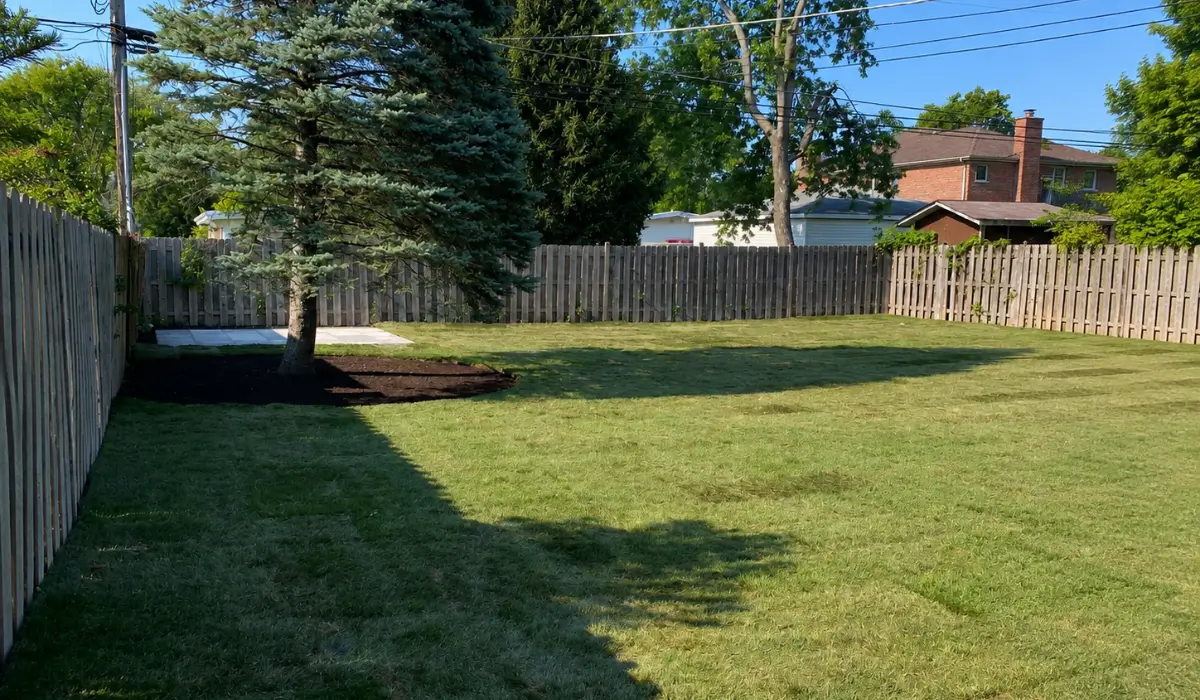
If your lawn struggled through summer, August may be your best chance to repair it before cooler weather arrives. The best time to reseed your lawn before summer ends is when the existing grass is thin but the soil, drainage, and watering conditions can still support healthy growth.
Tommy Pollina Landscape Company has helped Chicago-area homeowners solve lawn and landscape problems since 1982. Our landscape problem-solving services address the related conditions that influence lawn health, including soil, drainage, grading, irrigation coverage, and daily use.
Every lawn recovers differently because the underlying cause is not always the same.
Identify Your Lawn Type
The appearance of your lawn provides useful clues about what may be happening below the surface. Thin grass usually points to a different problem than standing water, widespread weeds, or damage limited to one high-traffic area.
Match your yard to the condition that best fits. If more than one applies, start with the issue most likely preventing healthy grass from growing.
| Your Lawn Condition | Start With This First Step |
|---|---|
| Thin but still mostly covered with grass | Overseeding and soil preparation |
| Damaged in isolated patches | Correct the cause, then repair those areas |
| Mostly weeds with little healthy grass | Soil evaluation and possible turf replacement |
| Frequently muddy or holding water | Drainage and grading assessment |
| Heavily shaded or exposed to constant traffic | Compare natural turf with artificial turf |
Type A: Thin and Sparse Grass Needs Better Growing Conditions
Thin grass often responds well to repair instead of replacement.
Common signs include:
- Grass blades are present but spread apart.
- Soil is visible between healthy sections.
- The lawn looks weaker after summer heat.
- Bare areas remain limited in size.
New seed needs prepared soil, consistent moisture, and enough time to develop roots. Compacted areas may also need aeration or light soil preparation.
Before hiring a provider for lawn reseeding services, ask whether the work includes checking soil conditions and preparing the seedbed, which is the loosened top layer of soil where the seed will sit.
Type B: Patchy and Damaged Areas Need Targeted Repair
Patchy lawns often develop around specific stress points. Heavy foot traffic, summer heat, pet activity, insects, disease, and uneven watering can all create isolated damage.
Effective repair starts by identifying the cause, correcting it, preparing the soil, and then reseeding or replacing the damaged turf.
Adding seed without fixing the cause usually leads to the same problem returning.
What we often see is one dry corner repeatedly reseeded while nearby grass remains healthy. In that situation, sprinkler coverage or compacted soil may matter more than the amount of seed applied.
Results for lawn care contractor near me should lead to a provider who evaluates the full affected area rather than treating every bare patch the same way. Many recurring bare spots are caused by issues covered in Lawn Looking Patchy? Fix It.
Type C: Weed-Filled Lawns May Need More Than Reseeding
A lawn covered mostly with weeds may not be ready for simple overseeding. The first step is determining how much healthy grass remains and whether the soil can support stronger turf.
Weeds spread when weak or thin grass leaves open soil exposed to sunlight, moisture, and nutrients.
If your lawn is mostly weeds, the recovery plan usually depends on how much healthy grass remains:
- Healthy grass is still present: Overseed after completing soil amendment.
- Large bare areas: Complete soil amendment before reseeding.
- Mostly weeds with little healthy turf: Evaluate whether turf replacement offers a better long-term result.
In many real cases, repeated weed treatments fail because the thin turf that allowed weeds to spread was never corrected. A professional evaluation can clarify whether soil amendment, reseeding, or full turf installation services provide the best lasting solution.
When comparing landscaping company near me results, look for a company that evaluates soil, drainage, irrigation, and surrounding plants together. Our landscape problem-solving approach looks at those related conditions together.
Type D: Constantly Muddy Areas May Point to Drainage Problems
A wet lawn is often not a grass problem. It may be a water-management issue that reduces the oxygen available to roots and creates poor conditions for seed germination.
Common warning signs include:
- Water pooling after rainfall.
- Soft ground that remains wet for several days.
- Grass thinning in low areas.
- Mud appearing near downspouts or slopes.
- Moss or moisture-loving plants spreading.
New seed cannot correct a drainage failure. Grading, which means shaping the ground so water moves away from problem areas, may be needed along with underground drainage, downspout changes, or irrigation adjustments.
Long-term drainage improvements require more than moving surface water away from one area.
Tommy Pollina Landscape Company has completed more than 10,000 drainage installations, and our team evaluates how water moves across the property before recommending drainage solutions for the property.
The Best Fix for Each Lawn Problem
Each lawn category requires a different repair because the visible symptom often points to a deeper issue.
A thin lawn with workable soil may respond well to overseeding. A muddy lawn usually needs drainage correction first, while a weed-heavy lawn may need soil amendment or replacement turf.
| Lawn Type | Primary Fix | Supporting Work |
|---|---|---|
| Thin and sparse | Overseeding | Soil preparation and steady watering |
| Patchy and damaged | Targeted turf repair | Correct irrigation, traffic, or soil stress |
| Mostly weeds | Soil amendment or turf replacement | Build denser, healthier grass |
| Constantly muddy | Drainage correction | Regrade or redirect water before reseeding |
| Heavy shade or traffic | Turf replacement evaluation | Compare natural and artificial options |
Overseeding is most effective when healthy grass still covers much of the area. Soil amendment may include adding suitable organic material or loosening compacted ground.
Correct drainage problems first, then reseed your lawn before summer ends while enough growing time remains for new roots to establish.
When comparing lawn maintenance near me options, look for ongoing care that supports the repair plan. Proper mowing, seasonal fertilization, irrigation monitoring, and soil care can help prevent the same decline from returning.
Our lawn maintenance services support both newly repaired and established lawns.
Why Soil Conditions Matter When You Reseed Your Lawn Before Summer Ends
Late summer can create useful growing conditions because the soil remains warm while air temperatures gradually become less stressful. Cool-season grasses commonly used in northern Illinois often begin growing well during this period, but timing varies by grass species, moisture, weather, and yard conditions.
Seed responds to soil temperature rather than air temperature, so warm afternoons alone do not guarantee suitable growing conditions.
A basic soil thermometer inserted a few inches into the ground can help track changes over several days. Consider recent rainfall, shade, irrigation, and the seed variety rather than relying on one reading.
August and early September often provide warm soil, cooler nights, and lower weed pressure. Waiting too far into fall shortens the period available for root growth before freezing conditions arrive.
Recommended planting timing aligns with University of Illinois Extension lawn care for cool-season grasses.
New Seed Needs Different Watering as It Develops
Freshly seeded soil needs consistent surface moisture during germination, but the watering pattern should change as the grass develops.
During early germination, light watering may be needed once or more each day depending on temperature, wind, shade, rainfall, and soil type. The upper soil should remain moist without washing seed away or creating muddy conditions.
Once seedlings emerge and roots begin developing, water less often but more deeply to encourage stronger root growth.
This progression can be summarized as follows:
- Seed stage: Keep the surface consistently damp.
- Germination stage: Maintain moisture without standing water.
- Early growth: Reduce watering frequency while watering more deeply.
- Established growth: Follow a normal schedule based on weather.
An irrigation system contractor can identify dry zones, clogged sprinkler heads, pressure problems, or overlapping coverage that may interfere with healthy early growth. What we often see is uneven sprinkler coverage creating both dry patches and overly wet areas within the same lawn.
Our irrigation and sprinkler services help match water delivery to the lawn’s condition.
Adjust watering as weather and soil conditions change. Efficient watering practices are consistent with EPA WaterSense outdoor watering.
When Reseeding Won’t Solve the Problem
If a lawn continues to struggle after repeated reseeding, the location and timing of the damage often reveal the underlying problem. Poor grading, drainage failures, irrigation deficiencies, and compacted soil can all prevent new grass from establishing.
Common signs reseeding alone will not solve the problem:
- Water pools after rainfall.
- The same areas dry out repeatedly.
- Grass struggles only in low spots.
- Soil feels hard and compacted.
- New grass fails despite proper watering.
In many real cases, one side of a yard stays wet because of grading while another dries out because sprinkler coverage is uneven. Correcting those conditions before reseeding gives new grass a better chance to survive.
Uneven watering patterns are often easier to recognize after reviewing Sprinklers Wasting Water? Signs to Check.
Effective drainage solutions address the source of the water, not only the symptom.
Is Artificial Turf a Better Option?
Artificial turf can be a practical option for areas where natural grass consistently struggles because of heavy traffic, active pets, or dense shade. The best option depends on how the space is used and whether natural grass has a realistic chance to thrive.
Natural grass is usually the better choice when:
- The lawn receives enough sunlight.
- Soil drains well.
- Regular lawn care is practical.
- Seasonal changes are part of the landscape you enjoy.
Artificial turf may be a better fit when:
- Pets use the area every day.
- Heavy foot traffic prevents healthy grass from recovering.
- Dense shade limits grass growth.
- A low-maintenance surface is preferred.
Pet owners may value the durability and cleaner surface, while families may prefer artificial turf for play areas that receive constant use. Shaded side yards may also benefit when healthy grass never receives enough sunlight.
When comparing artificial turf installers near me, ask about drainage beneath the turf, base preparation, heat exposure, pet use, edging, and maintenance.
Proper base preparation helps artificial turf perform as intended over time.
Lawn Recovery Timeline From August Through October
Every stage of recovery builds on the previous one. Starting at the right time and following a consistent care routine gives new grass the best chance to establish before winter arrives.
| Month | Primary Focus | Expected Progress |
|---|---|---|
| August | Diagnose problems, prepare the soil, and reseed | Seed is planted and germination begins |
| September | Maintain moisture and encourage root growth | Grass becomes thicker and more established |
| October | Protect developing roots before winter | Stronger roots support healthier spring growth |
August: Diagnose and Prepare to Reseed Your Lawn Before Summer Ends
August is the time to identify the lawn type, check drainage and irrigation, review soil conditions, and decide whether overseeding, targeted repair, or turf replacement is appropriate.
Prepare compacted or bare areas before spreading seed. Correct major water problems first, then begin reseeding when the soil and short-term forecast support steady germination.
Extreme heat can still stress lawns and surrounding plants. Late-season heat can also affect newly repaired lawns, especially under the conditions discussed in Protect Your Landscaping from Extreme Summer Heat.
September: Support Germination and Root Growth
September is often the main growth period. Keep the seedbed moist, limit heavy foot traffic, and monitor the lawn for dry zones or puddling.
As seedlings emerge, reduce watering frequency gradually while allowing moisture to reach deeper into the soil. Mow after the new grass reaches a suitable height and avoid removing too much of the blade at one time.
Expect thicker coverage and stronger growth rather than instant results.
October: Strengthen the Lawn Before Winter
October focuses on protecting developing roots before winter. Continue mowing as needed, avoid cutting the grass too short, and prevent heavy leaf buildup from blocking sunlight.
Watering needs usually decline as temperatures cool, but new turf should not dry out completely. Monitor rainfall and soil moisture instead of following a fixed schedule. Expected establishment timing is consistent with University of Minnesota lawn renovation.
Homeowners with questions about timing, maintenance, drainage, or irrigation can review our common landscaping questions.
A Lawn Assessment Clarifies the Next Step
Every lawn responds differently, and identifying the underlying cause is the first step toward lasting results.
Request a lawn assessment, or call (847) 698-6868 to schedule a convenient time for your property assessment.
Latest Posts:
- Landscape Lighting Ideas to Make Your Backyard Shine This Summer
- 5 Landscape Design Fixes to Make Before Winter Comes
- Top 5 Spring Planting Mistakes Homeowners Make
- The Ultimate Fall Lawn Care Routine Before the First Frost
- The Best Backyard Upgrades for Memorial Day Hosting
- Drainage Problems in Fall? Why It’s Not Too Late to Fix Them
- Winter Drainage Solutions to Prevent Ice Build-Up Around Glencoe Homes
- Tree Trimming Season: When, Why & Best Time to Trim Trees
- When Should You Book Holiday Lighting Installation? Sooner Than You Think
- Hardscape Maintenance Tips for Icy Winters in Winnetka
- Lawn Looking Patchy? 3 Fixes Before Summer Heat
- How to Winterize an Outdoor Kitchen in Wilmette and Park Ridge
- 6 Must-Have Features for Your Summer Landscaping Makeover
- Signs Your Lawn Has Winter Drainage Problems (And What to Do Now)
- Are Sprinklers Wasting Water? Signs It’s Time for a Check
- Planning Off-Season Landscaping Early for a Smoother Spring Build
- Is It Time to Replace Your Old Patio? 4 Signs to Watch For
- What Happens If You Don’t Remove Snow From Your Lawn?
- How to Protect Your Landscaping From Extreme Summer Heat
- Valentine’s Day Garden Prep: Plants That Bloom Beautifully by May
- Outdoor Living Trends: Mid-Summer Upgrades Worth the Investment
- Backyard Flooding? Why Early Spring Is the Best Time for Drainage Work
- Your July Landscape Checklist: 8 Tasks to Keep It Thriving
- Thinking of a Patio? Why February Is Prime Time for Hardscape Planning
- Fall Starts in August: How to Prep Your Landscape Now
- 3 Landscape Design Ideas to Lock In Before Spring Rush Starts
- Backyard Projects to Finish Before Labor Day
- What to Do First When Prepping Your Lawn for Spring
- Reseed Your Lawn Before Summer Ends: A Lawn Recovery Plan
- Essential Spring Landscaping Services to Book Before April
- When to Book Fall Cleanup (Hint: It’s Earlier Than You Think)
- Why Mulching in April Protects Your Garden All Year Long
- How Outdoor Lighting Boosts Home Value & Safety This Fall
- Outdoor Kitchens in Park Ridge: A Must-Have for Summer
- Evergreens and Shrubs in Glencoe with Cold-Weather Plant Installation
- Functional & Beautiful Retaining Walls for Winnetka Homes
- Transforming Small Backyards in Kenilworth with Hardscaping
- 5 Landscape Design Trends for Glencoe Homeowners in 2025
- French Drain vs. Channel Drain: Which Works Best for Glenview Homes?
- Landscape Drainage Solutions That Actually Work in Winnetka
- Planning a Late Summer Hardscape Installation in Park Ridge
- Outdoor Kitchen Add-Ons Worth the Investment in Glencoe
- We’re Featured on Redfin! Backyard Privacy Tips from Tommy Pollina Landscaping
- Overwatering or Drying? Smart Irrigation System Installations
- Creating Multi-Level Hardscape Designs for Glenview Backyards
- Drainage Upgrades to Prevent Fall Flooding in Park Ridge
- Best Arborvitae Varieties for Privacy in Winnetka and Wilmette
- Designing Outdoor Kitchens with Built-In Fire Features in Glencoe