
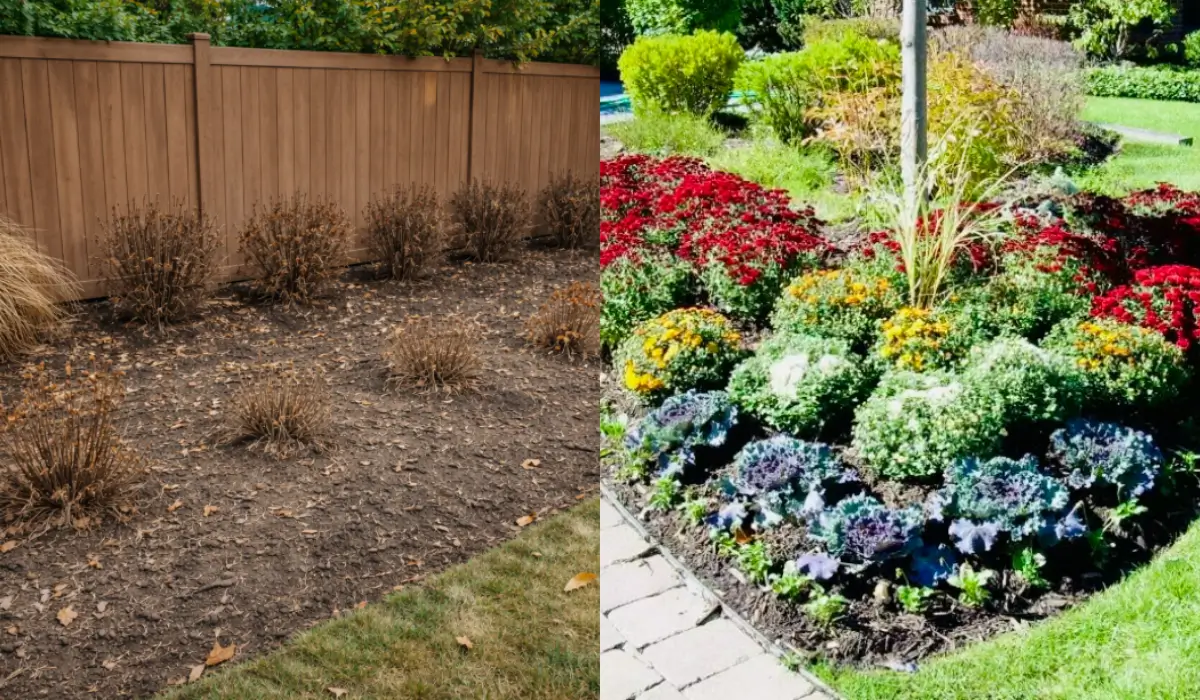
Spring Planting Mistakes That Kill Your Plants (And How to Fix Them)
Spring planting mistakes cause plantings to fail most often due to poor timing, soil issues, overcrowding, incorrect plant selection, and lack of maintenance. When these factors are ignored, plants struggle to establish and decline soon after installation. You may have installed everything correctly on the surface, yet results continue to disappoint.
Many properties repeat the same cycle of replacing plants without fixing the root cause. Tommy Pollina Landscape Company Inc. provides solutions using professional landscape design and installation services that address soil conditions, spacing, and timing. This guide explains what is causing these failures and how to create conditions that support long-term plant success.
Plants failing season after season can quickly become frustrating and costly. Get clear guidance before replacing anything again. Call today for expert planting insight that helps prevent repeat issues and supports stronger, more reliable landscape performance moving forward.
Why Spring Planting Mistakes Keep Happening
Many homeowners follow the same pattern every year: plant in spring, see early growth, then watch plants decline as temperatures rise.
A typical case looks like this:
A homeowner installs new shrubs in April. By May, everything appears healthy, similar to what many expect when searching for landscape plantings near me. By July, sections begin to thin out. By August, several plants need replacement.
The cycle repeats the following year. The issue rarely comes down to effort. Most failures trace back to conditions below the surface that prevent roots from establishing properly.
|
“Most planting failures aren’t caused by the plant itself. They’re caused by soil conditions and timing mismatches that prevent roots from ever establishing properly.” — Tommy Pollina, Landscape Design Specialist, 15+ years field experience |
Professional landscape design and installation helps address these hidden factors before problems begin.
In regions like Chicago, which fall within USDA Plant Hardiness Zones 5 to 6, spring temperatures fluctuate heavily.
Mistake #1: Planting Too Early or Too Late
Timing determines whether roots establish before stress conditions begin, which is one of the most overlooked factors behind spring planting mistakes.
What Happens
Planting too early places roots in cold, inactive soil. Planting too late shortens the establishment window before summer heat arrives.
This creates uneven growth patterns and leaves plants without the stability needed to handle rising temperatures.
What Works Better
Planting should follow soil readiness—not calendar dates.
Consistent ground warmth allows roots to activate immediately and develop evenly. Stable early growth sets the foundation for long-term performance.
👉 Early root activity remains one of the strongest indicators of plant survival.
Mistake #2: Ignoring Soil Quality
Soil controls how water, oxygen, and nutrients move through planting areas. When soil structure is inconsistent, plant performance becomes unpredictable.
Why This Causes Failure
Many residential properties contain compacted or uneven soil. This creates a moisture imbalance, where some areas retain water while others dry out too quickly.
Poor landscape installation practices often leave these underlying conditions unresolved.
What Works Better
Soil conditions should be corrected before planting begins, as unresolved soil issues remain a leading cause of spring planting mistakes.
Improving structure, adding organic material, and stabilizing drainage create a consistent environment for root development. Balanced soil supports uniform growth and reduces plant stress.
👉 Healthy soil creates predictable results across the entire landscape.
Plant failures rarely come from a single mistake. Most problems happen when multiple factors affect each other at the same time.
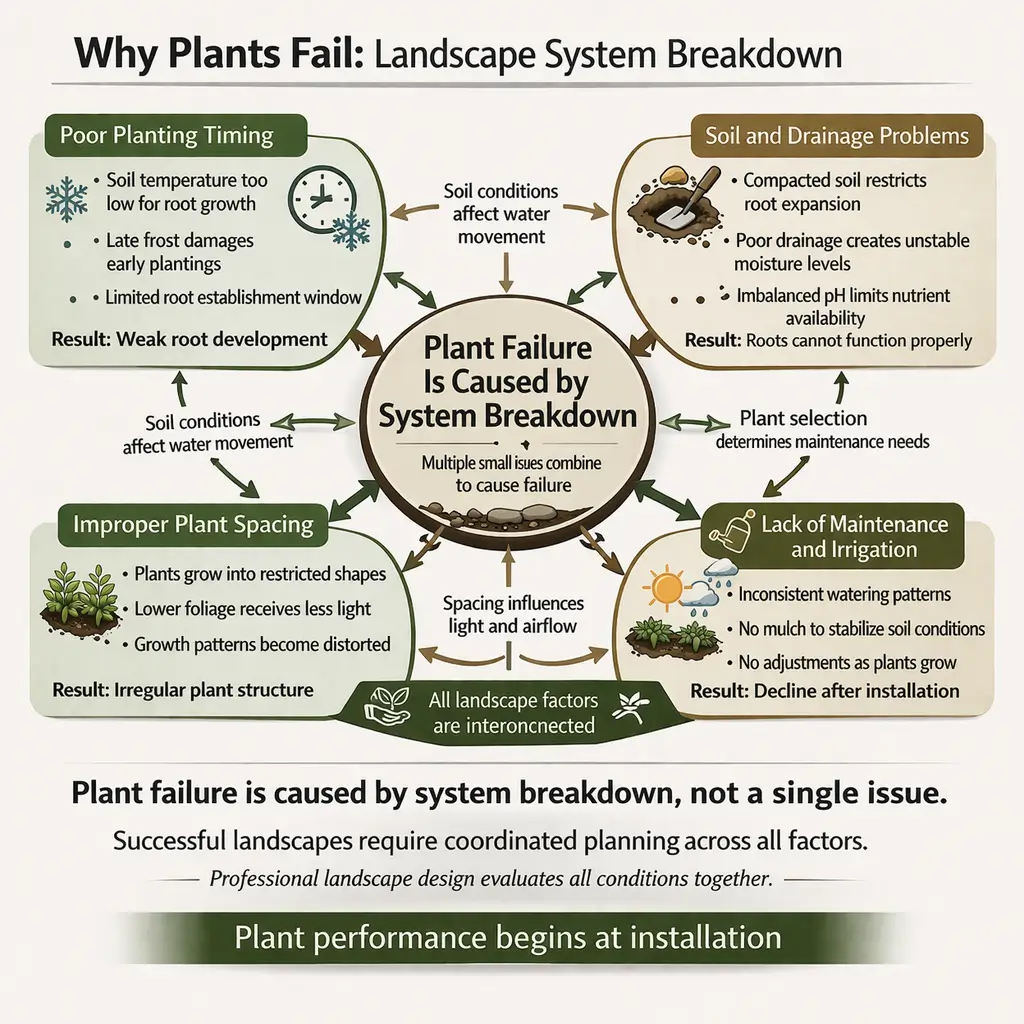
Why Plants Fail: Landscape System Breakdown Explained
Mistake #3: Overcrowding Plants
Spacing decisions often focus on initial appearance rather than long-term growth.
Why It Becomes a Problem
Plants placed too closely together begin to compete for light, water, and nutrients. As they mature, airflow decreases and growth becomes distorted. Instead of developing outward, plants stretch upward while lower growth declines.
A qualified garden designer plans spacing based on how plants mature, not how they look on day one.
What Works Better
Plant spacing should reflect mature size—not installation size. Adequate spacing allows each plant to develop naturally, maintain structure, and reduce future maintenance demands.
👉 Proper spacing improves plant health and preserves design integrity over time.
Replacing plants without lasting results often points to deeper site issues. A professional evaluation reveals what is limiting growth and what needs correction. Schedule a consultation to build a planting plan designed for long term success and healthier landscape performance.
Mistake #4: Choosing the Wrong Plants for the Space
Every property contains variations in sunlight, moisture, and exposure. These differences directly affect plant performance.
Where It Goes Wrong
Plant selection often prioritizes appearance over environmental fit. This leads to inconsistent results, even under the same care routine. Popular choices like spring flowers often struggle when placed in the wrong conditions.
What Works Better
Plant selection should align with actual site conditions. Evaluating sun exposure, soil moisture, and airflow leads to more consistent outcomes. Matching plants to their environment reduces stress and improves long-term survival.
👉 The right plant in the right location consistently outperforms design-driven choices.
Mistake #5: No Mulch or Maintenance Plan
Planting marks the beginning—not the completion—of a successful landscape.
Why Mulch Matters
Mulch stabilizes soil conditions during early growth. It helps retain moisture, regulate temperature, and protect developing root systems. Decorative elements like seasonal planters add visual appeal but still rely on proper maintenance to perform well.
Ongoing Care
Long-term performance depends on consistent maintenance. Watering during early establishment, adjusting to seasonal changes, and monitoring plant health all contribute to stability. Without these steps, even well-installed landscapes begin to decline.
👉 Strong landscapes result from consistent care, not just proper installation.
The 5-Point Plant Survival System
Most successful landscapes follow a consistent structure:
- Timing aligned with soil readiness
- Stable and corrected soil conditions
- Proper spacing for mature growth
- Plant selection based on environment
- Ongoing care and maintenance
This system removes the most common causes of plant failure and creates reliable, repeatable results.
Real Project Example: Why Plants Failed on a New Installation
A residential property in the Chicago suburbs experienced repeated plant loss across multiple seasons, a pattern commonly linked to spring planting mistakes.
The initial assumption focused on plant quality. A full site evaluation revealed the actual issue:
- Compacted clay soil beneath new topsoil
- Water pooling in low sections
- Root systems are unable to penetrate below the surface layer
After correcting soil structure and drainage, the same plant types established successfully and remained stable through the following season.
👉 The difference came from correcting conditions—not replacing plants.
Spring Planting Mistakes and How to Prevent Them
Repeated plant failure usually points to underlying site conditions rather than plant quality, which is often overlooked when searching for a planting service near me. When the same areas continue to struggle, issues such as soil structure, drainage, or plant selection have not been properly addressed.
Replacing plants without correcting these factors leads to the same results each season. Tommy Pollina Landscape Company Inc. focuses on identifying and resolving these conditions through detailed site evaluations and professional seasonal planting services. A proper assessment helps prevent ongoing plant loss and creates a landscape that performs consistently over time.
Get a Professional Planting Plan Tailored to Your YardOngoing plant loss often comes from overlooked site conditions rather than plant quality. Get a clear plan built around soil, spacing, and timing. Call 847-698-6868 today to move forward with a landscape designed for consistent growth and long-term success. |
Latest Posts:
- Landscape Lighting Ideas to Make Your Backyard Shine This Summer
- 5 Landscape Design Fixes to Make Before Winter Comes
- Top 5 Spring Planting Mistakes Homeowners Make
- The Ultimate Fall Lawn Care Routine Before the First Frost
- The Best Backyard Upgrades for Memorial Day Hosting
- Drainage Problems in Fall? Why It’s Not Too Late to Fix Them
- Winter Drainage Solutions to Prevent Ice Build-Up Around Glencoe Homes
- Tree Trimming Season: When, Why & Best Time to Trim Trees
- When Should You Book Holiday Lighting Installation? Sooner Than You Think
- Hardscape Maintenance Tips for Icy Winters in Winnetka
- Lawn Looking Patchy? 3 Fixes Before Summer Heat
- How to Winterize an Outdoor Kitchen in Wilmette and Park Ridge
- 6 Must-Have Features for Your Summer Landscaping Makeover
- Signs Your Lawn Has Winter Drainage Problems (And What to Do Now)
- Are Sprinklers Wasting Water? Signs It’s Time for a Check
- Planning Off-Season Landscaping Early for a Smoother Spring Build
- Is It Time to Replace Your Old Patio? 4 Signs to Watch For
- What Happens If You Don’t Remove Snow From Your Lawn?
- How to Protect Your Landscaping From Extreme Summer Heat
- Valentine’s Day Garden Prep: Plants That Bloom Beautifully by May
- Outdoor Living Trends: Mid-Summer Upgrades Worth the Investment
- Backyard Flooding? Why Early Spring Is the Best Time for Drainage Work
- Your July Landscape Checklist: 8 Tasks to Keep It Thriving
- Thinking of a Patio? Why February Is Prime Time for Hardscape Planning
- Fall Starts in August: How to Prep Your Landscape Now
- 3 Landscape Design Ideas to Lock In Before Spring Rush Starts
- Backyard Projects to Finish Before Labor Day
- What to Do First When Prepping Your Lawn for Spring
- Reseed Your Lawn Before Summer Ends: A Lawn Recovery Plan
- Essential Spring Landscaping Services to Book Before April
- When to Book Fall Cleanup (Hint: It’s Earlier Than You Think)
- Why Mulching in April Protects Your Garden All Year Long
- How Outdoor Lighting Boosts Home Value & Safety This Fall
- Outdoor Kitchens in Park Ridge: A Must-Have for Summer
- Evergreens and Shrubs in Glencoe with Cold-Weather Plant Installation
- Functional & Beautiful Retaining Walls for Winnetka Homes
- Transforming Small Backyards in Kenilworth with Hardscaping
- 5 Landscape Design Trends for Glencoe Homeowners in 2025
- French Drain vs. Channel Drain: Which Works Best for Glenview Homes?
- Landscape Drainage Solutions That Actually Work in Winnetka
- Planning a Late Summer Hardscape Installation in Park Ridge
- Outdoor Kitchen Add-Ons Worth the Investment in Glencoe
- We’re Featured on Redfin! Backyard Privacy Tips from Tommy Pollina Landscaping
- Overwatering or Drying? Smart Irrigation System Installations
- Creating Multi-Level Hardscape Designs for Glenview Backyards
- Drainage Upgrades to Prevent Fall Flooding in Park Ridge
- Best Arborvitae Varieties for Privacy in Winnetka and Wilmette
- Designing Outdoor Kitchens with Built-In Fire Features in Glencoe