
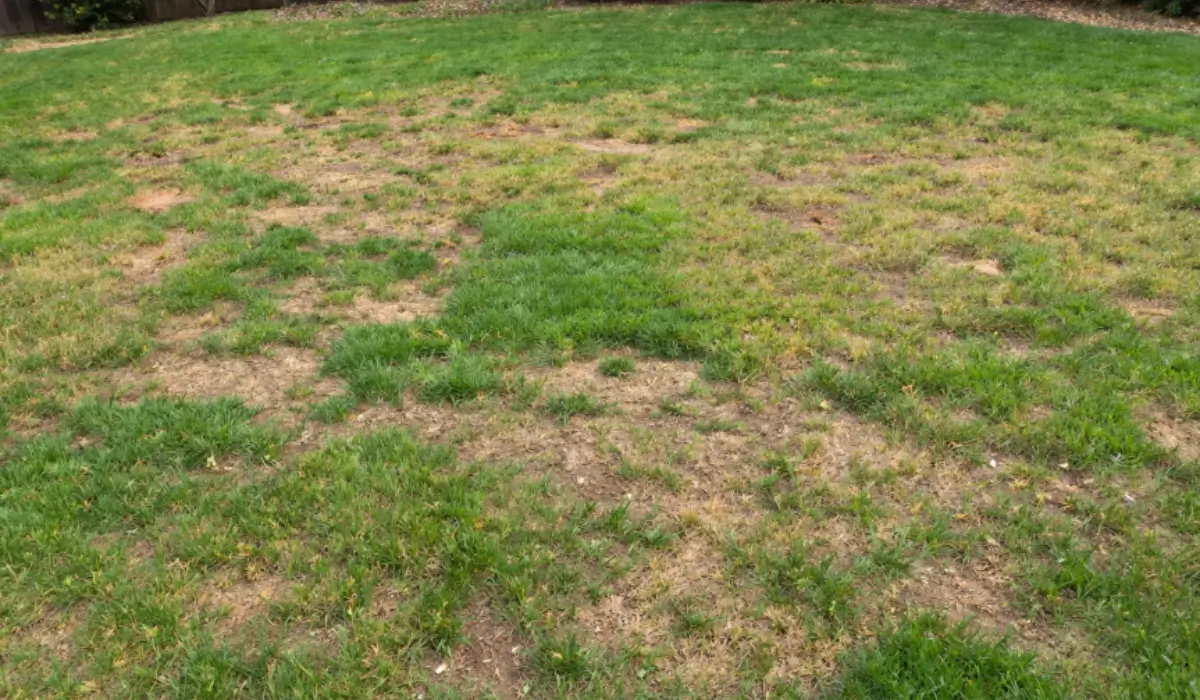
What Causes a Lawn Looking Patchy Before Summer
Bare spots? Uneven color? Mud zones? A lawn looking patchy can be fixed, especially before summer heat makes the problem harder to reverse.
Spring tends to reveal issues that developed quietly over time. This is also the peak season for spring lawn repair, when underlying problems become more visible. In most cases, more than one factor is involved, which explains why simple fixes often fail to last.
Tommy Pollina Landscape. has corrected these lawn conditions across Chicago properties since 1982 by fixing soil, turf, and drainage together.
A lawn looks patchy due to compacted soil, worn grass, or drainage problems. The best way to fix patchy lawn areas is to aerate the soil, repair or replace damaged turf, and correct water flow before summer heat adds stress.
Compacted Soil: The Most Common Cause of Patchy Lawns
Heavy use and seasonal pressure compress the soil, reducing the space roots need to grow. Grass struggles to spread, leading to a lawn looking patchy with thin and uneven coverage.
Water often runs off instead of soaking in, leaving roots without consistent moisture. As temperatures rise, these areas weaken even further.
Solution: Aeration + Soil Conditioning
- Core aeration loosens dense soil and restores airflow
- Soil conditioning improves structure and nutrient access
- Early treatment supports stronger root development
Aeration tends to show visible improvement within a few weeks. Consistent results often come from structured care like seasonal lawn maintenance for patchy lawns.
📌 Soil Fix
- Compacted soil restricts root growth
- Aeration improves oxygen and water movement
- Early correction reduces summer stress
Problem #2: Patchy, Worn-Out Grass
Frequent use and aging turf can break down the surface layer, leaving visible bare spots and inconsistent density. This usually points to turf fatigue, though underlying soil conditions may also contribute.
Repeated reseeding without improvement often signals that the surrounding grass cannot support new growth.
Solution: Spot Reseeding or Turf Patch Installs
| Condition | Best Fix | Speed |
| Small bare spots | Reseeding | Moderate |
| Moderate wear | Turf patch installation | Faster |
| Large damaged areas | Full turf installation | Immediate |
This comparison makes it easier to choose the right repair approach based on the condition of the lawn.
Combining turf repair with proper upkeep produces stronger, longer-lasting results. See examples in before-and-after patchy lawn repair projects.
📌 Turf Repair
- Small areas respond well to reseeding
- Turf patches provide faster coverage
- Larger damage benefits from replacement
Most lawns show signs from more than one of these issues—this quick guide helps pinpoint what’s happening.
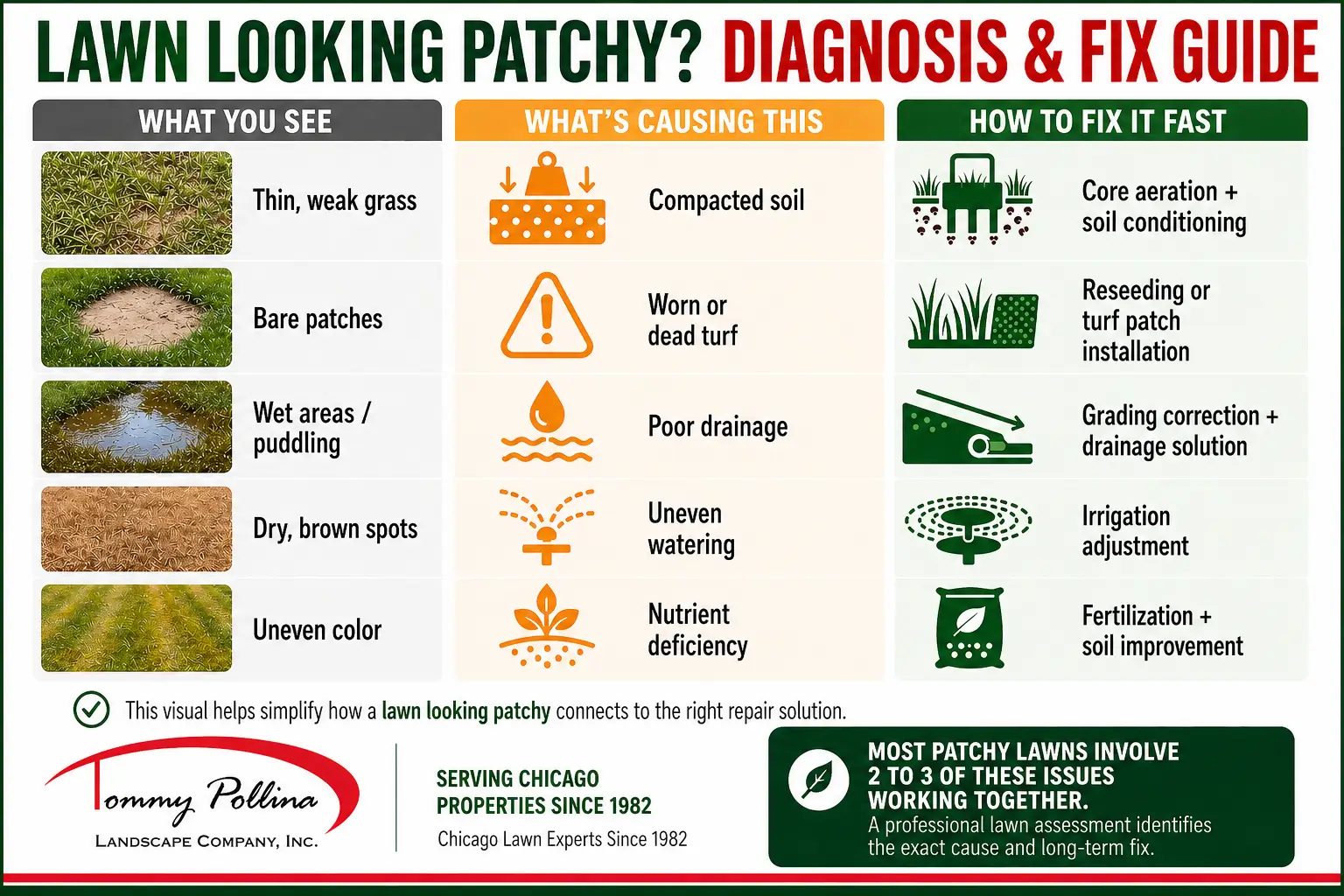
Patchy Lawn Diagnosis And Repair Solutions Made Simple
Problem #3: Drainage or Watering Issues
Uneven moisture levels create inconsistent growing conditions. Some sections hold water too long, while others dry out quickly, resulting in irregular color and density across the lawn.
Properties with grading issues or inefficient irrigation systems tend to show this pattern more clearly over time.
Solution: Slope Correction + Irrigation Audit
- Adjust grading to guide water away from problem areas
- Evaluate irrigation coverage for consistency
- Install drainage solutions where water collects
Research from University of Illinois lawn care guidance highlights the importance of proper drainage. Supporting findings from Purdue turf management research show how uneven watering impacts lawn performance.
When Multiple Issues Require a Coordinated Fix
A patchy lawn rarely comes from a single cause. Soil condition, turf health, and water movement often interact, creating overlapping problems that simple fixes cannot resolve.
Targeting only one issue may produce short-term improvement, but results often fade when underlying factors remain unchanged.
A coordinated approach focuses on:
- Identifying all contributing factors
- Prioritizing repairs in the right order
- Creating conditions that support long-term growth
Working with experienced teams from local landscaping companies ensures each part of the lawn receives the right solution.
A detailed evaluation helps uncover overlapping problems and determine the correct repair sequence.
Many homeowners begin searching for a lawn care contractor near me after repeated lawn issues continue to return.
Real feedback from customer review experiences reflects consistent results across different property types.
FAQ: Lawn Looking Patchy Solutions
What causes a lawn to look patchy after winter?
Seasonal stress exposes soil compaction, turf damage, and drainage problems built over time.
What is the best way to fix patchy lawn areas quickly?
Aeration combined with turf repair and proper watering adjustments produces reliable improvement.
Should reseeding or turf installation be used for patchy grass?
Reseeding works for small areas, while turf installation provides faster and longer-lasting coverage.
How long does it take to fix a patchy lawn?
Reseeding usually takes a few weeks to establish visible growth. Turf installation delivers immediate coverage, while full system repair involving soil and drainage improvements may take several weeks for complete stabilization.
Can drainage problems affect lawn health?
Poor drainage stands as one of the most common causes of uneven growth and decline.
Fix the Cause Before Summer Makes It Worse
A lawn looking patchy reflects underlying conditions that affect how grass grows and spreads. Addressing these early helps restore consistency and prevents minor issues from expanding into larger problem areas.
Waiting too long often leads to more intensive repairs. Early correction keeps the process more manageable and improves long-term results.
Tommy Pollina Landscape focuses on correcting root causes, helping lawns recover in a way that lasts.
Book a Lawn Assessment Before June Heat
A patchy lawn often signals deeper issues that require more than surface-level fixes.
With decades of experience and thousands of completed projects, Tommy Pollina Landscape delivers solutions designed for long-term lawn performance—not short-term results.
Taking action now gives your lawn the best chance to recover before summer heat makes restoration more difficult.
Latest Posts:
- Landscape Lighting Ideas to Make Your Backyard Shine This Summer
- 5 Landscape Design Fixes to Make Before Winter Comes
- Top 5 Spring Planting Mistakes Homeowners Make
- The Ultimate Fall Lawn Care Routine Before the First Frost
- The Best Backyard Upgrades for Memorial Day Hosting
- Drainage Problems in Fall? Why It’s Not Too Late to Fix Them
- Winter Drainage Solutions to Prevent Ice Build-Up Around Glencoe Homes
- Tree Trimming Season: When, Why & Best Time to Trim Trees
- When Should You Book Holiday Lighting Installation? Sooner Than You Think
- Hardscape Maintenance Tips for Icy Winters in Winnetka
- Lawn Looking Patchy? 3 Fixes Before Summer Heat
- How to Winterize an Outdoor Kitchen in Wilmette and Park Ridge
- 6 Must-Have Features for Your Summer Landscaping Makeover
- Signs Your Lawn Has Winter Drainage Problems (And What to Do Now)
- Are Sprinklers Wasting Water? Signs It’s Time for a Check
- Planning Off-Season Landscaping Early for a Smoother Spring Build
- Is It Time to Replace Your Old Patio? 4 Signs to Watch For
- What Happens If You Don’t Remove Snow From Your Lawn?
- How to Protect Your Landscaping From Extreme Summer Heat
- Valentine’s Day Garden Prep: Plants That Bloom Beautifully by May
- Outdoor Living Trends: Mid-Summer Upgrades Worth the Investment
- Backyard Flooding? Why Early Spring Is the Best Time for Drainage Work
- Your July Landscape Checklist: 8 Tasks to Keep It Thriving
- Thinking of a Patio? Why February Is Prime Time for Hardscape Planning
- Fall Starts in August: How to Prep Your Landscape Now
- 3 Landscape Design Ideas to Lock In Before Spring Rush Starts
- Backyard Projects to Finish Before Labor Day
- What to Do First When Prepping Your Lawn for Spring
- Reseed Your Lawn Before Summer Ends: A Lawn Recovery Plan
- Essential Spring Landscaping Services to Book Before April
- When to Book Fall Cleanup (Hint: It’s Earlier Than You Think)
- Why Mulching in April Protects Your Garden All Year Long
- How Outdoor Lighting Boosts Home Value & Safety This Fall
- Outdoor Kitchens in Park Ridge: A Must-Have for Summer
- Evergreens and Shrubs in Glencoe with Cold-Weather Plant Installation
- Functional & Beautiful Retaining Walls for Winnetka Homes
- Transforming Small Backyards in Kenilworth with Hardscaping
- 5 Landscape Design Trends for Glencoe Homeowners in 2025
- French Drain vs. Channel Drain: Which Works Best for Glenview Homes?
- Landscape Drainage Solutions That Actually Work in Winnetka
- Planning a Late Summer Hardscape Installation in Park Ridge
- Outdoor Kitchen Add-Ons Worth the Investment in Glencoe
- We’re Featured on Redfin! Backyard Privacy Tips from Tommy Pollina Landscaping
- Overwatering or Drying? Smart Irrigation System Installations
- Creating Multi-Level Hardscape Designs for Glenview Backyards
- Drainage Upgrades to Prevent Fall Flooding in Park Ridge
- Best Arborvitae Varieties for Privacy in Winnetka and Wilmette
- Designing Outdoor Kitchens with Built-In Fire Features in Glencoe