
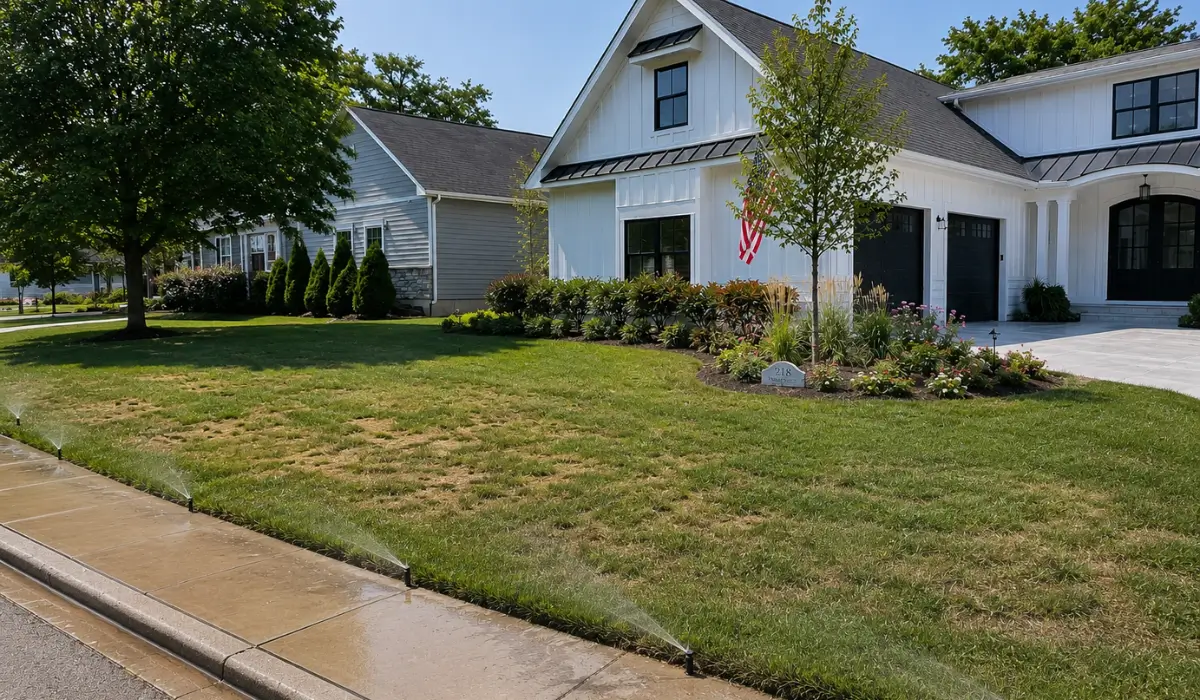
Sprinklers that spray the sidewalk aren’t just annoying, they could be costing you hundreds in wasted water. Here’s how to know if your system needs a tune-up.
Sprinklers wasting water can also create lawn stress, muddy areas, and uneven growth long before visible lawn changes begin appearing. Serving local homeowners since 1982, Tommy Pollina Landscape Company has spent decades solving landscape challenges that affect how properties function.
Water rarely stays confined to one area because irrigation concerns can gradually influence lawn health, drainage behavior, and overall property performance. Reducing unnecessary water use supports healthier landscapes and aligns with broader water conservation goals.
Sign #1: Uneven Lawn Growth or Dry Patches
One side of the yard may stay green while another begins looking stressed. A lawn receiving inconsistent water coverage usually shows visible differences before homeowners recognize irrigation concerns.
What It Means and How to Fix It
Dry areas do not always mean a lawn needs more water. In many situations, uneven coverage happens because sprinkler heads shift over time, become clogged, or lose part of their spray pattern.
A homeowner may increase watering time after seeing grass near a driveway start turning brown. This usually adds more water to sections that already receive enough moisture while dry sections continue struggling.
Common causes include:
- Clogged sprinkler nozzles that interrupt spray patterns
- Misaligned spray heads that reduce coverage accuracy
- Pressure imbalance between zones that affects distribution
- Aging components that no longer perform consistently
- Coverage overlap gaps that create dry sections
Many homeowners dealing with dry spots also notice lawn inconsistency nearby. Our guide covering patchy lawn repair issues explains how irrigation performance and lawn health affect one another.
Some situations only require targeted sprinkler repair, while others reveal larger coverage concerns affecting the entire system.
Sign #2: Water Runoff or Overspray
You turn on the system and notice water spraying onto sidewalks, driveways, or nearby hard surfaces. Healthy irrigation zones direct water where it belongs and avoid unnecessary runoff.
Common Issues With Old Heads or Improper Layout
Overspray wastes water, but the impact extends beyond higher water use. Water repeatedly reaching hard surfaces can collect in areas where drainage already struggles.
Repeated runoff can create unnecessary moisture near turf areas and landscape beds. Runoff concerns frequently relate to broader landscape conditions rather than one damaged component.
Signs homeowners commonly notice:
- Water crossing sidewalks or driveways
- Excess moisture collecting near curbs
- Sprinkler mist drifting during windy conditions
- Grass staying soaked in isolated sections
- Dry lawn areas located nearby
The EPA WaterSense program identifies irrigation inefficiency as a major source of residential water waste, especially during peak watering seasons.
| Sign | What You Might Notice | Possible Cause |
| Uneven lawn growth | Dry spots or stressed grass | Poor coverage or clogged heads |
| Water runoff | Sidewalk or driveway overspray | Head alignment issues |
| Rising water bills | Higher seasonal usage | Hidden leaks |
| Pooling water | Muddy or saturated zones | Drainage or zoning problems |
Sign #3: Sky-High Water Bills
A water bill sometimes reveals an irrigation concern before lawn changes become obvious. Small leaks can increase water use gradually while remaining difficult to spot.
Seasonal Usage Spikes and Hidden Leaks
Seasonal increases are normal because lawns need more water during warmer periods. Sudden spikes that feel out of proportion usually deserve a closer look.
Underground leaks do not always create visible flooding. Homeowners sometimes notice changing lawn conditions or unexplained increases in water use before finding the source.
Common warning signs include:
- Water bills rising unexpectedly
- Lawn sections staying damp longer
- Reduced sprinkler pressure
- Faster grass growth in isolated areas
Multiple warning signs can suggest the cause extends beyond a simple sprinkler adjustment. Our team evaluates coverage patterns, system pressure, and irrigation performance during a complete irrigation system inspection.
Many homeowners searching for a trusted irrigation system contractor want solutions that improve system efficiency instead of temporary adjustments.
The U.S. Geological Survey highlights how outdoor watering contributes heavily to seasonal residential water use, which is why hidden irrigation leaks and inefficient zones can become expensive quickly.
Sign #4: Pooling Water or Muddy Zones
Some yards stay wet long after nearby areas dry out. Persistent wet areas can indicate irrigation conflicts, drainage limitations, or zoning concerns.
Poor Zoning or Drainage Conflict
Not every section of a property needs identical watering patterns. A shaded area beneath mature trees has different moisture needs than open lawn sections receiving direct sunlight.
Older irrigation layouts sometimes contain outdated zones that no longer match changing landscape conditions. An experienced irrigation installer can help redesign sections that no longer distribute water efficiently.
We frequently see conditions such as:
- Improper grading that redirects water flow
- Compacted soil that slows absorption
- Drainage limitations near specific sections
- Excess watering in isolated zones
- Runoff movement toward lower areas
Homeowners experiencing recurring wet sections often notice related concerns discussed in our backyard drainage guide.
What a Sprinkler Pro Looks For
A sprinkler evaluation focuses on system performance rather than only visible symptoms. Tommy Pollina approaches landscape concerns by evaluating how different property conditions influence one another.
Pressure Tests, Head Rotation, Zoning Logic
Our team reviews several conditions that influence irrigation performance and water distribution across the property. Small adjustments sometimes uncover larger concerns that homeowners cannot easily see.
Areas commonly reviewed include:
- Water pressure consistency
- Head rotation and spray pattern
- Zone performance
- Coverage overlap
- Drainage interaction
- Leak indicators
- Seasonal adjustments
Water-smart irrigation upgrades can improve coverage and reduce unnecessary water use across the property. Certain landscape areas may also benefit from drip systems that deliver water directly to plant roots where moisture is needed most.
Many homeowners use our spring landscape checklist to identify seasonal work that helps prevent larger concerns later. Seasonal maintenance and regular inspections also support long-term irrigation performance.
Quick 30-Second Sprinkler Check
A quick review around your property can reveal early warning signs before water waste starts affecting larger areas of the landscape.
- Dry grass appears beside healthy sections
- Water reaches sidewalks or driveways
- Wet spots remain after watering stops
- Water bills increased unexpectedly
Two or more signs usually suggest your system deserves a closer look before summer demand increases. In many cases, sprinklers wasting water becomes noticeable through a combination of dry patches, overspray, and rising water bills rather than a single warning sign.
Book a System Audit Before Peak Summer
Small irrigation concerns become easier to address when they are identified early. A system distributing water correctly can help protect lawn health, reduce waste, and support broader water-saving landscaping goals.
Our team has spent decades helping homeowners identify irrigation concerns before they create larger property issues. The Tommy Pollina company history explains the problem-solving approach that has guided our work since 1982.
A professional review can help clarify what is causing the issue and which solution best fits your property.
Our irrigation service solutions explain different approaches that can improve system performance. You can also call (847) 698-6868 to discuss what your property may need.
Latest Posts:
- Landscape Lighting Ideas to Make Your Backyard Shine This Summer
- 5 Landscape Design Fixes to Make Before Winter Comes
- Top 5 Spring Planting Mistakes Homeowners Make
- The Ultimate Fall Lawn Care Routine Before the First Frost
- The Best Backyard Upgrades for Memorial Day Hosting
- Drainage Problems in Fall? Why It’s Not Too Late to Fix Them
- Winter Drainage Solutions to Prevent Ice Build-Up Around Glencoe Homes
- Tree Trimming Season: When, Why & Best Time to Trim Trees
- When Should You Book Holiday Lighting Installation? Sooner Than You Think
- Hardscape Maintenance Tips for Icy Winters in Winnetka
- Lawn Looking Patchy? 3 Fixes Before Summer Heat
- How to Winterize an Outdoor Kitchen in Wilmette and Park Ridge
- 6 Must-Have Features for Your Summer Landscaping Makeover
- Signs Your Lawn Has Winter Drainage Problems (And What to Do Now)
- Are Sprinklers Wasting Water? Signs It’s Time for a Check
- Planning Off-Season Landscaping Early for a Smoother Spring Build
- Is It Time to Replace Your Old Patio? 4 Signs to Watch For
- What Happens If You Don’t Remove Snow From Your Lawn?
- How to Protect Your Landscaping From Extreme Summer Heat
- Valentine’s Day Garden Prep: Plants That Bloom Beautifully by May
- Outdoor Living Trends: Mid-Summer Upgrades Worth the Investment
- Backyard Flooding? Why Early Spring Is the Best Time for Drainage Work
- Your July Landscape Checklist: 8 Tasks to Keep It Thriving
- Thinking of a Patio? Why February Is Prime Time for Hardscape Planning
- Fall Starts in August: How to Prep Your Landscape Now
- 3 Landscape Design Ideas to Lock In Before Spring Rush Starts
- Backyard Projects to Finish Before Labor Day
- What to Do First When Prepping Your Lawn for Spring
- Reseed Your Lawn Before Summer Ends: A Lawn Recovery Plan
- Essential Spring Landscaping Services to Book Before April
- When to Book Fall Cleanup (Hint: It’s Earlier Than You Think)
- Why Mulching in April Protects Your Garden All Year Long
- How Outdoor Lighting Boosts Home Value & Safety This Fall
- Outdoor Kitchens in Park Ridge: A Must-Have for Summer
- Evergreens and Shrubs in Glencoe with Cold-Weather Plant Installation
- Functional & Beautiful Retaining Walls for Winnetka Homes
- Transforming Small Backyards in Kenilworth with Hardscaping
- 5 Landscape Design Trends for Glencoe Homeowners in 2025
- French Drain vs. Channel Drain: Which Works Best for Glenview Homes?
- Landscape Drainage Solutions That Actually Work in Winnetka
- Planning a Late Summer Hardscape Installation in Park Ridge
- Outdoor Kitchen Add-Ons Worth the Investment in Glencoe
- We’re Featured on Redfin! Backyard Privacy Tips from Tommy Pollina Landscaping
- Overwatering or Drying? Smart Irrigation System Installations
- Creating Multi-Level Hardscape Designs for Glenview Backyards
- Drainage Upgrades to Prevent Fall Flooding in Park Ridge
- Best Arborvitae Varieties for Privacy in Winnetka and Wilmette
- Designing Outdoor Kitchens with Built-In Fire Features in Glencoe