
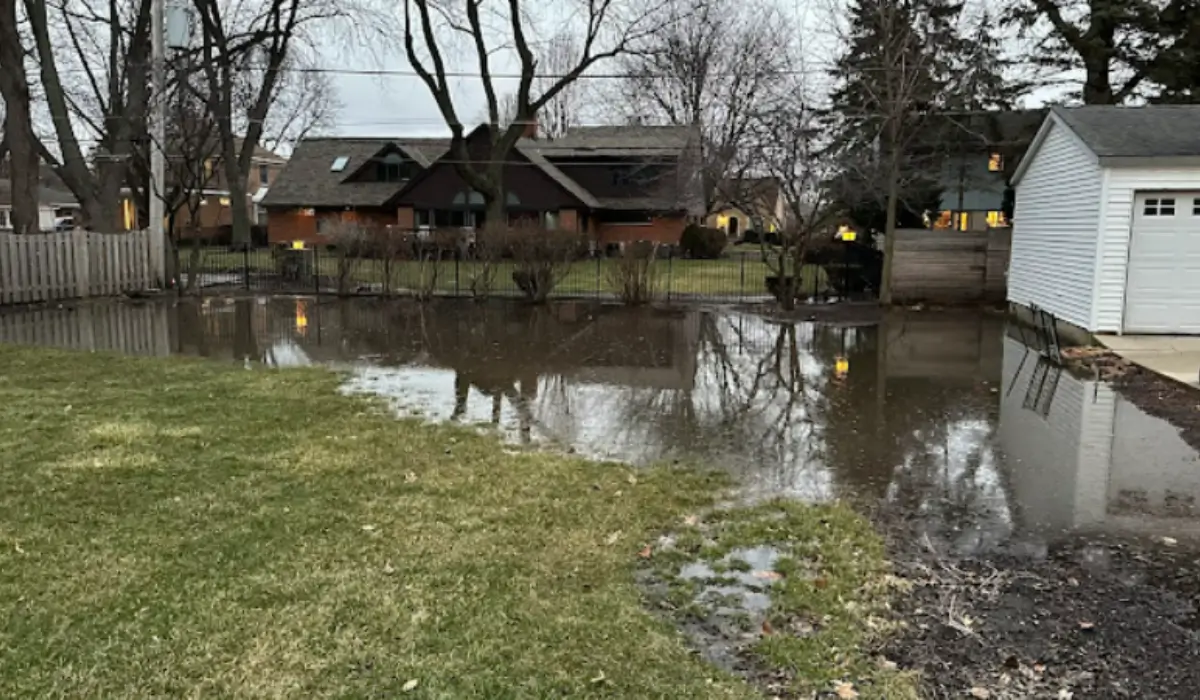
Early Spring Drainage Solutions for Backyard Flooding
Backyard flooding after snowmelt and spring rain signals underlying drainage failure. Early spring is the most effective time to correct the problem because saturated soil exposes weak grading and overloaded subsurface systems before heavier storms arrive.
Chicago averages more than three inches of rainfall in March alone, often layered on top of melting snow and frozen ground. That combination overwhelms compacted soil and aging drainage routes, turning minor pooling into recurring structural risk.
Tommy Pollina Landscape Company designs and installs engineered drainage systems that intercept excess water before it damages foundations, lawns, and hardscape.
Early spring soil movement places hidden stress on foundations and hardscape surfaces. Prevent recurring structural moisture damage before seasonal rains intensify. Book a professional drainage assessment focused on correcting water flow at its source.
Why Drainage Fails Are Most Visible in March
Winter stores moisture below the surface. Spring releases it all at once.
Snowmelt + Rain = Water Overload
Frozen soil prevents absorption for months. When temperatures rise:
- Snow melts rapidly
- Early spring rainfall increases runoff
- Clay-dense Midwest soil slows infiltration
- Compacted sublayers restrict downward flow
The National Weather Service explains that rapid snowmelt combined with heavy rainfall significantly increases runoff and localized flooding, which is why March frequently exposes hidden yard drainage weaknesses.
The result is sudden backyard flooding in low areas that appeared stable during fall. Water lingers longer near patios, foundation edges, and turf depressions because clay soil expands when saturated, limiting natural drainage even further.
After the first heavy storm, many homeowners begin searching for a drainage contractor near me once visible pooling returns in familiar spots.
Soil Has Not Recovered from Winter Saturation
Snow may disappear, but the soil remains stressed.
Chicago-area clay soil expands when wet and contracts when dry. Repeated freeze–thaw cycles compress soil structure and reduce permeability. When the next storm arrives, the ground cannot absorb additional moisture.
Instead of draining downward, water moves laterally, creating recurring backyard flooding patterns that repeat year after year in the same zones.
Early correction prevents:
- Root oxygen deprivation
- Turf thinning and fungal development
- Soil erosion along grading transitions
- Hydrostatic pressure buildup against foundation walls
- Settlement around patios and walkways
Ignoring seasonal flooding allows structural stress to accumulate gradually.
Signs Your Yard Needs a Drainage Assessment
Backyard flooding rarely starts dramatically. It begins with subtle warning signs.
Mushy Lawn That Never Fully Dries
Soft turf several days after rainfall signals trapped subsurface water. Roots deprived of oxygen weaken over time, leading to thinning grass and soil instability.
Standing Water for More Than 48 Hours
Proper grading should allow surface runoff to dissipate within one to two days. Lingering water suggests:
- Incorrect slope direction
- Subsurface compaction
- Blocked catch basins
- Undersized underground piping
A recurring water pooling yard often indicates deeper subsurface movement rather than surface unevenness alone.
Water Near Your Home’s Foundation
When soil remains saturated, hydrostatic pressure increases against foundation walls. Even minor cracks can widen under repeated pressure cycles.
Some homeowners assume they need sump pump repair. In many cases, exterior drainage overload is the real driver. Correcting outside water flow often reduces interior strain significantly
Repeated surface saturation signals deeper subsurface movement that worsens over time. Secure a detailed property evaluation and prevent progressive soil displacement before peak storm season arrives. Contact us today to protect your landscape investment.
What French Drains Actually Do (And Why They Work)
Repeated surface washouts lead many homeowners to search for a french drain contractor near me. A French drain does not block water. It captures and redirects it below the surface before pooling occurs.
How French Drain Installation Works
- A trench is excavated along the affected area.
- The trench is precisely sloped away from the home.
- A perforated pipe is installed at the base.
- Clean gravel promotes rapid filtration.
- Filter fabric prevents sediment intrusion.
- Collected water exits at a controlled discharge point.
French drain installation relieves underground pressure and prevents recurring backyard flooding by managing groundwater before it reaches the surface.
Performance advantages include:
- Stabilized soil around hardscape
- Reduced erosion near grading transitions
- Lower hydrostatic pressure along foundation walls
- Extended lifespan of exterior grading work
Surface patches provide temporary relief. Integrated grading and drainage correction ensures water flows toward engineered exit routes instead of migrating back toward the structure.
Drainage design requires accurate slope calculation, soil density analysis, and correct discharge placement. Many properties we service had prior systems installed improperly, allowing backyard flooding to return within a single season.
Feedback from homeowners who experienced similar recurring water issues is available in Customer Reviews, where clients describe how properly engineered systems restored lasting stability.
Before It Gets Worse: Case Example – Mt. Prospect
A homeowner in Mt. Prospect noticed soft lawn conditions every spring. Minor pooling gradually intensified into repeated seasonal flooding.
Initial Condition
- Lawn remained saturated through April
- Standing water followed moderate rainfall
- Water migrated toward the foundation
- Soil near the patio began settling
Recurring backyard flooding was lowering soil levels and weakening turf stability.
Our Team Evaluated:
- Surface pitch and slope direction
- Soil compaction and clay density
- Downspout discharge placement
- Overall landscape drainage flow
Solution Implemented
- Targeted French drain installation along the rear boundary
- Surface grading correction to redirect runoff
- Improved discharge pathways for controlled water exit
Result by May
- Firm, dry lawn surface
- No standing water after storms
- Reduced foundation moisture exposure
- Stronger, healthier turf growth
Soggy lawn to French drain and grading correction to dry, healthy lawn by May.
Homeowners can view similar completed drainage corrections in our Projects section, where real properties across the Chicago suburbs show how targeted grading and subsurface systems eliminate recurring water issues.
Early action prevented further soil displacement and eliminated seasonal backyard flooding before it progressed into structural damage.
Why Early Spring Is the Strategic Window
Timing directly affects both cost and performance.
- Soil is workable yet not summer-hardened
- Turf remains dormant, minimizing disruption
- Contractor scheduling is more flexible
- Peak thunderstorm cycles have not yet intensified
Waiting until June means tolerating ongoing backyard flooding while erosion and structural pressure accumulate. Demand also rises sharply as more homeowners search for a drainage contractor near me during peak season.
March provides a preventive window that reduces emergency repairs later in the year.
Protect Your Property Before the Next Storm
Backyard flooding undermines patios, retaining walls, and walkways while steadily increasing pressure against foundation walls. What begins as seasonal pooling can evolve into soil displacement, structural stress, and interior moisture intrusion.
Since 1982, Tommy Pollina Landscape Company has corrected thousands of drainage systems across Chicago’s northern suburbs using engineered water management solutions designed for clay-heavy soil conditions.
Persistent yard water problems do not resolve without intervention. Early spring offers the strongest opportunity to correct slope, intercept groundwater, and secure long-term property stability before storm intensity escalates.
Schedule Your Drainage Consult
Seasonal water overload does not resolve on its own. Protect structural integrity and landscape grading before prolonged saturation causes compounding damage. Call (847)-698-6868 and request a professional evaluation today. Review proven Drainage Services to secure lasting protection.
Latest Posts:
- Landscape Lighting Ideas to Make Your Backyard Shine This Summer
- 5 Landscape Design Fixes to Make Before Winter Comes
- Top 5 Spring Planting Mistakes Homeowners Make
- The Ultimate Fall Lawn Care Routine Before the First Frost
- The Best Backyard Upgrades for Memorial Day Hosting
- Drainage Problems in Fall? Why It’s Not Too Late to Fix Them
- Winter Drainage Solutions to Prevent Ice Build-Up Around Glencoe Homes
- Tree Trimming Season: When, Why & Best Time to Trim Trees
- When Should You Book Holiday Lighting Installation? Sooner Than You Think
- Hardscape Maintenance Tips for Icy Winters in Winnetka
- Lawn Looking Patchy? 3 Fixes Before Summer Heat
- How to Winterize an Outdoor Kitchen in Wilmette and Park Ridge
- 6 Must-Have Features for Your Summer Landscaping Makeover
- Signs Your Lawn Has Winter Drainage Problems (And What to Do Now)
- Are Sprinklers Wasting Water? Signs It’s Time for a Check
- Planning Off-Season Landscaping Early for a Smoother Spring Build
- Is It Time to Replace Your Old Patio? 4 Signs to Watch For
- What Happens If You Don’t Remove Snow From Your Lawn?
- How to Protect Your Landscaping From Extreme Summer Heat
- Valentine’s Day Garden Prep: Plants That Bloom Beautifully by May
- Outdoor Living Trends: Mid-Summer Upgrades Worth the Investment
- Backyard Flooding? Why Early Spring Is the Best Time for Drainage Work
- Your July Landscape Checklist: 8 Tasks to Keep It Thriving
- Thinking of a Patio? Why February Is Prime Time for Hardscape Planning
- Fall Starts in August: How to Prep Your Landscape Now
- 3 Landscape Design Ideas to Lock In Before Spring Rush Starts
- Backyard Projects to Finish Before Labor Day
- What to Do First When Prepping Your Lawn for Spring
- Reseed Your Lawn Before Summer Ends: A Lawn Recovery Plan
- Essential Spring Landscaping Services to Book Before April
- When to Book Fall Cleanup (Hint: It’s Earlier Than You Think)
- Why Mulching in April Protects Your Garden All Year Long
- How Outdoor Lighting Boosts Home Value & Safety This Fall
- Outdoor Kitchens in Park Ridge: A Must-Have for Summer
- Evergreens and Shrubs in Glencoe with Cold-Weather Plant Installation
- Functional & Beautiful Retaining Walls for Winnetka Homes
- Transforming Small Backyards in Kenilworth with Hardscaping
- 5 Landscape Design Trends for Glencoe Homeowners in 2025
- French Drain vs. Channel Drain: Which Works Best for Glenview Homes?
- Landscape Drainage Solutions That Actually Work in Winnetka
- Planning a Late Summer Hardscape Installation in Park Ridge
- Outdoor Kitchen Add-Ons Worth the Investment in Glencoe
- We’re Featured on Redfin! Backyard Privacy Tips from Tommy Pollina Landscaping
- Overwatering or Drying? Smart Irrigation System Installations
- Creating Multi-Level Hardscape Designs for Glenview Backyards
- Drainage Upgrades to Prevent Fall Flooding in Park Ridge
- Best Arborvitae Varieties for Privacy in Winnetka and Wilmette
- Designing Outdoor Kitchens with Built-In Fire Features in Glencoe