
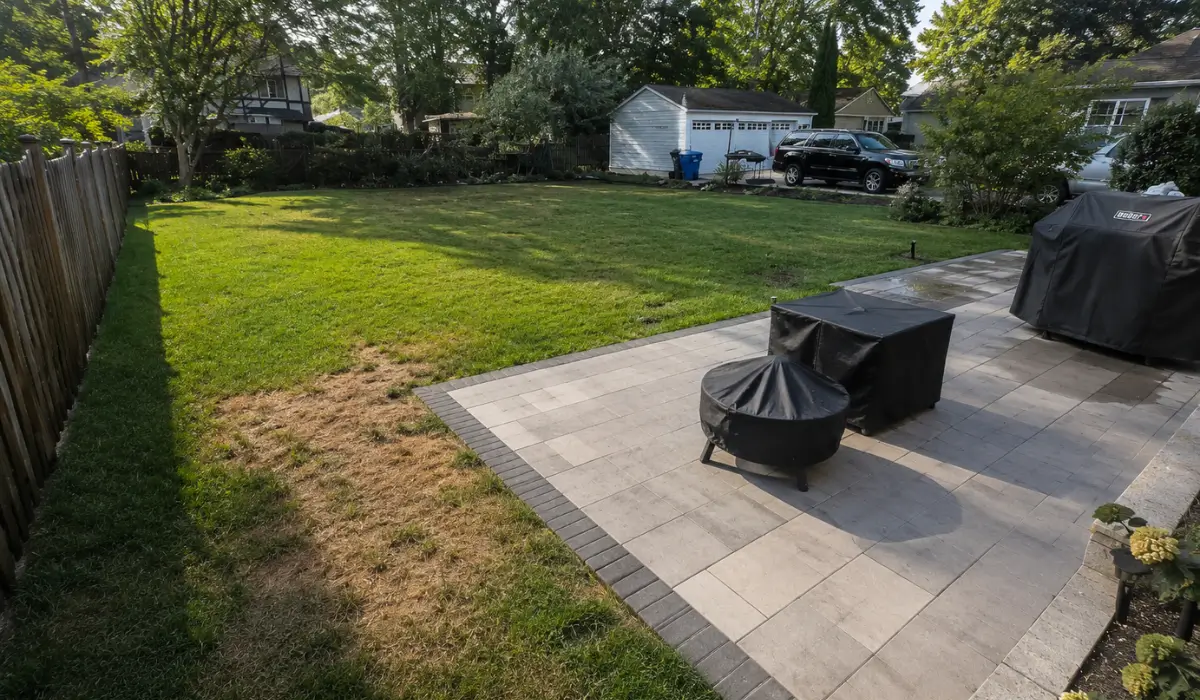
July is when dry spots, stressed plants, and watering problems stop hiding. A July landscape checklist helps homeowners identify what is changing before late-summer conditions put more pressure on the yard. At Tommy Pollina Landscape Company, we often find that July did not create the problem. The heat simply made an irrigation gap, weak turf area, or struggling plant easier to see.
A yard can look healthy in June and show clear warning signs a few weeks later. This eight-task calendar focuses on what to check, what the pattern may mean, and when a repeated problem deserves a closer look.
Quick answer:
In July, check sprinkler coverage, dry lawn areas, mulch depth, damaged growth, weak turf, drainage, plant health, and late-summer risks. The order matters because each week gives you new clues about how the landscape is handling heat and changing moisture.
Why a July Landscape Checklist Matters During Chicago Summers
Mid-summer acts like a stress test for a yard. Grass beside hot pavement may fade first, growing shrubs can block sprinkler spray, and a short, heavy storm may expose a low area that holds water. These patterns tell us more than a general “the yard looks dry” observation.
Many homeowners increase watering as soon as the lawn loses color. Sometimes that is appropriate. In other cases, more water misses the dry area, runs off compacted ground, or keeps an already wet section soaked.
A useful mid-season review looks for patterns such as:
- A dry crescent near the edge of a sprinkler zone
- Turf fading beside concrete but staying green farther away
- Mulch so thin that bare soil is visible
- One shrub wilting while nearby plants remain healthy
- Water collecting in the same low spot after a hard storm
- The same lawn section thinning for a second or third summer
Location, timing, and repetition often tell more of the story than lawn color alone. A problem that returns in the same place each summer deserves a different look from a one-time dry patch.
The pattern helps narrow the cause. A single dry corner and a uniformly faded lawn do not automatically need the same response, even though both may look brown from the kitchen window.
Our landscape problem-solving team looks at how water, turf, plants, and drainage affect one another. That connected view is especially useful in July, when several parts of the yard may show different symptoms at the same time.
Week One: Find Watering Problems Before They Spread
The first week of July is a good time to compare wet and dry areas rather than judging the lawn by color alone. A sprinkler system may be running on schedule while a growing perennial, tilted head, or changed spray pattern leaves part of the yard dry.
We often see this after spring growth fills in. A sprinkler head that had a clear path in May may be spraying into a shrub by July, while the turf behind it receives very little water.
Use this diagnostic checklist during a normal watering cycle:
- Watch where each sprinkler begins and ends its spray.
- Look for mist blowing onto pavement instead of the lawn.
- Compare dry spots with the edges of sprinkler coverage.
- Check whether taller plants are blocking a spray head.
- Notice puddles that form before the rest of the area looks wet.
A crescent-shaped dry patch can point to missed coverage. Water running down a driveway may suggest overspray or a poorly aimed head. Puddling near one zone can mean the soil is taking in water more slowly than it is being applied.
The EPA WaterSense irrigation guidance explains why efficient watering depends on matching irrigation to actual landscape needs. The important homeowner test is still what happens on the property: where the spray lands, how quickly water collects, and which areas remain dry.
Run the system long enough to watch each zone rather than checking only whether the sprinkler heads rise. A working head can still send water in the wrong direction or fail to reach the edge of the turf.
Our guide to sprinkler water waste signs covers more clues homeowners can spot while the system is running.
One of the more useful July lawn tips is simple: study the shape and location of a dry area before changing the watering schedule. The pattern can keep a homeowner from watering the entire yard longer when only one zone needs attention.
Week Two: Prune Damaged Growth Without Adding Heat Stress
By the second week of July, storm damage and broken growth are often easier to separate from healthy summer growth. The goal is not to make every shrub look perfectly shaped. It is to identify branches that are broken, dead, rubbing, or creating a clear safety concern.
A common field scenario starts after a windy storm. A homeowner sees one damaged branch and gives the entire tree or shrub a heavy trim. The damaged wood is removed, but healthy foliage that helped shade the plant is removed too.
Use the July Landscape Checklist to Guide Pruning Decisions
A useful pruning review starts with damage, not appearance. Broken limbs can tear farther, dead growth may hide inside a full canopy, and crossing branches can rub against each other as wind moves them.
Summer pruning also requires restraint. The Morton Arboretum tree pruning guidance provides more detail on pruning decisions and proper cuts for homeowners who need tree-specific information.
A simple four-step review keeps the decision focused:
- Identify clear damage. Look for split, hanging, or dead branches.
- Check the branch location. Note limbs near walks, driveways, roofs, or gathering areas.
- Separate damage from normal growth. Fast summer growth alone is not a reason for heavy pruning.
- Decide whether the work is safely reachable. Large limbs and overhead work need a different level of care.
What we often see is not a lack of effort. It is too much trimming at the wrong moment. Removing healthy growth simply to make a stressed plant look smaller can leave it with less foliage during a hot period.
Our tree trimming services focus on the condition and structure of the plant rather than treating every fast-growing branch as a problem.
Timing still matters after the immediate damage is addressed. Some work can wait until the plant and season are better suited to a larger pruning plan.
Our guide to tree trimming timing explains how season and tree condition affect that decision. Good plant maintenance means knowing what should be removed now and what is better left alone.
Week Three: Decide Whether Weak Turf Can Recover
By mid-July, repeated turf problems usually have a recognizable location. Grass may thin beside a driveway, under a mature tree, along a busy walking route, or in a low area that stays wet after storms.
This is where the July landscape checklist becomes a decision tool rather than a task list. If the same patch fails every summer despite regular watering and reseeding, the site itself may be limiting the grass.
| What You See | Possible Cause | Decision to Consider |
|---|---|---|
| Thin turf under trees | Shade or root competition | Review grass choice and site conditions |
| Fading beside pavement | Reflected heat and faster drying | Check moisture and turf condition |
| Bare path across lawn | Repeated foot traffic | Repair or consider a tougher surface |
| Soft, weak turf in a low area | Poor water movement | Review drainage and grading |
| Repeated failure in one location | Several site limits | Compare repair with another ground cover |
In many real cases, homeowners have already tried more seed and more water before calling us. When the exact same area fails again, we look at shade, traffic, tree roots, drainage, and heat exposure before assuming the lawn simply needs another repair.
The University of Illinois Extension lawn resources provide Illinois-specific turf education. One useful distinction is whether the lawn has a broad health problem or a problem tied to one repeated location.
The location gives us decision support. Turf fading throughout an open, sunny yard presents a different situation from one narrow strip that fails beside pavement every July.
Our patchy lawn solutions explain additional reasons a lawn may lose density.
When the same area struggles year after year, choosing a lawn care contractor near me often comes down to finding someone who will diagnose the cause instead of reseeding the same patch again. Repeated failure deserves a closer look at what the grass is being asked to tolerate.
Tommy Pollina Landscape Company evaluates these conditions as part of our landscape maintenance services.
Natural grass is not always the best answer for every part of a property. A high-traffic side yard, deeply shaded space, or repeatedly damaged section may justify comparing turf repair with artificial turf or another surface. The better choice depends on how the area is used, not on forcing grass into a location where it repeatedly fails.
Week Four: Find the Problems August Heat Will Make Worse
Late July is the time to review conditions that are already trending in the wrong direction. The concern is not simply that August may be hot. Plants and turf that enter the month with weak roots, poor moisture control, or unresolved drainage problems have less room to handle another stressful stretch.
Some Chicagoland properties have dense or clay-heavy soil that absorbs water slowly, especially where foot traffic or past construction has compacted the ground. During a short, hard storm, water may move across the surface and collect in a low area instead of soaking in evenly.
Use a four-part August risk review:
Moisture: Compare areas that dry quickly with areas that remain wet long after watering or rain.
Plant condition: Note plants with ongoing wilt, leaf loss, or decline that is different from nearby plants.
Soil cover: Check whether mulch has thinned enough to expose soil around planting beds.
Drainage: Revisit low spots after a storm and note where water sits or moves toward structures.
The point is to compare conditions, not treat every symptom the same way. A plant that wilts every afternoon but recovers by morning presents a different picture from one that remains wilted and continues losing leaves.
For summer landscaping, late July is also a practical planning point. A single weak plant may need closer monitoring, while several declining plants in the same bed may point to a shared moisture, soil, or site problem.
That distinction matters before replacement planting. Putting a new plant into the same wet, dry, or poorly draining location without checking the cause can repeat the loss.
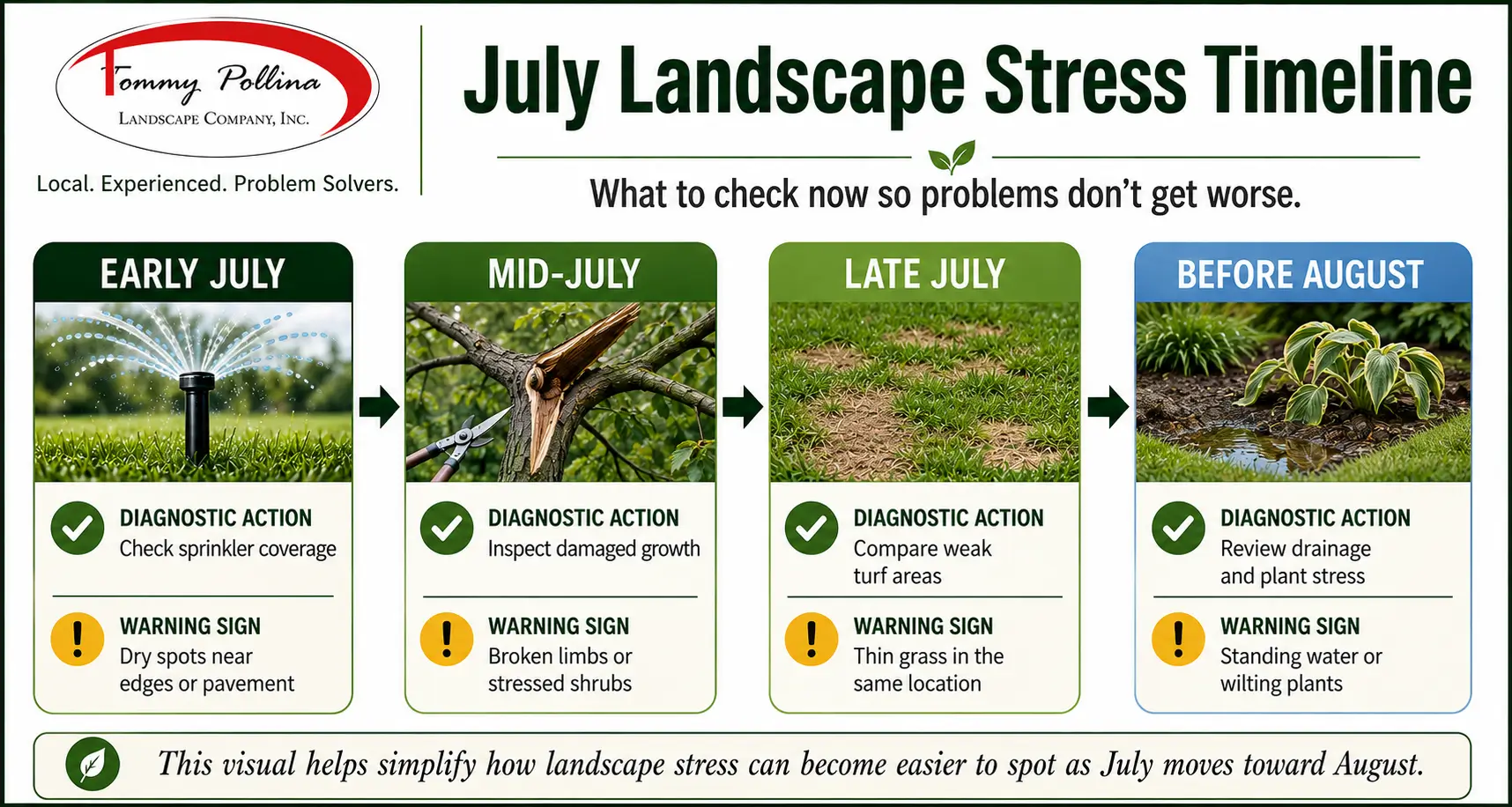
July Landscape Stress Timeline for Healthier Chicago Yards
| What You See | Possible Cause | Decision to Consider |
|---|---|---|
| Thin turf under trees | Shade or root competition | Review grass choice and site conditions |
| Fading beside pavement | Reflected heat and faster drying | Check moisture and turf condition |
| Bare path across lawn | Repeated foot traffic | Repair or consider a tougher surface |
| Soft, weak turf in a low area | Poor water movement | Review drainage and grading |
| Repeated failure in one location | Several site limits | Compare repair with another ground cover |
Mid-Summer Mistakes We See Every Year
Several July problems begin with a reasonable assumption. The mistake happens when the same response is repeated even though the yard keeps showing a different pattern.
Waiting for grass to turn fully brown. Early turf stress may show as a dull color, footprints that stay visible, or blades that do not spring back quickly. Waiting for a large brown patch can make it harder to tell where the problem started.
Watering every problem longer. A missed sprinkler area will still be missed if the system runs another 20 minutes. Meanwhile, sections with good coverage may receive more water than they need.
Trimming for shape after storm damage. One broken branch does not automatically mean the whole plant needs a hard cutback. The first decision is what is damaged and what remains healthy.
Ignoring a repeat location. When water pools, turf thins, or plants decline in the same place each summer, the location is giving useful information. Repeated symptoms often justify a closer look at grading, drainage, shade, traffic, or irrigation coverage.
Based on actual scenarios we see, the most expensive mistake is not missing one weed or delaying one mow. It is treating a recurring site problem as a series of unrelated cosmetic issues. Our local landscaping experience since 1982 has taught us to pay close attention to where a problem returns, when it appears, and what changed around it.
That is also why garden upkeep should include observation. A homeowner who notices where a problem begins has better information than someone trying to remember the yard’s condition after the damage has spread.
Common Mid-Summer Landscape Questions
These are the practical questions that usually follow a July yard review. The answers depend on the pattern and whether the problem has happened before.
Is July Too Late To Improve A Lawn?
No. July can reveal where turf is struggling, but the right response depends on the cause. A small irrigation gap may be corrected now, while a repeatedly failing area may need repair planning for a better seasonal window.
Why Does One Part Of My Lawn Stay Dry?
Compare sun exposure, pavement, tree roots, soil, and sprinkler coverage. A dry area beside concrete may lose moisture faster, while a curved dry patch near a sprinkler edge may point to missed spray.
Can A Stressed Plant Recover?
Some can, but the surrounding conditions matter. We compare the plant with nearby plants and look at moisture, drainage, visible damage, and whether the decline is continuing.
Our common landscaping questions cover other property concerns. The answers can help homeowners separate a routine maintenance issue from a condition that deserves a property-specific review.
Photos and notes about when a problem appears can also make a later conversation more useful. A picture taken after a storm or during a sprinkler cycle may show a pattern that is gone by the time the yard is dry.
Decide What Your Yard Needs Before August
A single dry spot may only need a sprinkler adjustment. The same area failing every July points to a condition worth diagnosing. Repeated problems are where a closer review becomes more useful than another temporary fix.
The best next decision is based on the pattern you found during the month. Watering problems, storm damage, weak turf, and drainage concerns each require a different response, so a blanket treatment can waste time and hide the real cause.
This is the difference between routine care and problem-solving. The yard is giving clues through location, timing, and repetition. Reading those clues makes the next repair or maintenance decision more informed.
Book a Mid-Season Landscape Tune-Up
Repeated landscape stress usually has a cause, even when the first symptom looks small. Since 1982, Tommy Pollina Landscape Company has helped Chicagoland property owners look at water, turf, plants, and grading as connected parts of the yard.
If your July landscape checklist uncovered recurring dry spots, weak turf, or plants that continue to decline, schedule a property review or call (847) 698-6868. We will first look at what is happening on the property, then explain the options that fit the condition we find.
Latest Posts:
- Landscape Lighting Ideas to Make Your Backyard Shine This Summer
- 5 Landscape Design Fixes to Make Before Winter Comes
- Top 5 Spring Planting Mistakes Homeowners Make
- The Ultimate Fall Lawn Care Routine Before the First Frost
- The Best Backyard Upgrades for Memorial Day Hosting
- Drainage Problems in Fall? Why It’s Not Too Late to Fix Them
- Winter Drainage Solutions to Prevent Ice Build-Up Around Glencoe Homes
- Tree Trimming Season: When, Why & Best Time to Trim Trees
- When Should You Book Holiday Lighting Installation? Sooner Than You Think
- Hardscape Maintenance Tips for Icy Winters in Winnetka
- Lawn Looking Patchy? 3 Fixes Before Summer Heat
- How to Winterize an Outdoor Kitchen in Wilmette and Park Ridge
- 6 Must-Have Features for Your Summer Landscaping Makeover
- Signs Your Lawn Has Winter Drainage Problems (And What to Do Now)
- Are Sprinklers Wasting Water? Signs It’s Time for a Check
- Planning Off-Season Landscaping Early for a Smoother Spring Build
- Is It Time to Replace Your Old Patio? 4 Signs to Watch For
- What Happens If You Don’t Remove Snow From Your Lawn?
- How to Protect Your Landscaping From Extreme Summer Heat
- Valentine’s Day Garden Prep: Plants That Bloom Beautifully by May
- Outdoor Living Trends: Mid-Summer Upgrades Worth the Investment
- Backyard Flooding? Why Early Spring Is the Best Time for Drainage Work
- Your July Landscape Checklist: 8 Tasks to Keep It Thriving
- Thinking of a Patio? Why February Is Prime Time for Hardscape Planning
- Fall Starts in August: How to Prep Your Landscape Now
- 3 Landscape Design Ideas to Lock In Before Spring Rush Starts
- Backyard Projects to Finish Before Labor Day
- What to Do First When Prepping Your Lawn for Spring
- Reseed Your Lawn Before Summer Ends: A Lawn Recovery Plan
- Essential Spring Landscaping Services to Book Before April
- When to Book Fall Cleanup (Hint: It’s Earlier Than You Think)
- Why Mulching in April Protects Your Garden All Year Long
- How Outdoor Lighting Boosts Home Value & Safety This Fall
- Outdoor Kitchens in Park Ridge: A Must-Have for Summer
- Evergreens and Shrubs in Glencoe with Cold-Weather Plant Installation
- Functional & Beautiful Retaining Walls for Winnetka Homes
- Transforming Small Backyards in Kenilworth with Hardscaping
- 5 Landscape Design Trends for Glencoe Homeowners in 2025
- French Drain vs. Channel Drain: Which Works Best for Glenview Homes?
- Landscape Drainage Solutions That Actually Work in Winnetka
- Planning a Late Summer Hardscape Installation in Park Ridge
- Outdoor Kitchen Add-Ons Worth the Investment in Glencoe
- We’re Featured on Redfin! Backyard Privacy Tips from Tommy Pollina Landscaping
- Overwatering or Drying? Smart Irrigation System Installations
- Creating Multi-Level Hardscape Designs for Glenview Backyards
- Drainage Upgrades to Prevent Fall Flooding in Park Ridge
- Best Arborvitae Varieties for Privacy in Winnetka and Wilmette
- Designing Outdoor Kitchens with Built-In Fire Features in Glencoe