
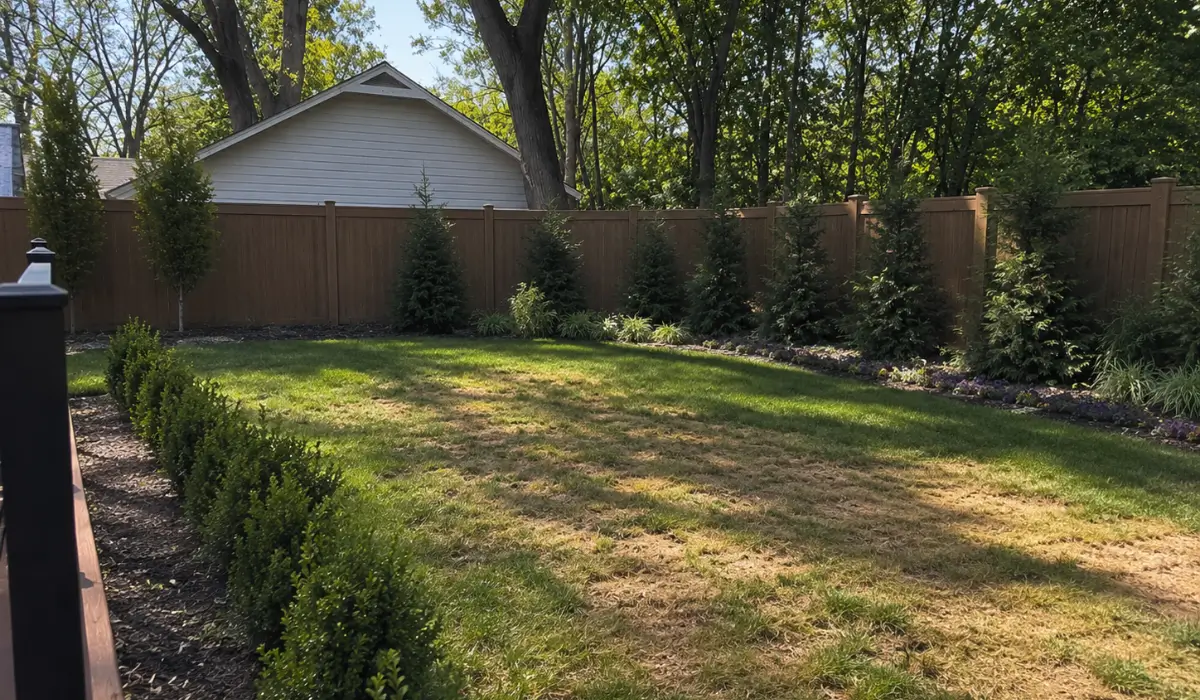
Extreme summer heat can damage lawns, weaken plants, and dry out soil long before homeowners notice visible problems. Protect your landscaping from extreme summer heat by stress-testing your property and identifying vulnerable areas before permanent damage occurs.
Tommy Pollina often sees summer damage develop several weeks before brown grass, wilted leaves, or thinning beds become noticeable. This article works as a landscape stress test that helps homeowners evaluate their own yard and recognize warning signs early.
As you move through each section, compare your property to the examples provided. The more stress points you find, the more likely heat is already affecting your lawn, plantings, soil, irrigation, or drainage.
How to Protect Your Landscaping From Extreme Summer Heat
Heat removes moisture faster than roots can absorb it. Areas with full sun, compacted soil, or newly planted vegetation usually show signs of stress before other sections of the yard.
Use this scorecard as a homeowner assessment. Count how many conditions apply to your property and compare your results to the risk levels below:
| Landscape Condition | Risk Level |
|---|---|
| Full sun exposure | High Risk |
| South-facing beds | High Risk |
| Newly planted shrubs | High Risk |
| Thin lawn coverage | Moderate Risk |
| Sloped areas | Moderate Risk |
| Mature shade trees | Low Risk |
Protect Your Landscaping From Extreme Summer Heat Before Damage Starts
Early stress usually develops below the surface. Roots often struggle before leaves wilt or grass begins changing color.
Based on actual scenarios, landscapes receiving attention during the early stages of stress often recover faster and require fewer repairs during late summer.
Summer Heat Score
- Low Risk: One or fewer high-risk conditions.
- Moderate Risk: Two or three high-risk conditions.
- High Risk: Four or more conditions or visible signs of stress.
A low score usually indicates that the landscape has enough protection to withstand short periods of heat. Moderate and high scores suggest areas that may benefit from additional attention during the hottest weeks of summer.
Properties with multiple high-risk conditions often experience problems earlier in the season. Dry soil, reflected heat, and poor water absorption can create stress even when irrigation systems appear to work properly.
Tommy Pollina Landscape Company regularly evaluates these areas because landscape problems often begin below the surface and spread gradually during summer.
The Parts of Your Yard Most Vulnerable to Summer Heat
Heat rarely affects an entire landscape equally. Certain areas lose moisture faster, receive more sunlight, or contain soil that struggles to hold water.
Walking through your property during the hottest part of the day often reveals stress areas that remain hidden during the morning. The following sections help spot which parts of your landscape may need additional attention.
Lawn Areas
Lawns often show the first signs of stress. Thin grass and compacted soil reduce the ability of roots to absorb moisture during periods of intense heat.
Common July problems include:
- Summer dormancy
- Brown burn spots
- Soil compaction
- Slow recovery
- Thin turf coverage
Dormancy does not always mean the lawn is dead. What we often see is grass entering a temporary survival stage because roots cannot access enough moisture.
Brown spots frequently appear in areas with poor soil conditions or uneven irrigation coverage. Our lawn maintenance services help monitor these conditions before permanent damage develops.
Flower Beds
Flower beds often contain multiple plants competing for available moisture. Shallow roots lose water quickly, especially during long periods of direct sunlight.
Water competition between plants can create stress even when irrigation appears adequate. Root systems closest to the surface usually experience the first signs of heat damage.
The article about spring mulch protection explains how mulch helps regulate soil temperatures and reduce moisture loss.
Trees and Plantings
Recently planted trees require consistent moisture while roots establish themselves. Mature trees generally tolerate summer heat because their roots reach deeper into the soil.
Plantings surrounding young trees often struggle because they compete for available water. Plant health monitoring helps identify these stress points before larger problems develop.
Proper summer plant care becomes especially important during prolonged heat. Water needs, soil moisture, and sunlight exposure can vary significantly between different plantings.
Hardscape Areas
Brick patios, driveways, and walkways absorb heat throughout the day. Nearby plants often experience additional stress because reflected heat increases temperatures around the root zone.
Patio edges and planting beds beside sidewalks frequently become warmer than other areas of the property. These locations often require additional moisture and protection.
Irrigation Zones
Uneven sprinkler coverage creates dry areas that may remain unnoticed during spring. Hot weather frequently reveals irrigation gaps that stay hidden during cooler months.
The article covering sprinkler warning signs discusses several irrigation issues that commonly appear during hot weather.
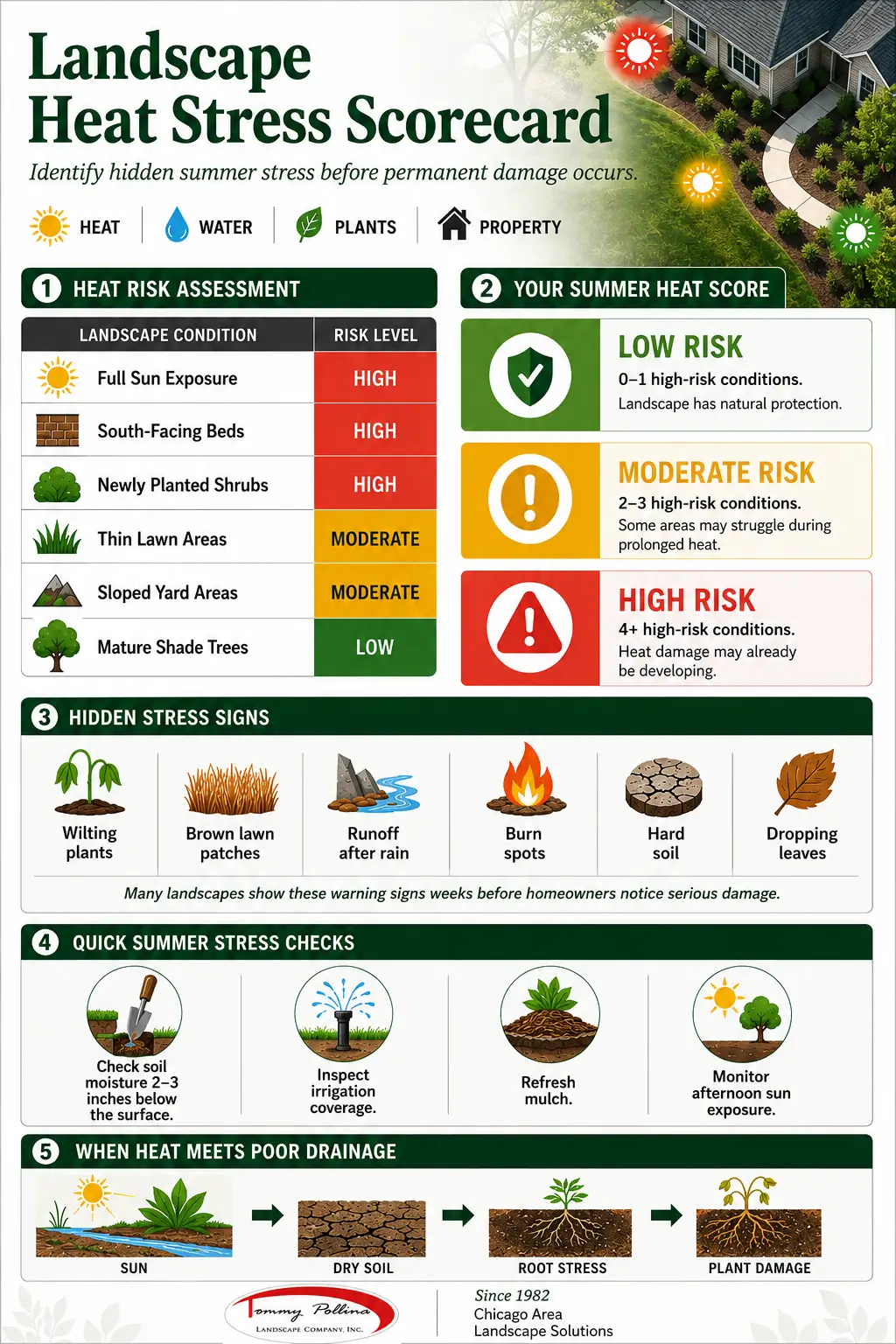
Landscape Heat Stress Scorecard for Summer Yard Protection
Small Changes That Make a Big Difference
Small improvements often help landscapes perform better during extreme heat. Water timing, soil conditions, and ground protection all influence how plants handle summer stress.
Morning watering allows moisture to reach roots before temperatures rise. Watering during the hottest part of the day increases evaporation and reduces the amount of water reaching the soil.
Small improvements that protect your landscaping from extreme summer heat often begin with better soil conditions and consistent moisture. Improving soil conditions also helps retain moisture during hot weather.
Adding compost or organic material allows soil to hold water longer and reduces stress around roots. Planting beds containing organic material often remain moist longer than compacted beds with hard soil.
Certain drought landscaping strategies and drought-tolerant plants improve long-term performance during long hot stretches. Native grasses, sedum, coneflowers, and black-eyed Susans often require less water once established. These approaches reduce water demands while helping landscapes remain healthier during dry weather.
Helpful practices include:
- Refresh mulch around plants.
- Check soil moisture two to three inches below the surface.
- Reduce traffic on stressed lawns.
- Monitor newly planted areas.
- Watch irrigation coverage.
- Provide temporary shade protection.
Dry soil below the surface is a stronger warning sign than dry soil on top because roots depend on moisture deeper in the ground.
Temporary shade cloth, patio umbrellas, or nearby container plants can help protect vulnerable flowers and newly installed shrubs during periods of intense afternoon heat. Beds receiving strong western sunlight often benefit from several hours of afternoon shade because it reduces leaf scorch and moisture loss.
Water-saving tips become increasingly important during extended heat because excessive watering may create shallow roots and weaker plants.
Many homeowners assume more water automatically solves every problem. In many real cases, poor soil conditions prevent moisture from reaching the roots even when irrigation increases.
24-Hour Summer Plant Survival Timeline
This visual helps simplify how heat and moisture affect a landscape throughout a typical summer day.
| Time of Day | Landscape Condition |
|---|---|
| Morning | Soil moisture remains highest |
| Midday | Surface moisture begins falling |
| Afternoon | Heat stress reaches its peak |
| Evening | Plants begin recovering |
| Overnight | Root recovery continues |
Properties that remain dry during the morning often experience stress earlier in the day. Observing these patterns helps homeowners identify areas requiring additional attention.
Healthy landscapes recover overnight. Stressed landscapes often remain under pressure even after temperatures begin dropping.
When Heat Problems Become Drainage Problems
Dry plants and drainage issues may appear unrelated. Hard soil frequently prevents water from soaking into the ground, causing runoff while roots remain dry.
What we often see involves water moving across the property instead of entering the soil. Areas appearing wet after rainfall may still contain roots suffering from moisture stress.
Homeowners searching for “drainage services near me ” or “drainage contractor near me” often discover that summer damage begins below the surface. Water running across hard soil leaves roots dry even after rainfall or irrigation.
Compacted ground sheds water instead of absorbing it. Root dehydration may occur during hot weather because moisture never reaches the areas where plants need it most.
Hidden drainage issues can make it difficult to protect your landscaping from extreme summer heat, even when watering schedules remain consistent.
Poor grading, compacted soil, and runoff often contribute to these problems. Some homeowners discover that heat damage is actually a water movement issue.
Homeowners interested in improving irrigation efficiency can also review the EPA WaterSense program for additional water conservation recommendations.
Tommy Pollina Landscape Company regularly corrects drainage problems that first become noticeable during periods of extreme heat because moisture below the surface determines plant health above ground.
What Professional Summer Maintenance Looks Like
Summer maintenance involves much more than mowing grass. Soil conditions, irrigation performance, plant health, and drainage all influence how landscapes perform during hot weather.
Use this section as a summer stress check. Any item that matches your property may indicate an area that deserves additional attention.
Professional evaluations commonly include:
- Lawn condition checks
- Irrigation inspections
- Soil evaluations
- Mulch assessments
- Plant condition evaluations
- Drainage observations
These evaluations help identify smaller concerns before they affect larger sections of the property. Early corrections often reduce repair costs and improve long-term landscape health.
The goal is not to treat every part of the yard the same. The goal is to determine which areas are experiencing the greatest stress.
Homeowners searching for a landscape design company near me often discover that successful landscapes require ongoing maintenance, irrigation evaluations, and plant health support throughout the summer.
Evaluating planting beds and seasonal plantings also plays an important role during hot weather. Proper watering adjustments and soil conditions help protect shrubs, perennials, and ornamental plants.
Our team frequently combines landscape maintenance services with irrigation inspections, mulch evaluations, and plant condition assessments to uncover developing issues while solutions remain straightforward.
Our complete landscaping services help identify problems while solutions remain simple and manageable.
The article discussing patchy lawn repair explains why some sections decline while nearby areas remain healthy.
Summer Maintenance Scenarios
A newly planted tree may require additional moisture while a mature tree remains healthy. One flower bed may struggle because of reflected heat while another nearby bed performs well.
These differences explain why every landscape responds differently during extreme heat. Effective maintenance focuses on the specific areas experiencing the most stress.
Common Questions About Summer Heat
Why do plants wilt after watering?
Water may never reach the roots because compacted soil prevents proper absorption. Surface moisture does not always indicate healthy soil conditions.
Can mulch help during summer?
Yes. mulch benefits include lower soil temperatures, reduced evaporation, and improved moisture retention.
Why does only one section of the lawn struggle?
Different parts of the property receive varying amounts of sunlight, heat, and water. Irrigation coverage also differs from one area to another.
Can drainage problems cause heat damage?
Yes. Poor drainage can prevent roots from receiving adequate moisture during periods of extreme heat.
Does grass always recover?
Some lawns recover during cooler weather while severely stressed areas may require additional attention.
Homeowners interested in regional growing conditions can reference the USDA Plant Hardiness Zone Map for additional planting information.
Summer Stress Requires Early Decisions
Small warning signs often develop into larger problems when hot weather continues for several weeks. Weak grass, dry beds, and struggling plants usually indicate issues below the surface that need attention.
Protect your landscaping from extreme summer heat by recognizing these warning signs and understanding how soil, water, drainage, and plant health work together.
Tommy Pollina Landscape Company continues helping homeowners understand the factors affecting their property so small concerns do not become larger landscape problems.
Schedule a Mid-Summer Landscape Health Assessment
Summer stress rarely improves on its own. Problems beginning with dry soil or thinning grass frequently affect larger portions of the landscape as temperatures remain high.
Our team has spent decades evaluating lawns, planting beds, irrigation systems, and drainage conditions throughout the Chicago area. Professional guidance often helps homeowners avoid unnecessary repairs and costly replacements.
Landscape problems become easier to solve when identified early. Schedule a landscape assessment to receive practical recommendations designed specifically for your property. You may also call (847) 698-6868 for additional guidance and reassurance before summer damage becomes permanent.
Latest Posts:
- Landscape Lighting Ideas to Make Your Backyard Shine This Summer
- 5 Landscape Design Fixes to Make Before Winter Comes
- Top 5 Spring Planting Mistakes Homeowners Make
- The Ultimate Fall Lawn Care Routine Before the First Frost
- The Best Backyard Upgrades for Memorial Day Hosting
- Drainage Problems in Fall? Why It’s Not Too Late to Fix Them
- Winter Drainage Solutions to Prevent Ice Build-Up Around Glencoe Homes
- Tree Trimming Season: When, Why & Best Time to Trim Trees
- When Should You Book Holiday Lighting Installation? Sooner Than You Think
- Hardscape Maintenance Tips for Icy Winters in Winnetka
- Lawn Looking Patchy? 3 Fixes Before Summer Heat
- How to Winterize an Outdoor Kitchen in Wilmette and Park Ridge
- 6 Must-Have Features for Your Summer Landscaping Makeover
- Signs Your Lawn Has Winter Drainage Problems (And What to Do Now)
- Are Sprinklers Wasting Water? Signs It’s Time for a Check
- Planning Off-Season Landscaping Early for a Smoother Spring Build
- Is It Time to Replace Your Old Patio? 4 Signs to Watch For
- What Happens If You Don’t Remove Snow From Your Lawn?
- How to Protect Your Landscaping From Extreme Summer Heat
- Valentine’s Day Garden Prep: Plants That Bloom Beautifully by May
- Outdoor Living Trends: Mid-Summer Upgrades Worth the Investment
- Backyard Flooding? Why Early Spring Is the Best Time for Drainage Work
- Your July Landscape Checklist: 8 Tasks to Keep It Thriving
- Thinking of a Patio? Why February Is Prime Time for Hardscape Planning
- Fall Starts in August: How to Prep Your Landscape Now
- 3 Landscape Design Ideas to Lock In Before Spring Rush Starts
- Backyard Projects to Finish Before Labor Day
- What to Do First When Prepping Your Lawn for Spring
- Reseed Your Lawn Before Summer Ends: A Lawn Recovery Plan
- Essential Spring Landscaping Services to Book Before April
- When to Book Fall Cleanup (Hint: It’s Earlier Than You Think)
- Why Mulching in April Protects Your Garden All Year Long
- How Outdoor Lighting Boosts Home Value & Safety This Fall
- Outdoor Kitchens in Park Ridge: A Must-Have for Summer
- Evergreens and Shrubs in Glencoe with Cold-Weather Plant Installation
- Functional & Beautiful Retaining Walls for Winnetka Homes
- Transforming Small Backyards in Kenilworth with Hardscaping
- 5 Landscape Design Trends for Glencoe Homeowners in 2025
- French Drain vs. Channel Drain: Which Works Best for Glenview Homes?
- Landscape Drainage Solutions That Actually Work in Winnetka
- Planning a Late Summer Hardscape Installation in Park Ridge
- Outdoor Kitchen Add-Ons Worth the Investment in Glencoe
- We’re Featured on Redfin! Backyard Privacy Tips from Tommy Pollina Landscaping
- Overwatering or Drying? Smart Irrigation System Installations
- Creating Multi-Level Hardscape Designs for Glenview Backyards
- Drainage Upgrades to Prevent Fall Flooding in Park Ridge
- Best Arborvitae Varieties for Privacy in Winnetka and Wilmette
- Designing Outdoor Kitchens with Built-In Fire Features in Glencoe