
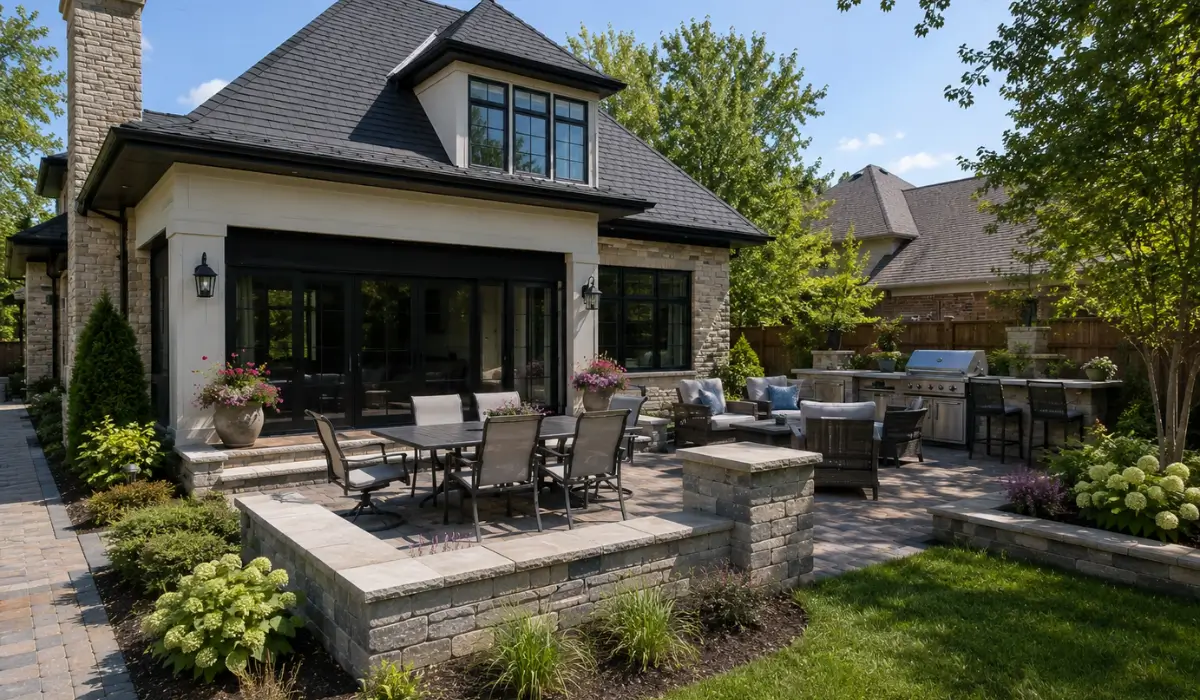
Not every backyard upgrade delivers the same value. If you’re investing in your property this summer, the strongest outdoor living trends are features people continue to use, enjoy, and appreciate long after installation – especially outdoor kitchens, fire pits, putting greens, and lighting.
July and August make the differences between useful features and overlooked ones easy to spot. A dark patio may empty after dinner, an isolated fire feature may feel disconnected, and an oversized installation can take up valuable yard space without improving everyday life.
Our work at Tommy Pollina Landscape Company starts with how the property needs to function. Comfortable gathering areas can change how a household experiences outdoor living, but appearance alone does not determine whether a project succeeds.
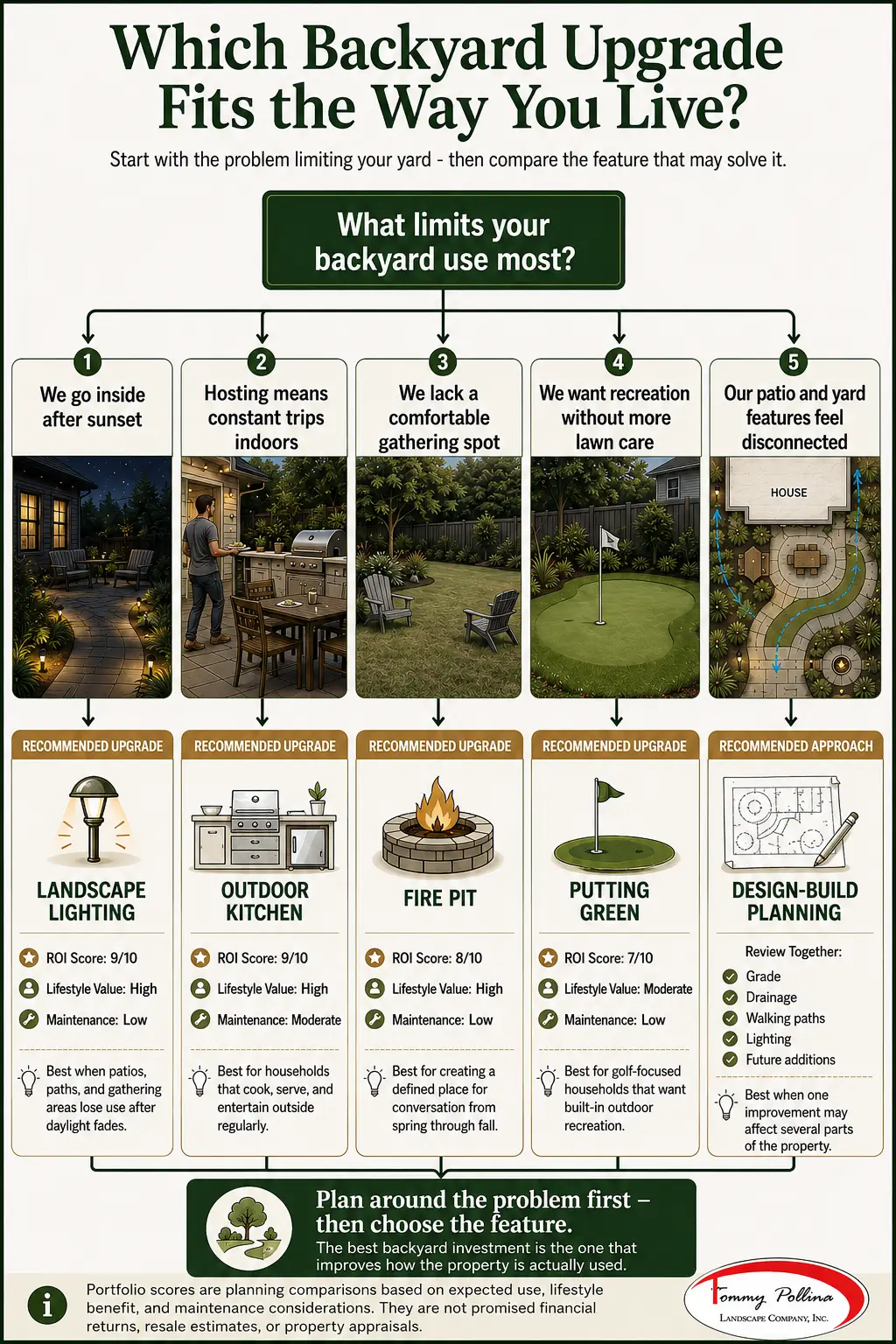
We use a Backyard Investment Portfolio approach in this guide. Each upgrade is considered by how regularly it may be used, the lifestyle benefit it adds, and the level of upkeep it can require. The ROI scores are editorial planning scores for comparison – not promised financial returns, resale estimates, or property appraisals.
Quick Answer: The strongest mid summer backyard investments in this guide are outdoor kitchens, fire pits, putting greens, and lighting. Their value comes from supporting regular activities, improving comfort, and giving people more reasons to use the yard during July and August.
A backyard can look finished and still fail to fit the household using it. Daily routines reveal whether an investment belongs in the yard or simply looked appealing during the planning stage.
July and August provide a useful test. Cooking outside becomes inconvenient without prep space. A patio may lose its appeal when direct sun reaches the dining table. Steps and paths can become difficult to see once daylight fades. These small frustrations affect how long people stay outside.
Several clients tell us the most successful features become part of normal life rather than special occasions. For broader industry education on landscape planning and professional practices, the National Association of Landscape Professionals offers resources for property owners and landscape professionals.
Backyard Investment Portfolio Scorecard
| Feature | ROI Score | Lifestyle Value | Maintenance Score | Best Fit |
|---|---|---|---|---|
| Outdoor Kitchen | 9/10 | High | Moderate | Entertaining |
| Fire Pit | 8/10 | High | Low | Small Yards |
| Putting Green | 7/10 | Moderate |
This visual helps simplify how different outdoor upgrades compare in terms of enjoyment, upkeep, and long-term planning value.
The scores reflect a simple planning question: how much practical benefit can a feature provide compared with the care it asks from the property owner? Lighting earns a high score because several parts of a yard can benefit from one coordinated plan. A putting green scores differently because its lifestyle value depends more heavily on who will use it.
In many real cases, a focused improvement serves a family better than a larger project filled with disconnected features. The scorecard is not a substitute for an on-site review. It is a way to narrow the choices before design decisions begin.
Outdoor Living Trends That Support Better Entertaining
A summer gathering becomes harder when food preparation, seating, drinks, and shade are scattered across the property. The better entertainment zone keeps those activities connected without making the patio feel crowded.
A client may begin by asking for a larger patio. Once we look at the way guests move between the house, grill, dining table, and lawn, the real need may be better circulation rather than more square footage. People searching for a patio builder near me may benefit from looking beyond patio size and considering how the entire area will function on a warm July evening.
Our hardscape installation services support patios, steps, retaining walls, and other built elements that can form the base of an entertainment area. Material selection matters, but grade, drainage, walking paths, and the location of future features also affect the finished result.
Designing Spaces Around Outdoor Living Trends
Outdoor kitchens earn a 9/10 portfolio score when a family hosts regularly because they reduce trips between the yard and indoor kitchen. Their moderate maintenance score reflects a practical reality: cooking surfaces, counters, appliances, and storage areas still need routine cleaning and seasonal care.
A family comparing outdoor landscaping services may initially focus on the grill. We look at the working area around it. Prep space needs to be comfortable, guests need room to pass, and hot cooking equipment should not interrupt the main seating path.
A qualified outdoor kitchens contractor should also account for the features that make the kitchen easier to use:
- Prep stations provide a dedicated area for food preparation and serving.
- Beverage centers keep cold drinks close to the dining and seating areas.
- Covered dining spaces add shade during hot July and August afternoons.
- Durable hardscape surfaces support cooking equipment and regular foot traffic.
Design Build planning connects these choices before installation begins. A patio extension can change the way water moves across a yard. A kitchen can change walking patterns. Lighting routes, electrical needs, shade, and possible future additions are easier to plan before hardscape is complete.
Our backyard entertaining ideas show how seating and hosting features can support the same outdoor area without competing for space.
In real projects, we see compact entertainment zones outperform oversized layouts when the smaller design places cooking, shade, and seating where people naturally gather. The investment is not just the kitchen equipment – it is the way the whole area works during a normal dinner, a weekend cookout, or a late-summer visit with friends.
Staycation Features for Spring Through Fall Use
A yard does not need to imitate a resort to provide recreation close to home. Fire features and activity areas work best when they give a family a clear reason to step outside on an ordinary evening.
Fire pits earn an 8/10 portfolio score because they can support gatherings from spring through fall with relatively low routine upkeep. Their use may be less consistent than lighting, but the lifestyle value can be high for people who enjoy conversation, cooler evenings, and informal seating.
A compact fire area can also fit a smaller property without taking over the lawn. The basic benefits are easy to compare:
- Spring through fall enjoyment
- A defined family gathering space
- Comfortable evening use
- Lower routine care than a full outdoor kitchen
Placement makes the difference. A fire feature tucked into a remote corner may look appealing in a design image but feel inconvenient in practice. Seating distance, nearby paths, wind exposure, and the connection to the patio all affect whether people actually gather there.
Our decades of landscape work have shown us that a simple feature can become the center of a yard when it fits a family’s habits. The University of Illinois Extension also provides Illinois-focused horticulture and seasonal landscape education for property owners who want to better understand local growing and yard conditions.
Putting Greens and Active Recreation
Custom putting greens offer built-in recreation for suburban properties where a family wants an activity area without caring for another section of traditional lawn. Their 7/10 portfolio score reflects strong value for golf-focused clients, while the moderate lifestyle rating recognizes that the feature is more personal than a patio or lighting plan.
Someone considering a turf installer may be thinking mainly about mowing and watering. For a putting green, the more important questions include usable dimensions, practice goals, surrounding grade, ball containment, and how the green connects to seating or other recreation areas.
We have seen clients choose a smaller putting area because it leaves room for other uses. That can be a better fit than turning a large section of the property into one activity zone. Our company experience and history reflects a problem-solving approach shaped by landscape work since 1982.
Low maintenance does not mean no maintenance. Debris removal, surface brushing, edge checks, and periodic care may still be needed to keep a residential putting green clean and performing as intended.
The better recreation plan respects the rest of the yard. A putting green beside comfortable seating may support practice and conversation, while thoughtful placement can preserve lawn space for children, pets, or larger gatherings. That flexibility is why property use matters more than copying a trend.
Evening Spaces Need a Layered Lighting Plan
A well-built patio can become quiet as soon as daylight fades. Lighting earns a 9/10 portfolio score because one coordinated system can support paths, steps, patios, entrances, and focal areas while requiring relatively little day-to-day attention.
Proper landscape lighting is not about making the yard as bright as an indoor room. The goal is to place light where movement, gathering, and visual focus require it. One bright fixture can create glare while leaving nearby steps or paths difficult to read.
A layered plan gives each light a clear job instead of asking one bright fixture to handle the entire yard:
- Pathway lighting defines walking routes and helps people follow changes in direction.
- Patio lighting supports dining and conversation without washing the seating area in harsh light.
- Accent lighting draws attention to selected trees, walls, or landscape features.
- Entry lighting improves visibility where people arrive or move between the house and yard.
Fixture position matters as much as fixture style. Light aimed into a seating area can feel harsh, while a carefully placed source can define a path or draw attention to a tree without dominating the view. The American Society of Landscape Architects is a broader professional resource for landscape architecture and outdoor design topics.
Property owners reviewing our backyard lighting ideas can see why pathway, accent, and patio lighting serve different roles within one yard.
Based on actual scenarios, we have seen patios gain a second period of use after dinner once the lighting plan supports conversation and movement without overwhelming the space. That is the real investment case for lighting – it can make features already on the property useful for more hours of the day.
A useful lighting plan also considers change. Plants grow, seating moves, and gathering areas may gain new features later. Planning fixture locations around the wider yard can reduce dark gaps and poorly aimed light as the landscape develops.
Choosing the Right Upgrade for Your Property
The right summer project depends on lot size, family routines, and the problem the property needs to solve. A feature that fits a large estate may consume too much room on a small lot, while a compact patio plan may not serve a property built for larger gatherings.
Small lots usually benefit from features with more than one purpose. Medium properties may have enough room to separate cooking and seating while keeping them connected. A large estate property can support recreation and entertainment zones, but those areas still need a logical relationship.
Some families also prefer phased work. A property owner comparing an affordable landscaping company near me may be balancing a larger backyard vision with the budget available for the first phase. Phasing can work well when the initial project anticipates later lighting, hardscape, or recreation additions.
Backyard Investment Portfolio Guide for Smarter Upgrade Decisions
| Property Type | Recommended Starting Point |
Planning Reason |
|---|---|---|
| Small Lot | Fire Feature | Creates a defined gathering area without consuming the full yard |
| Medium Lot | Outdoor Kitchen | Supports dining and hosting within a connected patio zone |
| Large Estate Property | Putting Green | Adds recreation while leaving room for other landscape uses |
| Entertainment Property | Lighting | Extends the use of patios, paths, and gathering areas |
| Active Family Yard | Multi-Use Patio | Supports seating, meals, and flexible activities |
The matrix is a starting point, not a rigid rule. A small lot used for frequent dinners may justify a compact outdoor kitchen. A large property owned by someone who rarely entertains may gain more from lighting and a quiet seating area than an expansive cooking zone.
Lot size also tells only part of the story. Two medium properties may need different starting points because one has heavy afternoon sun while the other has a steep grade, limited equipment access, or existing hardscape that affects the design. Those site conditions can change project scope before personal style enters the discussion.
A priority framework prevents the trend itself from making the decision. The feature should solve the strongest need first. Once that need is clear, size, materials, maintenance, and future additions become easier to evaluate.
Our landscape service options cover design, hardscape, lighting, and other work that may become part of a phased property plan. Looking at the wider service need can help prevent one project from limiting the next.
Our summer landscape improvements offer more examples of seasonal changes that can improve comfort and appearance. A July or August project discussion can also reveal which parts of the yard are currently too hot, too dark, difficult to reach, or simply ignored.
Planning Improvements That Last
Successful Design Build work treats the yard as a connected system. Retaining wall placement can affect usable space. Mature shrubs and trees can change sightlines or block light. Future irrigation routes may also conflict with finished hardscape when those systems are planned separately.
Around Chicago, summer downpours and winter freeze-thaw conditions give grade, drainage, and hardscape planning added importance. A feature should fit the site conditions as well as the activity it is meant to support.
What we often see is a client arriving with one requested feature and describing two or three related frustrations during the on-site meeting. The request may be a patio, but the real concerns include standing water near the seating area, no shade during dinner, and a dark route back to the house.
That diagnostic step helps us separate the wanted feature from the property problem. It also reduces the chance of completing one improvement and then cutting into finished work to accommodate another system later.
Good planning does not mean every feature needs to be installed at once. It means the first phase should respect what may happen next. That approach gives the property room to change without treating each project as an isolated decision.
Make the Summer Investment Fit the Way You Live
The best outdoor living trends are not automatically the newest or largest ideas. The stronger investment is the one that addresses how the property is used during July and August and continues to make sense after summer ends.
A family that hosts twice a week may receive more lifestyle value from an outdoor kitchen than a putting green. Someone who already loves the patio but goes inside after sunset may benefit more from lighting. A family with limited space may find that a well-placed fire feature creates the gathering area the yard was missing.
The Backyard Investment Portfolio framework keeps the decision practical: compare use, lifestyle value, and maintenance before comparing appearances. That does not remove personal preference from design. It gives personal preference a clearer structure.
Readers who still have questions about project planning, estimates, and landscape work can review our landscape questions and answers before discussing a property in detail.
A good summer upgrade should make the next use of the yard easier to imagine. The final action is to identify the activity your current yard handles poorly – cooking, gathering, recreation, or evening use – and use that problem as the starting point for the design.
Request a Summer Design Consultation
A backyard feature can look impressive and still be the wrong investment for the property. The better decision starts with the yard, the family’s routines, and the systems that need to work together.
Since 1982, our team has worked with residential and commercial landscape problems involving design, drainage, hardscape, plant material, lighting, and maintenance. That experience shapes the way we look at a new project before recommending a solution.
Property owners ready to compare mid-summer upgrade options can schedule a design consultation with our team. A conversation and on-site review can help clarify which feature fits the property and which ideas may be better saved for a later phase.
For direct guidance, call our landscape specialists at (847) 698-6868. We help local families plan summer outdoor improvements around real property needs, so the finished yard feels practical, comfortable, and worth using year after year.
Latest Posts:
- Landscape Lighting Ideas to Make Your Backyard Shine This Summer
- Top 5 Spring Planting Mistakes Homeowners Make
- The Best Backyard Upgrades for Memorial Day Hosting
- Winter Drainage Solutions to Prevent Ice Build-Up Around Glencoe Homes
- Tree Trimming Season: When, Why & Best Time to Trim Trees
- Hardscape Maintenance Tips for Icy Winters in Winnetka
- Lawn Looking Patchy? 3 Fixes Before Summer Heat
- Winterizing Outdoor Kitchens in Wilmette & Park Ridge
- 6 Must-Have Features for Your Summer Landscaping Makeover
- Signs Your Lawn Has Winter Drainage Problems (And What to Do Now)
- Are Sprinklers Wasting Water? Signs It’s Time for a Check
- Planning Off-Season Landscaping Early for a Smoother Spring Build
- Is It Time to Replace Your Old Patio? 4 Signs to Watch For
- What Happens If You Don’t Remove Snow From Your Lawn?
- How to Protect Your Landscaping From Extreme Summer Heat
- Valentine’s Day Garden Prep: Plants That Bloom Beautifully by May
- Outdoor Living Trends: Mid-Summer Upgrades Worth the Investment
- Backyard Flooding? Why Early Spring Is the Best Time for Drainage Work
- Your July Landscape Checklist: 8 Tasks to Keep It Thriving
- Thinking of a Patio? Why February Is Prime Time for Hardscape Planning
- 3 Landscape Design Ideas to Lock In Before Spring Rush Starts
- What to Do First When Prepping Your Lawn for Spring
- Essential Spring Landscaping Services to Book Before April
- Why Mulching in April Protects Your Garden All Year Long
- Outdoor Kitchens in Park Ridge: A Must-Have for Summer
- Evergreens and Shrubs in Glencoe with Cold-Weather Plant Installation
- Functional & Beautiful Retaining Walls for Winnetka Homes
- Transforming Small Backyards in Kenilworth with Hardscaping
- 5 Landscape Design Trends for Glencoe Homeowners in 2025
- French Drain vs. Channel Drain: Which Works Best for Glenview Homes?
- Landscape Drainage Solutions That Actually Work in Winnetka
- Planning a Late Summer Hardscape Installation in Park Ridge
- Outdoor Kitchen Add-Ons Worth the Investment in Glencoe
- We’re Featured on Redfin! Backyard Privacy Tips from Tommy Pollina Landscaping
- Overwatering or Drying? Smart Irrigation System Installations
- Creating Multi-Level Hardscape Designs for Glenview Backyards
- Drainage Upgrades to Prevent Fall Flooding in Park Ridge
- Best Arborvitae Varieties for Privacy in Winnetka & Wilmette
- Designing Outdoor Kitchens with Built-In Fire Features in Glencoe
- Retaining Wall Designs to Manage Slopes in Kenilworth
- Landscape Installation Ideas to Boost Curb Appeal in Lake Forest
- Fall Drainage Maintenance Checklist for Glenview Homeowners
- The Best Time for Arborvitae Installation in Kenilworth & Glencoe
- Boost Curb Appeal in Wilmette: Combine Hardscape and Plantings Today
- Choosing the Right Hardscape Material for Wilmette Backyards
- Drainage Solutions to Protect Foundations in Winnetka Homes
- Yard Drainage Problems in Glenview: What to Watch for This Spring
- Outdoor Kitchen Lighting and Heating Upgrades for Fall Entertaining