
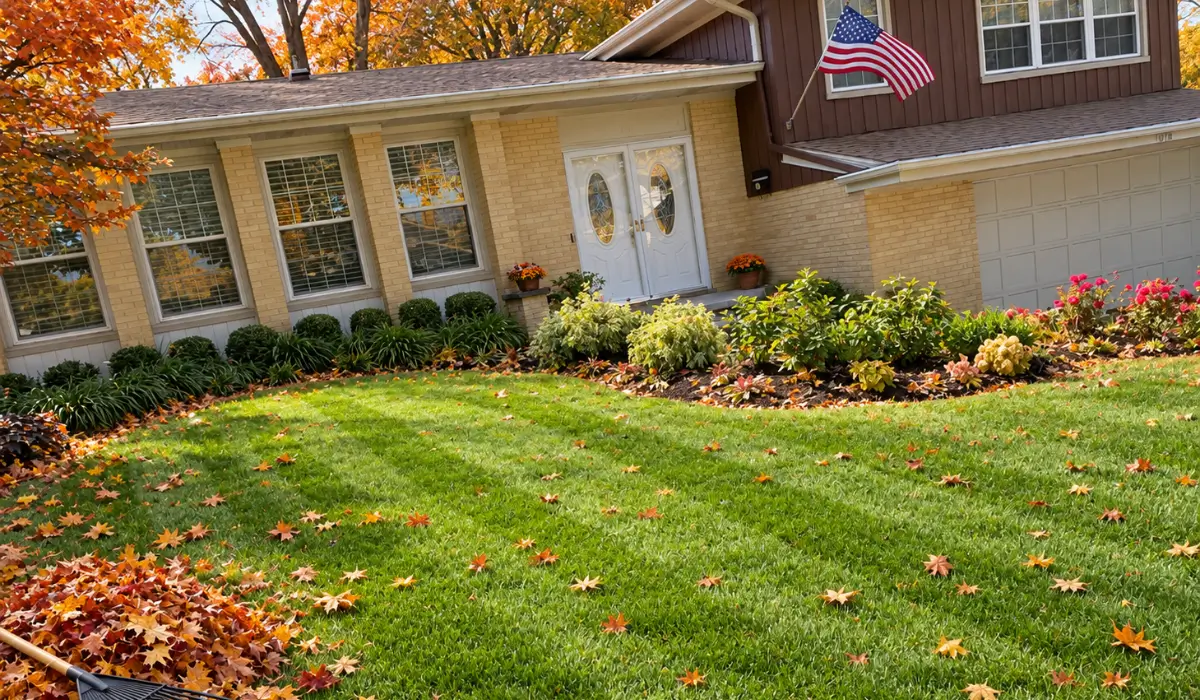
The weeks before the first frost can affect how your lawn handles winter and returns in spring. A practical fall lawn care routine uses this remaining time to support roots, manage leaves, address problem areas, and prepare irrigation for freezing weather.
Thin turf, standing water, compacted soil, and uneven watering may have different or connected causes. Tommy Pollina Landscape Company has served residential and commercial properties since 1982, and our landscaping experience considers how turf, soil, drainage, irrigation, and surrounding plants work together.
The countdown starts four weeks before frost with a close look at your lawn.
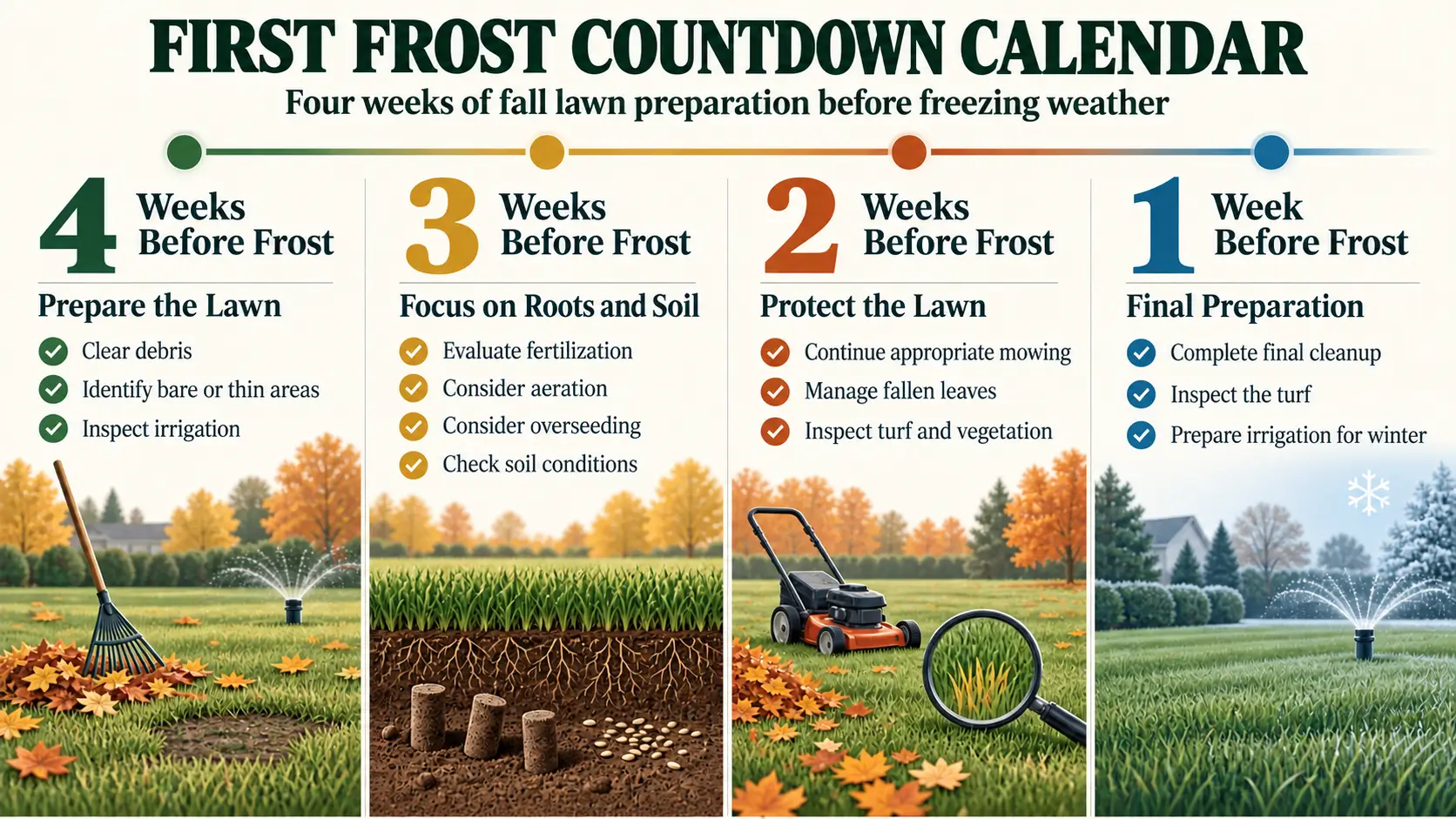
First Frost Countdown Calendar for Fall Lawn Care
Four Weeks Before Frost: Prepare the Lawn
Start by checking the lawn before deciding what work it needs. Remove leaves, branches, and other debris so problem areas are easier to see.
Focus on three conditions:
- Debris: Clear material that covers the turf or holds moisture against it.
- Bare and thin areas: Note locations affected by wear, shade, compaction, or poor watering.
- Irrigation: Check for dry areas, saturated soil, and uneven sprinkler coverage.
Look for patterns across the property. A dry patch may point to uneven irrigation coverage, while an area that stays wet may involve drainage, grading, compacted soil, or excess watering. Adding more water without identifying the cause can leave the underlying problem unchanged.
Bare spots need enough time for new grass to establish before colder conditions slow growth. Our late-summer reseeding advice addresses timing for establishing new turf before colder weather. Some fall landscape preparation may need to begin even earlier when the property has several seasonal needs.
Three Weeks Before Frost: Root Development With Fall Lawn Care
About three weeks before frost, shift attention below the grass blades. Fertilization, aeration, overseeding, and soil improvement should respond to the lawn’s condition rather than follow the same routine on every property.
Fertilization: Timing depends on turf condition, weather, and the product being used. Applying more fertilizer is not automatically better. University of Illinois information on lawn fertilization timing supports matching applications to turf needs and suitable seasonal conditions.
Aeration and overseeding: Compacted soil can restrict the movement of air and water around grass roots. Core aeration removes small plugs of soil to create openings. Where timing and growing conditions are suitable, overseeding can help fill thin areas. University of Illinois information on lawn aeration and overseeding supports these practices for cool-season turf.
Soil and drainage: Aeration does not solve every wet area. Recurring standing water can also involve grading, drainage, or irrigation. Properties receiving landscape maintenance services benefit from considering these conditions together instead of treating only the visible turf problem.
“Fall isn’t the end of lawn care season. It’s the beginning of next year’s lawn.”
Two Weeks Before Frost: Protection
Two weeks before frost, the priority shifts toward protecting the turf. Concentrate on mowing, leaf control, visible turf problems, and vegetation that needs trimming.
Mowing: Continue mowing while the grass is actively growing, but avoid cutting it extremely short simply because winter is approaching. Removing too much grass at once can add stress.
Leaf control: Heavy leaf cover blocks light and can hold moisture against the turf. For properties using fall cleanup services, regular debris removal keeps the grass exposed and makes wet, thin, or discolored areas easier to identify.
Turf condition: Excessive moisture, persistent leaf buildup, or unusual discoloration can signal that an area deserves closer inspection. These observations do not identify a specific turf disease on their own, but they can show where conditions need attention.
Surrounding vegetation: Trimming overgrown vegetation and removing debris can make problem areas around the lawn and planting beds easier to see. Our seasonal fall cleanup information covers the wider cleanup work involved in preparing a landscape for colder weather.
Completed projects can also show how lawn areas, planting beds, and other outdoor features function as one landscape. Our landscape project gallery shows examples of this work.
One Week Before Frost: Final Preparation
The final week is for turf inspection, cleanup, and irrigation preparation. Focus on work that remains useful before freezing weather arrives rather than adding treatments simply because the season is ending.
- Inspect the turf. Check for thin areas, discoloration, remaining debris, and standing water.
- Finish cleanup. Remove heavy leaf buildup and plant debris from lawns, beds, and drainage areas.
- Prepare irrigation. Make sure the system is ready for freezing conditions.
Water left in vulnerable irrigation components can freeze as temperatures fall. Colorado State University information on sprinkler winter preparation supports preparing sprinkler systems before freezing conditions arrive.
A professional irrigation system contractor can account for system design and property conditions when handling winterization. Our irrigation services address watering systems as part of broader landscape care. Our landscaping service FAQs address common questions about services and working with our team.
What Happens When Fall Lawn Care Is Skipped?
Missing seasonal maintenance does not automatically mean the lawn will fail. The greater concern is carrying unresolved conditions into winter and dealing with the same problems in spring.
Common results can include:
- Slower spring green-up when turf enters winter under stress.
- More room for weeds where turf remains thin or sparse.
- Persistent wet or dry areas where drainage or irrigation problems remain unresolved.
- Continued thinning where compaction, bare areas, or other underlying conditions remain untreated.
The scope of fall lawn care services should depend on the property rather than a fixed treatment list. A healthy lawn with good drainage may need routine mowing, leaf control, and irrigation preparation. Turf with bare spots, compacted soil, recurring wet areas, or uneven watering needs a more targeted approach.
Our lawn maintenance services can address ongoing seasonal needs. When comparing local lawn maintenance or landscaping companies, look beyond proximity. A provider should be able to identify the conditions affecting the property and recommend work that addresses those conditions.
The lawn is also one part of the larger outdoor space. Our landscaping services reflect an approach that considers lawn care, irrigation, drainage, planting, and other landscape conditions together. Property owners evaluating a provider can also consider customer reviews alongside the services relevant to their property.
Schedule a Professional Fall Lawn Evaluation
Routine mowing, leaf control, and winter preparation may be enough for a healthy lawn. Recurring wet areas, thinning turf, compacted soil, or uneven watering can point to conditions that deserve a closer look. We consider the lawn, irrigation, drainage, and surrounding landscape together so the next step matches the property rather than a standard treatment list.
Latest Posts:
- Landscape Lighting Ideas to Make Your Backyard Shine This Summer
- 5 Landscape Design Fixes to Make Before Winter Comes
- Top 5 Spring Planting Mistakes Homeowners Make
- The Ultimate Fall Lawn Care Routine Before the First Frost
- The Best Backyard Upgrades for Memorial Day Hosting
- Drainage Problems in Fall? Why It’s Not Too Late to Fix Them
- Winter Drainage Solutions to Prevent Ice Build-Up Around Glencoe Homes
- Tree Trimming Season: When, Why & Best Time to Trim Trees
- When Should You Book Holiday Lighting Installation? Sooner Than You Think
- Hardscape Maintenance Tips for Icy Winters in Winnetka
- Lawn Looking Patchy? 3 Fixes Before Summer Heat
- How to Winterize an Outdoor Kitchen in Wilmette and Park Ridge
- 6 Must-Have Features for Your Summer Landscaping Makeover
- Signs Your Lawn Has Winter Drainage Problems (And What to Do Now)
- Are Sprinklers Wasting Water? Signs It’s Time for a Check
- Planning Off-Season Landscaping Early for a Smoother Spring Build
- Is It Time to Replace Your Old Patio? 4 Signs to Watch For
- What Happens If You Don’t Remove Snow From Your Lawn?
- How to Protect Your Landscaping From Extreme Summer Heat
- Valentine’s Day Garden Prep: Plants That Bloom Beautifully by May
- Outdoor Living Trends: Mid-Summer Upgrades Worth the Investment
- Backyard Flooding? Why Early Spring Is the Best Time for Drainage Work
- Your July Landscape Checklist: 8 Tasks to Keep It Thriving
- Thinking of a Patio? Why February Is Prime Time for Hardscape Planning
- Fall Starts in August: How to Prep Your Landscape Now
- 3 Landscape Design Ideas to Lock In Before Spring Rush Starts
- Backyard Projects to Finish Before Labor Day
- What to Do First When Prepping Your Lawn for Spring
- Reseed Your Lawn Before Summer Ends: A Lawn Recovery Plan
- Essential Spring Landscaping Services to Book Before April
- When to Book Fall Cleanup (Hint: It’s Earlier Than You Think)
- Why Mulching in April Protects Your Garden All Year Long
- How Outdoor Lighting Boosts Home Value & Safety This Fall
- Outdoor Kitchens in Park Ridge: A Must-Have for Summer
- Evergreens and Shrubs in Glencoe with Cold-Weather Plant Installation
- Functional & Beautiful Retaining Walls for Winnetka Homes
- Transforming Small Backyards in Kenilworth with Hardscaping
- 5 Landscape Design Trends for Glencoe Homeowners in 2025
- French Drain vs. Channel Drain: Which Works Best for Glenview Homes?
- Landscape Drainage Solutions That Actually Work in Winnetka
- Planning a Late Summer Hardscape Installation in Park Ridge
- Outdoor Kitchen Add-Ons Worth the Investment in Glencoe
- We’re Featured on Redfin! Backyard Privacy Tips from Tommy Pollina Landscaping
- Overwatering or Drying? Smart Irrigation System Installations
- Creating Multi-Level Hardscape Designs for Glenview Backyards
- Drainage Upgrades to Prevent Fall Flooding in Park Ridge
- Best Arborvitae Varieties for Privacy in Winnetka and Wilmette
- Designing Outdoor Kitchens with Built-In Fire Features in Glencoe