
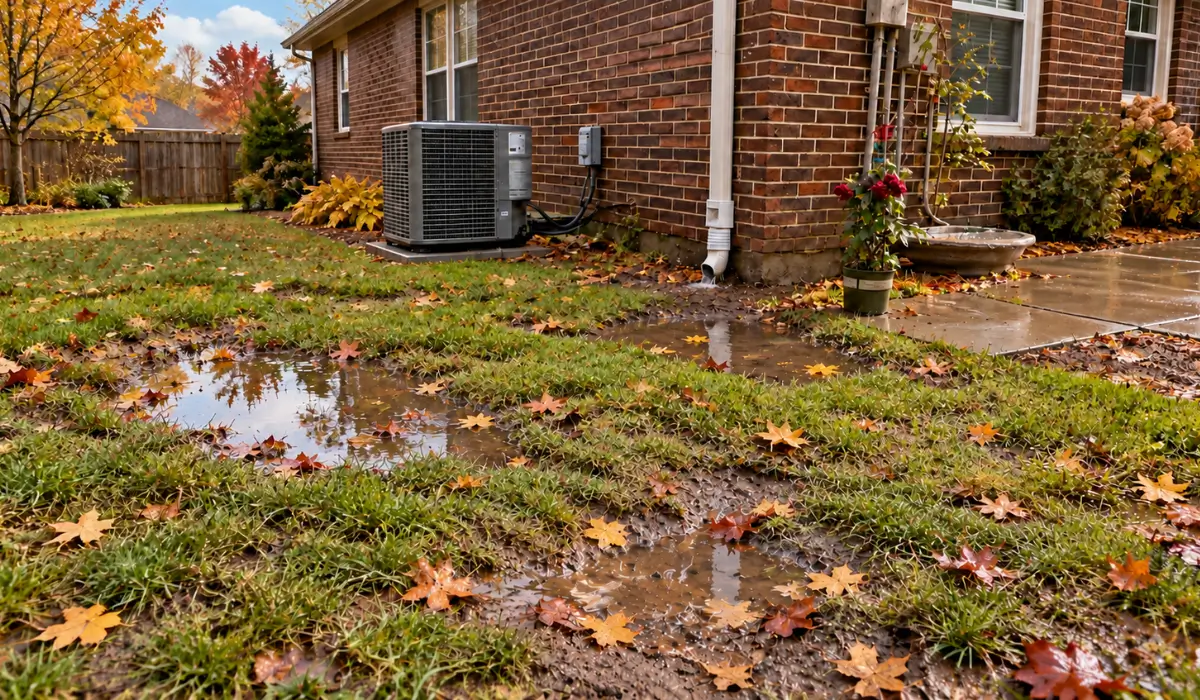
Fall rain has a way of exposing drainage problems that stayed hidden all summer. October may be one of the best times to identify and correct them before winter arrives because recurring rain can make water patterns easier to see.
A soggy lawn, water near the foundation, or recurring puddles can show where water collects, but not necessarily where the problem starts. Roof runoff, grading, soil conditions, and drainage routes may all play a role.
Since 1982, Tommy Pollina Landscape Company has helped solve landscape problems. We start by following the water’s journey, beginning with where it first enters the landscape.
1. Where Water Lands
A drainage problem can begin before rain reaches the lawn. Roof runoff enters the landscape from gutters, downspouts, and discharge points, so the first question is where that concentrated water goes.
A downspout that releases water close to the house or into an area that already drains poorly may send runoff toward the foundation or another low area.
After rainfall, check:
- where each downspout releases water;
- whether runoff moves away from the house;
- which areas receive concentrated roof water;
- what route the water follows;
- where that water eventually stops.
These observations help separate a discharge problem from one farther across the property.
Different downspout drainage solutions suit different site conditions. The U.S. Environmental Protection Agency includes redirecting downspout runoff among methods for managing roof runoff. Any solution still needs a suitable destination for the water.
Our drainage services consider the full water path rather than treating each wet spot as an isolated problem.
2. Where Water Travels
Once water reaches the ground, soil conditions, slope, and drainage channels affect its route. Compacted soil can slow how readily water enters the ground, while improper grading may send surface runoff toward the house or a low area.
Worn or ineffective drainage channels can also change the intended path. Two yards can have similar drainage problems while needing different corrections because the underlying conditions are different.
Grading and regrading can address problems caused by the shape or slope of the land. Our grading and regrading services focus on creating a more suitable route for surface water while accounting for the surrounding landscape.
Looking at drainage as one part of the property reflects our landscape problem-solving experience. Changes to the grade can affect where water moves and how other landscape features function.
3. Where Water Gets Trapped
The wettest area may be where the water journey ends rather than where the problem begins. Low spots, side yards, areas beside patios, and foundation edges can collect water because of the surrounding grade and runoff pattern.
After rain, note where water appears, which direction it moves, where it slows, and which areas remain wet after nearby ground begins to dry. Water that appears quickly may be receiving concentrated runoff, while water that remains longer can point toward soil, grading, or drainage conditions.
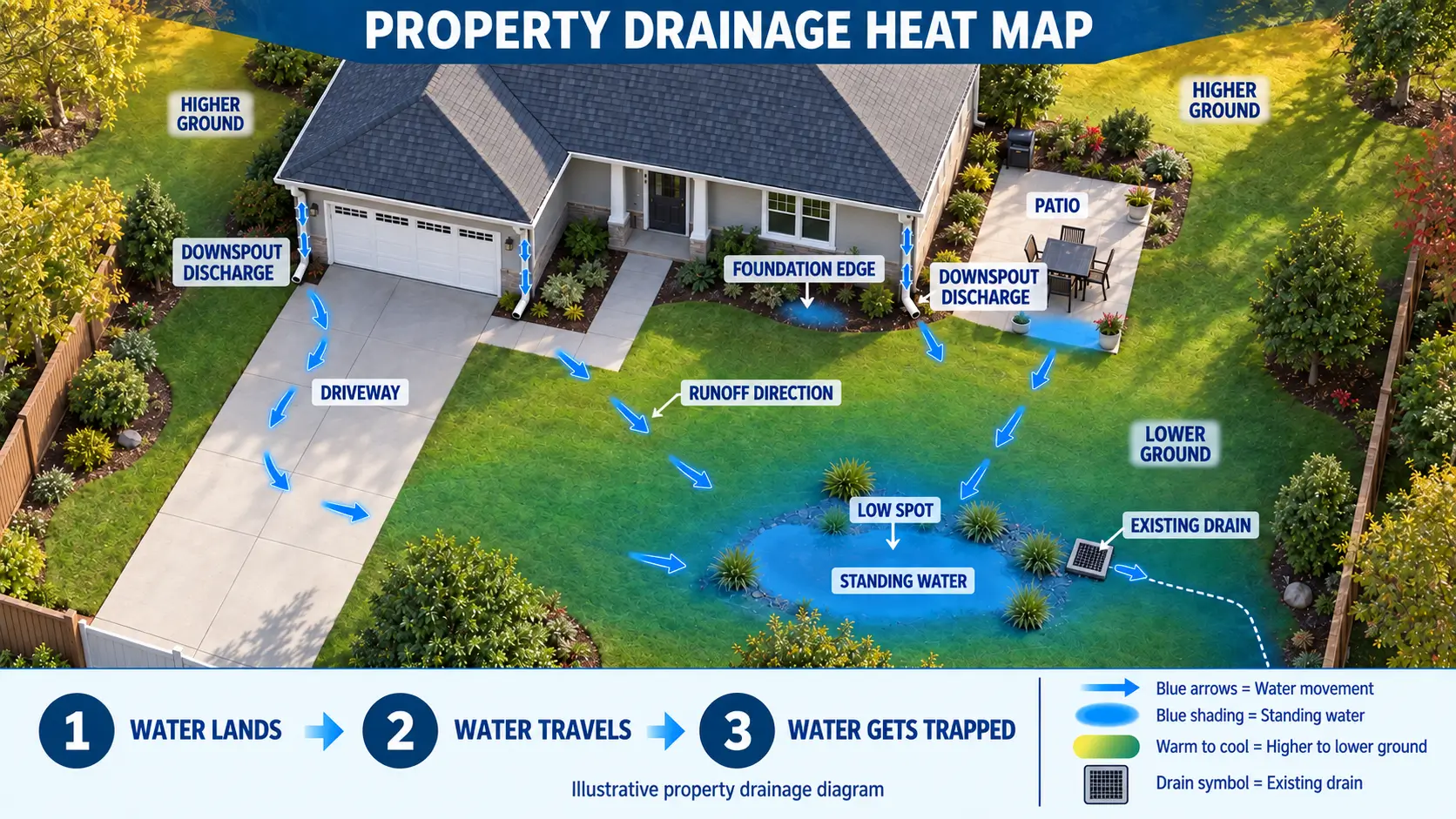
Property Drainage Heat Map Showing Water Runoff Flow
A property drainage heat map can mark roof and downspout discharge points, high and low ground, runoff paths, standing-water areas, hard surfaces, foundation edges, and existing drainage components. Seeing these features together can show why correcting the lowest spot alone may not solve the source of the problem.
Our landscape project gallery provides visual examples of outdoor conditions and improvements involved in creating functional landscapes.
Leaves and debris can make low areas and small surface drainage paths harder to spot. Fall landscape cleanup can make these areas easier to check before winter, while pre-winter landscape planning can account for how grading, hardscape, and plantings affect water movement.
4. Where Water Creates Damage
Water collecting in the wrong place does not automatically mean damage has already occurred. It does identify areas worth checking, especially when the same pattern returns after repeated rain.
Lawn Damage from Drainage Problems
A lawn that remains wet after nearby ground dries may involve poor drainage, compacted soil, grading, excess irrigation, or more than one condition.
Irrigation can add water to an already wet area without being the original cause. Signs of sprinkler water waste can help separate an irrigation issue from the larger drainage pattern.
Hardscape Damage
Patios, walks, and driveways affect runoff because water follows their slope. The direction water leaves these surfaces can reveal another part of its route across the property.
Surface material also affects water movement. The EPA’s information on permeable pavement and stormwater management explains how some surfaces allow rain and melting snow to pass into underlying layers.
Water beside a patio does not automatically make the patio the cause. Surrounding grade, downspouts, and nearby low areas may also contribute.
Foundation Concerns
Water near the foundation deserves closer attention because the source may involve grading, roof runoff, sump pump discharge, or existing drainage. Surface water alone does not explain every basement moisture problem.
For that reason, basement waterproofing and drain tile installation should not be treated as automatic answers. The source and route of the water need to be understood before deciding what type of work fits the problem.
FEMA’s information on protecting property from flooding also supports looking at how water may affect the property as a whole.
5. Solutions Matched to Problems
French drains, drain tile, regrading, catch basins, and discharge adjustments perform different jobs. Matching the solution starts with identifying the water source, why it collects, and where it can be directed.
| Problem You Notice | Possible Solution | What Needs To Be Checked |
|---|---|---|
| Standing water | French drain | Source, soil, grade, low area, and outlet |
| Foundation moisture | Drain tile | Grade, downspouts, sump discharge, and moisture source |
| Erosion | Regrading | Water direction, elevation, and discharge points |
| Overflow | Catch basin | Water source, collection point, and drainage route |
These pairings are starting points, not automatic diagnoses. Similar symptoms can have different causes, so site conditions still need to guide the final choice.
When comparing a yard drainage contractor, ask how the cause will be identified before a system is recommended. Searching for a drainage contractor near me can narrow local choices, but proximity alone does not show how the property will be assessed.
For readers comparing drainage services near me, our drainage service FAQs address common questions about our work and process. Properties needing faster attention can also be considered for emergency and expedited drainage service, with the response based on the conditions present.
Our customer reviews provide additional context about working with Tommy Pollina Landscape Company.
Address Fall Drainage Before Winter
Fall rain provides useful evidence while the water path is visible. Recurring puddles, concentrated runoff, low spots, and water near the house can show which areas deserve closer attention before winter.
The goal is not simply to remove one puddle. A useful correction needs to address why the water collects and how it can be managed in relation to the rest of the property.
When water continues to pool after rain, moves toward your house, or leaves parts of the property consistently wet, submit a landscape project inquiry or call 847-698-6868. We can discuss the conditions you are seeing and meet with you at the property to determine appropriate next steps.
Latest Posts:
- Landscape Lighting Ideas to Make Your Backyard Shine This Summer
- 5 Landscape Design Fixes to Make Before Winter Comes
- Top 5 Spring Planting Mistakes Homeowners Make
- The Ultimate Fall Lawn Care Routine Before the First Frost
- The Best Backyard Upgrades for Memorial Day Hosting
- Drainage Problems in Fall? Why It’s Not Too Late to Fix Them
- Winter Drainage Solutions to Prevent Ice Build-Up Around Glencoe Homes
- Tree Trimming Season: When, Why & Best Time to Trim Trees
- When Should You Book Holiday Lighting Installation? Sooner Than You Think
- Hardscape Maintenance Tips for Icy Winters in Winnetka
- Lawn Looking Patchy? 3 Fixes Before Summer Heat
- How to Winterize an Outdoor Kitchen in Wilmette and Park Ridge
- 6 Must-Have Features for Your Summer Landscaping Makeover
- Signs Your Lawn Has Winter Drainage Problems (And What to Do Now)
- Are Sprinklers Wasting Water? Signs It’s Time for a Check
- Planning Off-Season Landscaping Early for a Smoother Spring Build
- Is It Time to Replace Your Old Patio? 4 Signs to Watch For
- What Happens If You Don’t Remove Snow From Your Lawn?
- How to Protect Your Landscaping From Extreme Summer Heat
- Valentine’s Day Garden Prep: Plants That Bloom Beautifully by May
- Outdoor Living Trends: Mid-Summer Upgrades Worth the Investment
- Backyard Flooding? Why Early Spring Is the Best Time for Drainage Work
- Your July Landscape Checklist: 8 Tasks to Keep It Thriving
- Thinking of a Patio? Why February Is Prime Time for Hardscape Planning
- Fall Starts in August: How to Prep Your Landscape Now
- 3 Landscape Design Ideas to Lock In Before Spring Rush Starts
- Backyard Projects to Finish Before Labor Day
- What to Do First When Prepping Your Lawn for Spring
- Reseed Your Lawn Before Summer Ends: A Lawn Recovery Plan
- Essential Spring Landscaping Services to Book Before April
- When to Book Fall Cleanup (Hint: It’s Earlier Than You Think)
- Why Mulching in April Protects Your Garden All Year Long
- How Outdoor Lighting Boosts Home Value & Safety This Fall
- Outdoor Kitchens in Park Ridge: A Must-Have for Summer
- Evergreens and Shrubs in Glencoe with Cold-Weather Plant Installation
- Functional & Beautiful Retaining Walls for Winnetka Homes
- Transforming Small Backyards in Kenilworth with Hardscaping
- 5 Landscape Design Trends for Glencoe Homeowners in 2025
- French Drain vs. Channel Drain: Which Works Best for Glenview Homes?
- Landscape Drainage Solutions That Actually Work in Winnetka
- Planning a Late Summer Hardscape Installation in Park Ridge
- Outdoor Kitchen Add-Ons Worth the Investment in Glencoe
- We’re Featured on Redfin! Backyard Privacy Tips from Tommy Pollina Landscaping
- Overwatering or Drying? Smart Irrigation System Installations
- Creating Multi-Level Hardscape Designs for Glenview Backyards
- Drainage Upgrades to Prevent Fall Flooding in Park Ridge
- Best Arborvitae Varieties for Privacy in Winnetka and Wilmette
- Designing Outdoor Kitchens with Built-In Fire Features in Glencoe