
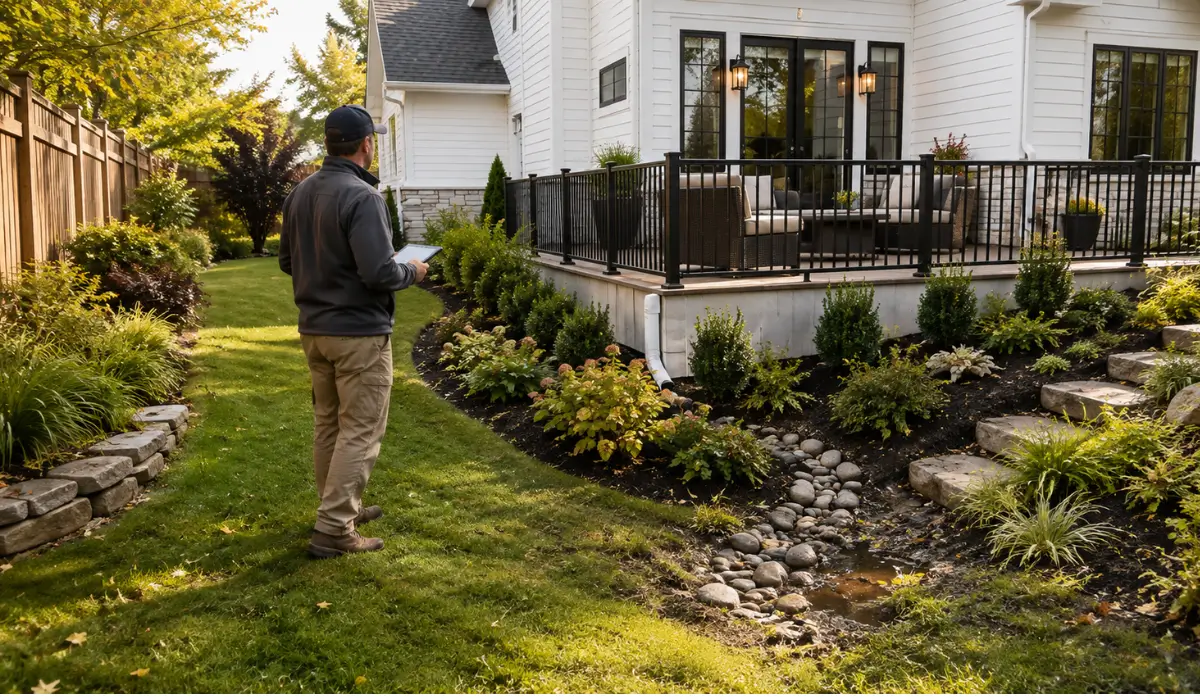
Winter can expose landscape weaknesses that are easy to miss during summer. September gives homeowners a useful window to check landscape design problems such as poor drainage, erosion, awkward outdoor spaces, and planting beds that no longer fit the property.
The goal is not to rebuild the yard before cold weather arrives. A fall property audit helps separate cosmetic updates from conditions that affect drainage, function, and future improvements. At Tommy Pollina Landscape Company Inc., our work includes drainage, hardscape, retaining walls, outdoor living, and broader property improvements.
Audit Zone #1: Your Front Yard
Stand near the street or driveway and look at the house, planting beds, walkways, and lawn together. The front landscape should frame the home, support clear access, and look balanced from the street.
Ask These Three Questions
- Does the landscape frame the home?
Check for shrubs or trees blocking windows, entrances, walkways, or architectural details. - Are planting beds balanced?
Compare their scale, shape, density, and placement. Healthy plants can still sit in a layout that no longer fits the home. - Is curb appeal working for or against you?
Look for bare areas, overcrowding, awkward bed shapes, and plants that have outgrown their locations.
Maintenance Issue or Design Issue?
One overgrown shrub may only need pruning. Crowded plants, blocked access, or several areas that no longer work together can signal a larger layout problem.
Landscape redesign services may make more sense than replacing plants one at a time. Our fall landscape preparation steps separate seasonal tasks from broader improvements, backed by the landscape experience behind our work.
Audit Zone #2: Water Movement
The place where water collects is not always where the problem begins. Runoff may travel from higher ground, a downspout, irrigation, compacted soil, or hardscape before forming a puddle elsewhere.
Walk the property after rainfall when possible and look for:
- Pooling near the house, patio, walkways, or lawn
- Soil or mulch washing out of planting beds
- Channels forming on slopes
- Downspouts emptying into low areas
- Soft or consistently wet lawn
- Runoff crossing patios or walkways
Trace the Cause in Three Steps
- Locate the source. Where does the water begin?
- Follow its path. What slope, surface, or downspout directs it?
- Identify a safe destination. Where can it move without creating another problem?
For homeowners searching for a drainage contractor near me, these observations provide useful context for evaluating the problem. The EPA’s information on urbanization and stormwater runoff explains how developed surfaces can change runoff and affect water resources.
Our landscape drainage services address water-management concerns around the property.
Key insight: Trace the water before treating the wet spot. Correcting the symptom alone may leave the cause untouched.
Audit Zone #3: Outdoor Living Areas
A patio can look attractive and still function poorly. Judge the space by how people sit, cook, entertain, and move between the house and yard.
Run a Real-Use Test
Walk through the space as though you were hosting a normal gathering:
- Check the surface. Look for cracked, loose, or uneven pavers and other hardscape.
- Follow the walking paths. Make sure furniture or cooking areas do not restrict normal movement.
- Check the connections. Movement between the house, patio, and yard should feel practical.
- Notice unused space. Areas that consistently sit empty may no longer fit how you use the patio.
- Watch for water. Pooling or runoff can affect both comfort and hardscape performance.
A dated appearance alone does not mean a patio needs replacement. Surface condition, drainage, and everyday use provide better evidence. Our old patio replacement signs can help distinguish cosmetic aging from more substantial problems.
A functional patio may only need targeted hardscape improvements. Larger changes may make sense when you need better seating flow, an outdoor kitchen, a fireplace, or more useful entertainment space.
Good backyard landscaping design connects patios, planting beds, drainage, lawns, and walking routes so the space works as a whole. Our patios and hardscape options show related structural features to consider when planning the space.
Audit Zone #4: Elevation Changes
A slope does not automatically need correction. It becomes a concern when it contributes to erosion, poor drainage, soil movement, or lost usable space.
Read the Slope for Evidence
Look for:
- Channels cut into soil after rain
- Exposed roots or washed-out beds
- Soil collecting downhill
- Runoff moving rapidly down the slope
- Areas that are difficult to mow, walk across, or use
Match the Response to the Problem
- Runoff causing erosion: Trace where the water begins and whether changing its path could reduce soil loss.
- Poorly directed surface water: Reshaping the ground may improve surface flow.
- Soil moving on a grade: Determine whether the slope needs structural support.
- A slope limiting usable yard space: Consider whether a better transition between levels could improve function.
Retaining wall installation may make sense when supporting soil or managing an elevation change addresses the actual problem. A wall is not the automatic fix for every slope; water control may also need attention when runoff is driving erosion.
Slope stabilization, erosion control, drainage, and usable yard space should be evaluated together. Our retaining wall and hardscape work shows related structural options, while our landscaping service questions cover common project considerations.
Audit Zone #5: Seasonal Functionality
A yard that works well in summer should retain enough structure and function when leaves fall and daylight shortens.
Four Features to Check
- Lighting: Check whether steps, walks, entrances, and gathering areas become difficult to see after sunset.
- Evergreens: Note how much screening and visual structure remains after deciduous plants lose their leaves.
- Drainage: Watch for areas that repeatedly become wet during fall rain or later snowmelt. Wet areas during otherwise dry conditions may point to irrigation problems, so our sprinkler water-waste signs can help identify another possible source. Where the shape of the ground consistently sends surface water toward problem areas, grading and regrading may warrant evaluation.
- Seasonal color: Check whether planting beds depend almost entirely on summer flowers. Planting timing also changes with the season, and University of Illinois Extension provides regional information on when to plant.
A four-season landscape does not need to look the same year-round. Prioritize seasonal changes that affect access, screening, drainage, visibility, or normal use before appearance-only gaps.
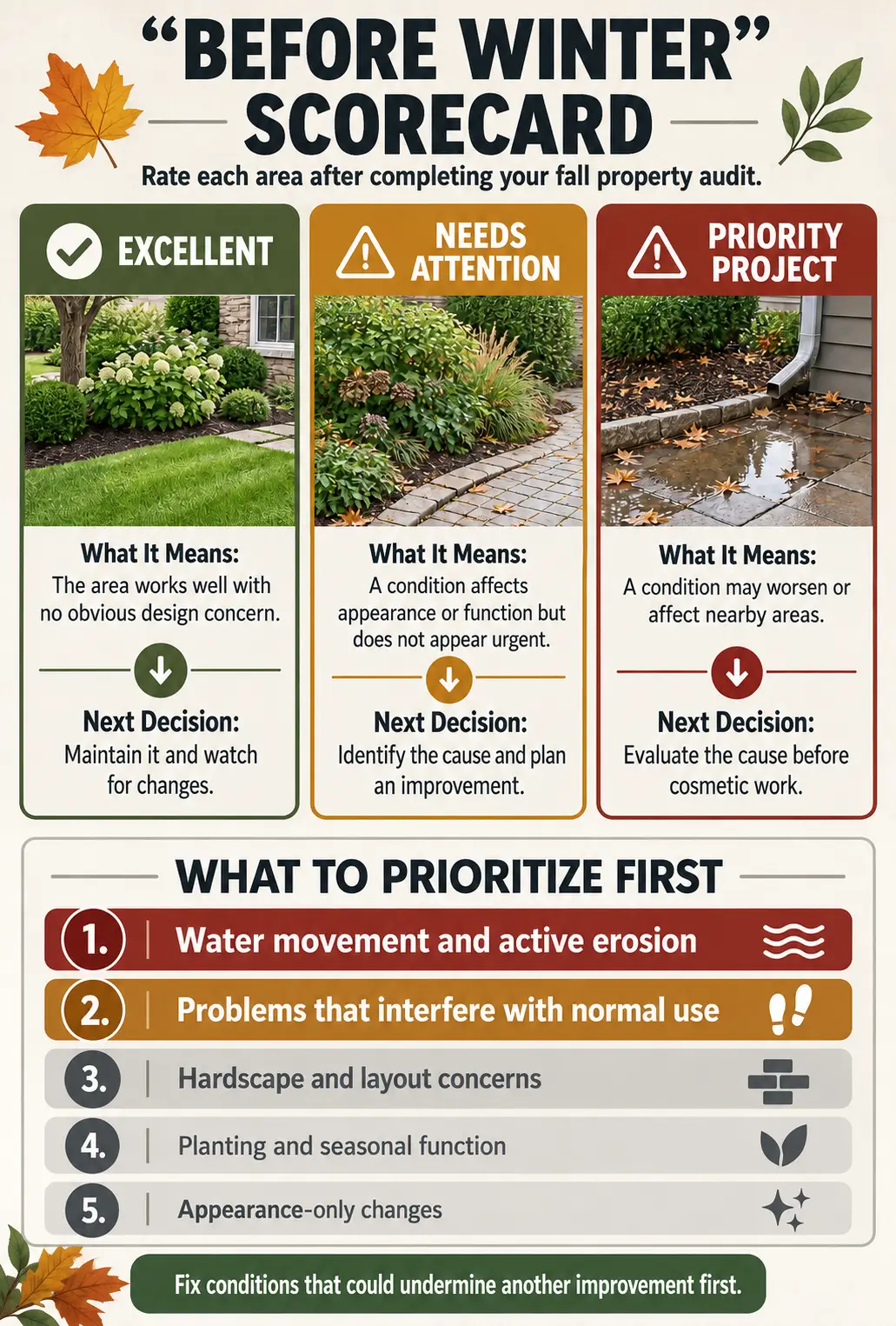
Before Winter Landscape Scorecard for Property Project Priorities
Set Priorities in This Order
- Water movement and active erosion
- Problems that interfere with normal use
- Hardscape and layout concerns
- Planting and seasonal function
- Appearance-only changes
A Priority Project is not necessarily the largest project. It is one that can affect other decisions. Replacing plants, for example, may have limited value when runoff repeatedly washes through the same bed.
Not every issue needs to be completed before winter. Some can be planned in fall and scheduled when conditions are appropriate.
Homeowners searching for a landscape design company near me should compare whether each company evaluates planting, drainage, hardscape, elevation, and outdoor living areas as connected parts of the property. Review our completed landscape projects and customer landscape reviews when weighing your next move.
Put the Right Fall Landscape Design Project First
Water problems, active erosion, unstable hardscape, and access issues can affect other improvements on the property. Address the underlying condition first, then plan planting, outdoor living, and appearance updates around a stronger foundation.
Bring your property concerns to Tommy Pollina Landscape Company Inc. for a focused review of what deserves attention first and what can wait. Call 847-698-6868 to discuss the project.
👉 Prioritize My Property Projects
Latest Posts:
- Landscape Lighting Ideas to Make Your Backyard Shine This Summer
- Top 5 Spring Planting Mistakes Homeowners Make
- The Best Backyard Upgrades for Memorial Day Hosting
- Winter Drainage Solutions to Prevent Ice Build-Up Around Glencoe Homes
- Tree Trimming Season: When, Why & Best Time to Trim Trees
- Hardscape Maintenance Tips for Icy Winters in Winnetka
- Lawn Looking Patchy? 3 Fixes Before Summer Heat
- How to Winterize an Outdoor Kitchen in Wilmette and Park Ridge
- 6 Must-Have Features for Your Summer Landscaping Makeover
- Signs Your Lawn Has Winter Drainage Problems (And What to Do Now)
- Are Sprinklers Wasting Water? Signs It’s Time for a Check
- Planning Off-Season Landscaping Early for a Smoother Spring Build
- Is It Time to Replace Your Old Patio? 4 Signs to Watch For
- What Happens If You Don’t Remove Snow From Your Lawn?
- How to Protect Your Landscaping From Extreme Summer Heat
- Valentine’s Day Garden Prep: Plants That Bloom Beautifully by May
- Outdoor Living Trends: Mid-Summer Upgrades Worth the Investment
- Backyard Flooding? Why Early Spring Is the Best Time for Drainage Work
- Your July Landscape Checklist: 8 Tasks to Keep It Thriving
- Thinking of a Patio? Why February Is Prime Time for Hardscape Planning
- Backyard Projects to Finish Before Labor Day
- 3 Landscape Design Ideas to Lock In Before Spring Rush Starts
- Reseed Your Lawn Before Summer Ends: A Lawn Recovery Plan
- What to Do First When Prepping Your Lawn for Spring
- When to Book Fall Cleanup (Hint: It’s Earlier Than You Think)
- Essential Spring Landscaping Services to Book Before April
- How Outdoor Lighting Boosts Home Value & Safety This Fall
- Why Mulching in April Protects Your Garden All Year Long
- 5 Landscape Design Fixes to Make Before Winter Comes
- Outdoor Kitchens in Park Ridge: A Must-Have for Summer
- Evergreens and Shrubs in Glencoe with Cold-Weather Plant Installation
- Functional & Beautiful Retaining Walls for Winnetka Homes
- Transforming Small Backyards in Kenilworth with Hardscaping
- 5 Landscape Design Trends for Glencoe Homeowners in 2025
- French Drain vs. Channel Drain: Which Works Best for Glenview Homes?
- Landscape Drainage Solutions That Actually Work in Winnetka
- Planning a Late Summer Hardscape Installation in Park Ridge
- Outdoor Kitchen Add-Ons Worth the Investment in Glencoe
- We’re Featured on Redfin! Backyard Privacy Tips from Tommy Pollina Landscaping
- Overwatering or Drying? Smart Irrigation System Installations
- Creating Multi-Level Hardscape Designs for Glenview Backyards
- Drainage Upgrades to Prevent Fall Flooding in Park Ridge
- Best Arborvitae Varieties for Privacy in Winnetka and Wilmette
- Designing Outdoor Kitchens with Built-In Fire Features in Glencoe
- Retaining Wall Designs to Manage Slopes in Kenilworth
- Landscape Installation Ideas to Boost Curb Appeal in Lake Forest
- Fall Drainage Maintenance Checklist for Glenview Homeowners
- The Best Time for Arborvitae Installation in Kenilworth & Glencoe