
You do not need to wait until every leaf has fallen to schedule fall cleanup. Starting earlier gives you time to manage heavy leaf buildup, address damaged branches, prepare garden beds, and spot drainage concerns before colder weather limits your options.
For Chicago-area properties, seasonal work can begin as early as September and continue through November. Tommy Pollina Landscape Company has served Chicago-area properties since 1982, and fall care makes more sense when it follows what the landscape needs rather than one date on the calendar.
The reason is practical: fall landscape tasks are connected. Delay one long enough, and it can create the next problem.
The First Domino: Delayed Leaf Removal
A few scattered leaves are rarely the concern. Problems become more likely when a thick layer remains over the lawn, especially after rain mats the leaves together.
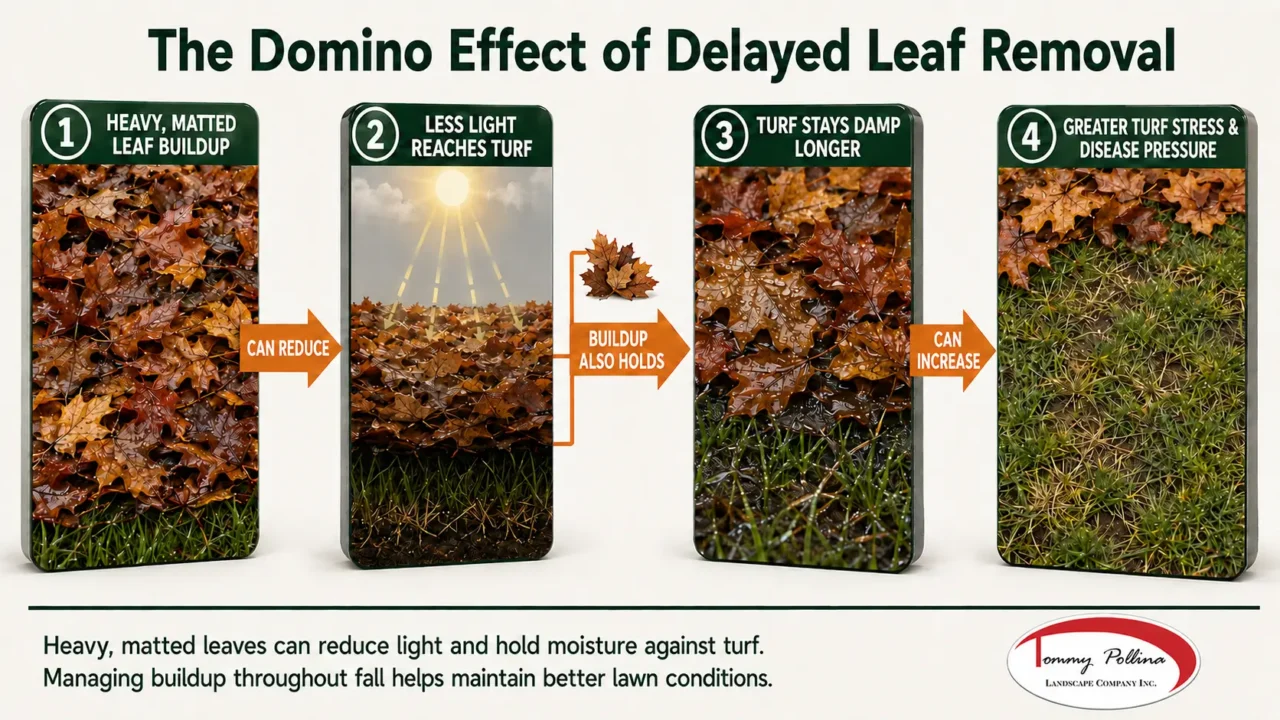
Heavy coverage can reduce the light reaching turf and hold moisture close to the grass. Instead of waiting for one final cleanup after every tree is bare, manage substantial buildup as the season progresses. Healthy turf also has benefits beyond appearance, including soil stabilization and runoff reduction, as described in the University of Minnesota Extension’s discussion of environmental benefits of healthy lawns.
How Delayed Leaf Removal Can Affect Lawn Health
- Smothered turf: Dense leaf cover reduces the light reaching the grass.
- Trapped moisture: Wet, matted leaves can keep the lawn damp for longer periods.
- Disease pressure: Prolonged damp conditions can create conditions that favor some turf diseases.
The distinction matters. Fall care does not require chasing every individual leaf across the lawn. The concern is allowing heavy coverage to remain long enough to interfere with growing conditions.
Leaf removal services address that buildup directly, while broader fall cleanup services can account for seasonal needs elsewhere on the property. Homeowners who rely on our lawn maintenance services can treat leaf accumulation as part of the lawn’s changing condition rather than a separate cosmetic chore.
A search for lawn maintenance near me may return plenty of local choices. A more useful question is whether the work responds to what the lawn needs as temperatures, growth, moisture, and leaf coverage change.
The Second Domino: Missed Pruning Opportunities
Fall can make branch problems easier to recognize as foliage thins. Deadwood, broken limbs, and storm-damaged branches deserve attention because their condition and location can affect safety and determine what work makes sense.
That does not mean every tree or shrub should be pruned simply because fall has arrived. The reason for pruning should determine the work.
Pay closer attention to:
- dead or visibly damaged branches;
- limbs damaged during storms;
- branches affecting walkways or frequently used areas;
- weak or questionable limbs that deserve closer assessment.
Pruning timing varies by plant and purpose. USDA Forest Service research on proper tree pruning practices reinforces the importance of appropriate pruning methods rather than removing branches without a clear reason.
Our team can address relevant trimming needs as part of seasonal landscape care, but assessment should come before cutting. A search for tree trimming services near me may identify local companies, yet the better questions are what needs pruning, why the work is recommended, and whether the timing suits the plant.
That distinction keeps fall trimming purposeful. Visible damage may call for attention, while routine shaping or other pruning may belong on a different timetable.
The Third Domino: Garden Beds Left Unprepared
A fall bed cleanup should prepare planting areas for colder weather without stripping them unnecessarily. Existing plants, mulch, spent annuals, and seasonal containers do not all need the same treatment.
Three areas deserve attention:
- Spent annuals: Remove plant material that has finished for the season rather than leaving neglected growth in place.
- Existing mulch: Check its condition and depth before adding another layer.
- Seasonal planters: Clear or prepare containers based on what will remain in them as temperatures fall.
A mulch refresh does not always mean adding more. Mulching should respond to the amount already in the bed, the plants growing there, and how well the existing material is covering the soil. Adding material automatically can create unnecessary work rather than better preparation.
Bed care also fits into a longer seasonal schedule. Our August landscape preparation tips help homeowners identify work that can make sense before autumn leaf drop accelerates.
Good preparation is selective. Clearing spent material, checking existing mulch, and handling seasonal planters leaves beds better prepared for colder weather without turning cleanup into a reason to disturb areas that are already in good condition. Homeowners considering how seasonal care fits into the larger landscape can also review our completed landscape projects for examples of our work.
The Fourth Domino: Small Drainage Issues Can Return in Spring
Standing water in fall shows where water is collecting, but it does not automatically reveal why. A blocked drainage path, surface grading, runoff, compacted soil, or another property condition may influence how water moves.
“A puddle is a clue, not a diagnosis.”
Look for patterns such as:
- water remaining in low areas after rain;
- soil washing away from beds or slopes;
- leaves and debris blocking visible drainage routes;
- repeated wet areas in the same part of the property.
Water that does not move as expected can affect more than one part of a landscape. The EPA’s information about urbanization and stormwater runoff describes how runoff over developed surfaces can contribute to erosion and carry pollutants into waterways.
The visible symptom should not dictate the solution. Grading and regrading may be relevant when slope affects water movement, while other conditions may call for different drainage services. A proper evaluation should identify the likely cause before a specific correction is selected.
Someone searching for a drainage contractor near me should look beyond the proposed fix and ask how the contractor determined why water is collecting. That diagnostic step helps separate the wet spot you can see from the condition causing it.
A Smart Fall Cleanup Timeline Starts Before the Final Leaf Drop
Fall cleanup works best as a seasonal process rather than one late-autumn appointment. September, October, and November bring different landscape needs, so spreading the work across the season can prevent everything from becoming a last-minute task.
Weather, plant conditions, leaf drop, and the property itself should still determine the exact schedule.
When Fall Cleanup Should Start in September
September is a good time to assess the lawn and landscape before heavy leaf accumulation becomes the main concern. Planning early also leaves room for lawn work that depends more heavily on seasonal timing.
Lawns that need reseeding may have a narrower useful window than routine cleanup. Our discussion of lawn reseeding before summer ends covers why waiting too long can change the options for that work.
Other outdoor projects may also make more sense before colder weather settles in. These Labor Day backyard project ideas give homeowners another way to consider which improvements still fit the remaining season.
Starting in September does not mean doing every fall task at once. It means identifying work with an earlier window so it does not get pushed into an overloaded November schedule.
October: Respond to What the Property Is Showing
By October, leaf management often becomes more active, while trees, shrubs, beds, and drainage routes may reveal other seasonal needs.
Look at how those conditions interact rather than treating them as unrelated jobs. Leaves accumulating over turf require one response. Leaves blocking a drainage route create a different concern. A damaged branch over a walkway calls for a different decision than routine shrub shaping.
Broader landscape maintenance services can help connect those needs across the property. Our team can prioritize seasonal work based on actual conditions instead of treating every visible issue as an isolated chore.
October is less about following a fixed checklist and more about responding to the landscape. Leaf drop, plant condition, weather, and drainage patterns can all change which task deserves attention first.
November: Finish Rather Than Begin Everything
November may be the finishing point for many seasonal tasks, but it should not automatically be the starting point for all of them.
Final leaf removal, remaining bed work, and checks of visible drainage routes may still make sense as the season winds down. Work that depended on earlier growing conditions or greater scheduling flexibility may already have belonged in September or October. Homeowners sorting out practical service questions before scheduling can also review our landscaping FAQs.
November may be when seasonal cleanup finishes, but fall preparation can start much earlier.
An earlier start spreads decisions across the season and lets the condition of the landscape determine what deserves attention first.
Book Around Your Landscape, Not the Leaf Pile
The right time to book fall cleanup depends on the first meaningful seasonal needs appearing on the property, not the day the last leaf finally falls. Heavy leaf coverage, damaged branches, unfinished beds, and recurring wet areas can each change what deserves attention and when.
Homeowners comparing a landscaping company near me should consider more than the number of services listed. Tommy Pollina’s landscaping experience and history gives homeowners useful context about the company behind the work, including the local experience that shapes our approach to landscape care.
Past customer experience adds another perspective to that decision. Tommy Pollina customer reviews show feedback from people who have worked with our team, giving homeowners another point of reference beyond descriptions of our services.
The goal is not to rush every fall task or treat every property the same. Separate what is time-sensitive from what can wait, then determine which conditions deserve a closer look before choosing the work that makes sense.
Let the Yard Set the Fall Schedule
Waiting for the last leaf to fall can push several seasonal needs into the same narrow window. A better approach is to prioritize what the property is already showing: heavy leaf cover on the lawn, damaged branches that need attention, beds that need preparation, or drainage trouble worth checking before winter changes the conditions.
Tommy Pollina Landscape Company has worked with Chicago-area landscapes since 1982. That local experience helps our team look at fall work as a sequence of property needs rather than a single cleanup date, so work that matters earlier does not automatically get pushed to the end of the season.
Once those priorities are clear, our team can help determine which seasonal work fits your property and what makes sense to address first. A conversation about your yard can start at 847-698-6868, with the focus on the work your landscape actually needs this fall.
Latest Posts:
- Landscape Lighting Ideas to Make Your Backyard Shine This Summer
- Top 5 Spring Planting Mistakes Homeowners Make
- The Best Backyard Upgrades for Memorial Day Hosting
- Winter Drainage Solutions to Prevent Ice Build-Up Around Glencoe Homes
- Tree Trimming Season: When, Why & Best Time to Trim Trees
- Hardscape Maintenance Tips for Icy Winters in Winnetka
- Lawn Looking Patchy? 3 Fixes Before Summer Heat
- How to Winterize an Outdoor Kitchen in Wilmette and Park Ridge
- 6 Must-Have Features for Your Summer Landscaping Makeover
- Signs Your Lawn Has Winter Drainage Problems (And What to Do Now)
- Are Sprinklers Wasting Water? Signs It’s Time for a Check
- Planning Off-Season Landscaping Early for a Smoother Spring Build
- Is It Time to Replace Your Old Patio? 4 Signs to Watch For
- What Happens If You Don’t Remove Snow From Your Lawn?
- How to Protect Your Landscaping From Extreme Summer Heat
- Valentine’s Day Garden Prep: Plants That Bloom Beautifully by May
- Outdoor Living Trends: Mid-Summer Upgrades Worth the Investment
- Backyard Flooding? Why Early Spring Is the Best Time for Drainage Work
- Your July Landscape Checklist: 8 Tasks to Keep It Thriving
- Thinking of a Patio? Why February Is Prime Time for Hardscape Planning
- Backyard Projects to Finish Before Labor Day
- 3 Landscape Design Ideas to Lock In Before Spring Rush Starts
- Reseed Your Lawn Before Summer Ends: A Lawn Recovery Plan
- What to Do First When Prepping Your Lawn for Spring
- When to Book Fall Cleanup (Hint: It’s Earlier Than You Think)
- Essential Spring Landscaping Services to Book Before April
- How Outdoor Lighting Boosts Home Value & Safety This Fall
- Why Mulching in April Protects Your Garden All Year Long
- 5 Landscape Design Fixes to Make Before Winter Comes
- Outdoor Kitchens in Park Ridge: A Must-Have for Summer
- Evergreens and Shrubs in Glencoe with Cold-Weather Plant Installation
- Functional & Beautiful Retaining Walls for Winnetka Homes
- Transforming Small Backyards in Kenilworth with Hardscaping
- 5 Landscape Design Trends for Glencoe Homeowners in 2025
- French Drain vs. Channel Drain: Which Works Best for Glenview Homes?
- Landscape Drainage Solutions That Actually Work in Winnetka
- Planning a Late Summer Hardscape Installation in Park Ridge
- Outdoor Kitchen Add-Ons Worth the Investment in Glencoe
- We’re Featured on Redfin! Backyard Privacy Tips from Tommy Pollina Landscaping
- Overwatering or Drying? Smart Irrigation System Installations
- Creating Multi-Level Hardscape Designs for Glenview Backyards
- Drainage Upgrades to Prevent Fall Flooding in Park Ridge
- Best Arborvitae Varieties for Privacy in Winnetka and Wilmette
- Designing Outdoor Kitchens with Built-In Fire Features in Glencoe
- Retaining Wall Designs to Manage Slopes in Kenilworth
- Landscape Installation Ideas to Boost Curb Appeal in Lake Forest
- Fall Drainage Maintenance Checklist for Glenview Homeowners
- The Best Time for Arborvitae Installation in Kenilworth & Glencoe