
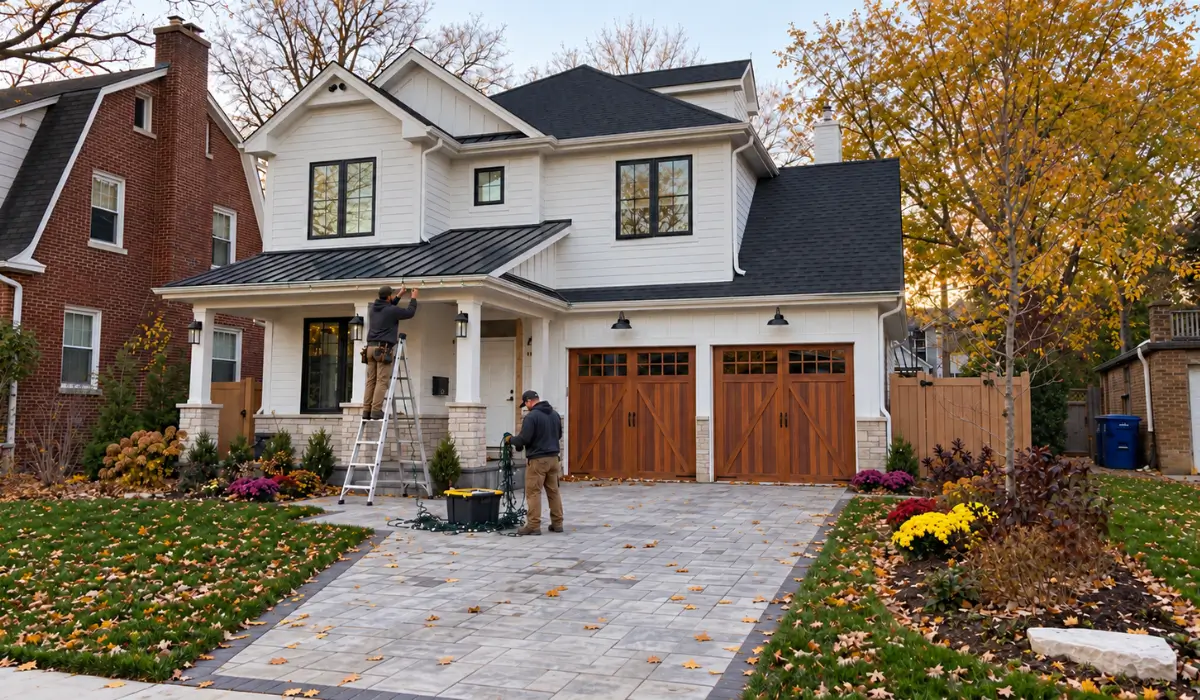
Many homeowners start thinking about holiday lights as temperatures drop and seasonal decorations appear. Planning your holiday lighting installation in August or September gives you more time for design and materials, with installation potentially beginning in October and activation closer to the holidays.
Early planning does not mean turning the lights on early. It gives design, installation, testing, and activation their own place in the schedule.
August and September: Planning Season
A holiday lighting project starts before lights appear on the house. Rooflines, trees, shrubs, pathways, entrances, planting beds, and existing outdoor lighting can all shape how the finished display looks after dark.
Since 1982, Tommy Pollina Landscape Company has worked with residential and commercial landscapes as connected outdoor spaces. That landscaping perspective matters because seasonal lighting should relate to the property rather than look separate from it.
August and September are mainly about three planning decisions:
- Design: Decide which parts of the house and landscape should draw attention after dark.
- Scope: Determine whether the display stays near the house or includes trees, shrubs, pathways, and other landscape features.
- Materials and access: Match the planned layout with the materials, equipment, and property access the installation may require.
A Christmas light installation focused on an entry and roofline requires a different plan from one that includes several areas of the yard. Making these decisions first keeps available decorations from determining the design.
Seasonal lighting may also coincide with other landscape projects before winter when outdoor work is planned for the same part of the year.
October: Installation Sweet Spot
October can be a practical time to move from planning to physical installation. The setup can happen before the date you want the display illuminated, keeping installation separate from activation.
Property access is one reason timing matters. A roofline or taller tree requires different equipment and positioning than shrubs or other features close to the ground. Weather can affect outdoor work as well. The National Weather Service’s Chicago weather information shows how conditions can change as fall moves toward winter.
October is an installation window, not a guarantee of better or safer weather. Property size, access, materials, conditions, and scheduling can affect the actual installation date.
Holiday Lighting Installation Timeline
The project can move in stages instead of treating every part of the job as one event.
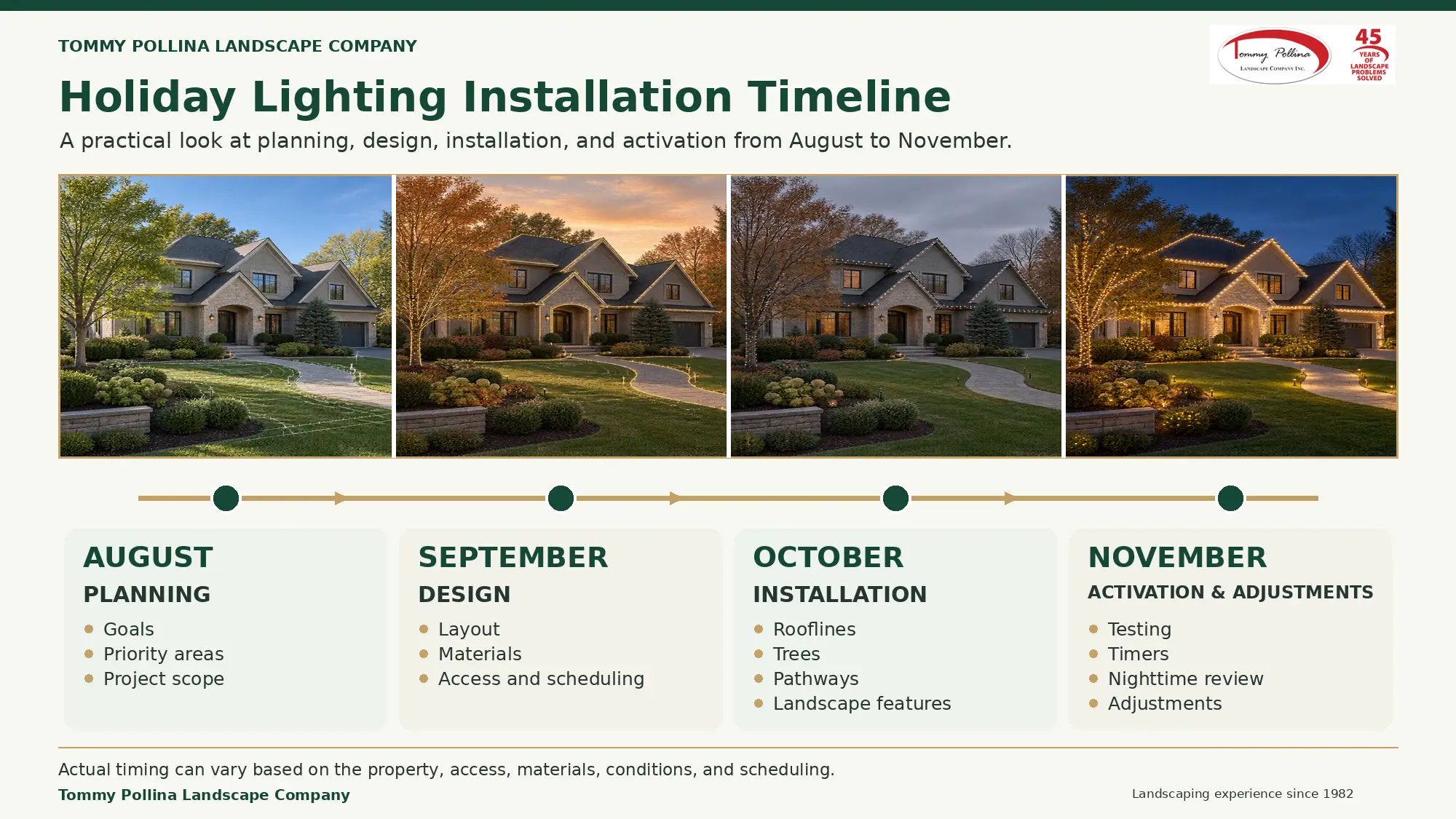
Holiday Lighting Installation Timeline From Planning Through Activation Alt Text
This order keeps the main design decisions ahead of physical installation. Testing and final adjustments then happen after the display is in place.
Our completed landscape projects show how individual outdoor features can relate to the property as a whole.
November: Activation & Adjustments
Once installation is complete, November can focus on three final tasks:
- Test the display. Check that installed lighting operates as intended.
- Set the timing. Configure timers where they are part of the project.
- Review the display after dark. Check brightness, placement, and the balance between illuminated areas.
Nighttime matters because a display can look different once the entire property is viewed after dark. A roofline may draw too much attention, a tree may need more definition, or separate illuminated areas may not feel connected.
Professional holiday lighting services can include these final checks in addition to physical installation. Our landscaping FAQs cover common questions about services and the project process.
The Difference Between DIY and Professional Displays
DIY can make sense for a small, accessible display. Professional installation becomes more relevant as the project expands across rooflines, taller trees, pathways, and multiple landscape areas.
Comparing DIY decorating with a holiday decor company comes down to the work involved:
| DIY | Professional |
|---|---|
| You source and organize materials | Materials can follow a coordinated design |
| You plan individual decorated areas | House and landscape can be considered together |
| You handle ladders and elevated access | The installation team handles physical installation |
| Coverage depends on your time, equipment, and access | Multiple selected areas can follow one plan |
The distinction becomes more important when elevated access is involved. OSHA’s safe ladder use guidance addresses ladder setup and use for elevated work. The U.S. Consumer Product Safety Commission also includes relevant precautions in its holiday decorating safety guidance.
A simple ground-level display and a project involving rooflines or taller landscape features do not require the same equipment or physical work. Similar property considerations apply to year-round outdoor lighting, home value, and safety.
The Elements That Create a Premium Display
A premium display is not simply one with more lights. The stronger approach is to give each selected feature a purpose within the overall view of the property.
- Rooflines define the shape of the house.
- Trees add height and carry the display into the yard.
- Pathways and entrances guide attention toward the home.
- Landscape accents highlight selected plants or outdoor features.
The goal is intentional placement rather than maximum light. A defined roofline and illuminated entrance may need only selected tree or landscape lighting to tie the house and yard together. Giving every feature equal emphasis can make the property look busy.
Our landscaping experience since 1982 supports a whole-property view of outdoor design. Permanent lighting forms part of that same nighttime setting, and our landscape lighting services focus on how outdoor areas look and function after dark.
A landscape lighting installation can account for seasonal lighting so permanent and temporary elements complement rather than compete with each other. The same consideration applies when an outdoor lighting contractor is involved in permanent improvements.
Lighting also relates to how outdoor areas are arranged and used, a point reflected in current outdoor living trends.
Holiday Lighting Planning Checklist
The planning decision becomes easier once the basic scope is clear. Before discussing the project, identify:
- The date you want the display turned on
- House and landscape areas you want decorated
- Must-have features and optional ideas
- Rooflines, taller trees, or difficult-access areas
- Existing outdoor lighting
- Whether lighting should stay near the house or extend into the landscape
- Design ideas or questions you want addressed
This checklist can be saved or printed as a planning tool. It gives the project a starting point without requiring you to create the finished design yourself.
Our customer reviews add client perspective on working with Tommy Pollina Landscape Company.
Reserve Your Preferred Installation Date
Once you know which areas you want lit and when you want the display ready, the practical next step is confirming whether the project fits your property and timing. Our holiday decor and lighting service keeps seasonal lighting connected to the overall outdoor setting and gives the project a relevant starting point.
Request Holiday Lighting Planning
Latest Posts:
- Landscape Lighting Ideas to Make Your Backyard Shine This Summer
- 5 Landscape Design Fixes to Make Before Winter Comes
- Top 5 Spring Planting Mistakes Homeowners Make
- The Ultimate Fall Lawn Care Routine Before the First Frost
- The Best Backyard Upgrades for Memorial Day Hosting
- Drainage Problems in Fall? Why It’s Not Too Late to Fix Them
- Winter Drainage Solutions to Prevent Ice Build-Up Around Glencoe Homes
- Tree Trimming Season: When, Why & Best Time to Trim Trees
- When Should You Book Holiday Lighting Installation? Sooner Than You Think
- Hardscape Maintenance Tips for Icy Winters in Winnetka
- Lawn Looking Patchy? 3 Fixes Before Summer Heat
- How to Winterize an Outdoor Kitchen in Wilmette and Park Ridge
- 6 Must-Have Features for Your Summer Landscaping Makeover
- Signs Your Lawn Has Winter Drainage Problems (And What to Do Now)
- Are Sprinklers Wasting Water? Signs It’s Time for a Check
- Planning Off-Season Landscaping Early for a Smoother Spring Build
- Is It Time to Replace Your Old Patio? 4 Signs to Watch For
- What Happens If You Don’t Remove Snow From Your Lawn?
- How to Protect Your Landscaping From Extreme Summer Heat
- Valentine’s Day Garden Prep: Plants That Bloom Beautifully by May
- Outdoor Living Trends: Mid-Summer Upgrades Worth the Investment
- Backyard Flooding? Why Early Spring Is the Best Time for Drainage Work
- Your July Landscape Checklist: 8 Tasks to Keep It Thriving
- Thinking of a Patio? Why February Is Prime Time for Hardscape Planning
- Fall Starts in August: How to Prep Your Landscape Now
- 3 Landscape Design Ideas to Lock In Before Spring Rush Starts
- Backyard Projects to Finish Before Labor Day
- What to Do First When Prepping Your Lawn for Spring
- Reseed Your Lawn Before Summer Ends: A Lawn Recovery Plan
- Essential Spring Landscaping Services to Book Before April
- When to Book Fall Cleanup (Hint: It’s Earlier Than You Think)
- Why Mulching in April Protects Your Garden All Year Long
- How Outdoor Lighting Boosts Home Value & Safety This Fall
- Outdoor Kitchens in Park Ridge: A Must-Have for Summer
- Evergreens and Shrubs in Glencoe with Cold-Weather Plant Installation
- Functional & Beautiful Retaining Walls for Winnetka Homes
- Transforming Small Backyards in Kenilworth with Hardscaping
- 5 Landscape Design Trends for Glencoe Homeowners in 2025
- French Drain vs. Channel Drain: Which Works Best for Glenview Homes?
- Landscape Drainage Solutions That Actually Work in Winnetka
- Planning a Late Summer Hardscape Installation in Park Ridge
- Outdoor Kitchen Add-Ons Worth the Investment in Glencoe
- We’re Featured on Redfin! Backyard Privacy Tips from Tommy Pollina Landscaping
- Overwatering or Drying? Smart Irrigation System Installations
- Creating Multi-Level Hardscape Designs for Glenview Backyards
- Drainage Upgrades to Prevent Fall Flooding in Park Ridge
- Best Arborvitae Varieties for Privacy in Winnetka and Wilmette
- Designing Outdoor Kitchens with Built-In Fire Features in Glencoe