
Most homeowners think fall landscaping begins in September. In reality, the best time to Prep Your Landscape is in August, when summer conditions reveal problems before cooler weather arrives. Heat, heavy rain, dry periods, and daily use often expose weak lawns, stressed plants, drainage issues, and damaged trees that are easier to evaluate before leaves begin to fall.
Since 1982, Tommy Pollina Landscape Company has helped Chicago-area homeowners prepare their landscapes by identifying the underlying causes of seasonal problems instead of treating only the visible symptoms. Reviewing your property in late summer provides time to prioritize repairs, improve growing conditions, and complete important work before the demands of fall increase.
The professional calendar in this article follows the same seasonal planning process our team uses—from inspecting turf and irrigation in August to preparing trees, drainage, planting beds, and outdoor spaces for the months ahead.
What Landscape Professionals Are Doing Right Now
Landscape professionals use August to review how each part of the property performed during summer. They look beyond visible damage for signs such as weak turf, uneven irrigation, compacted soil, damaged branches, shallow mulch, and standing water.
Professionals evaluate how watering, soil, trees, and drainage influence one another before recommending seasonal work.
How to Prep Your Landscape Like a Professional
A professional inspection starts with observation rather than treatment. Walk the property after watering and again after rainfall. Compare healthy areas with sections that look thin, dry, muddy, or overgrown.
Tommy Pollina Landscape Company evaluates these conditions to identify the cause instead of fixing only what is visible.
Check these areas first:
- Lawn sections showing heat or traffic stress
- Irrigation heads with weak or uneven coverage
- Mulch that has washed away or become too deep
- Tree branches that appear cracked, dead, or poorly attached
- Downspouts and low areas holding water
- Soil that feels hard, bare, or slow to absorb water
The company’s article on protecting landscapes from extreme heat can help homeowners identify plant and turf stress caused by summer conditions.
Rank concerns by safety, water management, plant health, and appearance. Damaged branches and drainage problems should usually come before cosmetic work.
Monitoring Irrigation Before Weather Changes
Summer watering schedules should not continue automatically into fall. Shorter days and cooler temperatures usually reduce how quickly soil dries, although plant needs still vary by weather and location.
Run the irrigation system and look for misting, overspray, blocked sprinkler heads, water hitting pavement, and dry areas. Water-efficient irrigation and outdoor water use recommendations from the EPA help explain practices that can reduce unnecessary water use while maintaining healthy landscapes.
| Observation | Possible Cause | Why It Matters |
|---|---|---|
| Brown patches | Uneven watering or stressed turf | Weak grass may enter fall with limited root growth |
| Standing water | Overwatering or poor drainage | Saturated soil can damage roots |
| Dry planting beds | Incomplete irrigation coverage | Shrubs and perennials may remain stressed |
| Muddy low spots | Ground slope or drainage concern | Fall rain may worsen the problem |
Before changing watering schedules, check whether moisture is already reaching the soil around the roots.
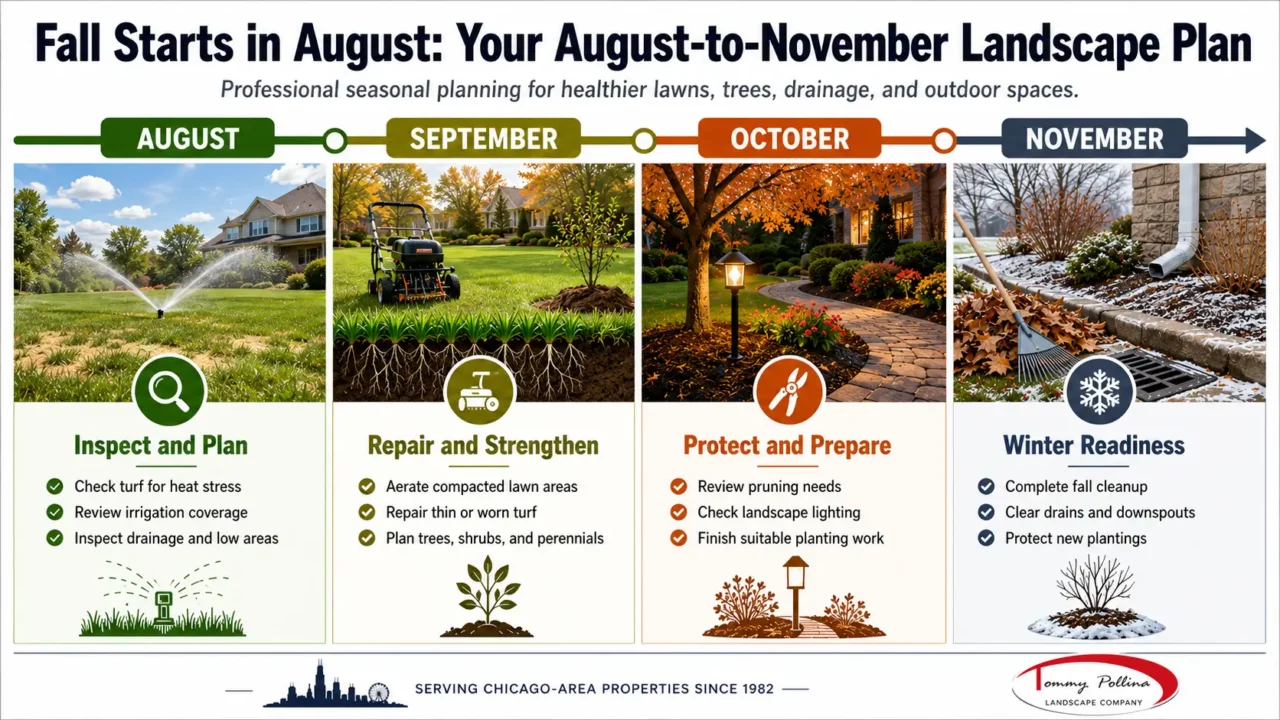
The August-to-November Success Timeline
A seasonal timeline helps organize work according to the conditions each month brings.
| Month | Primary Focus | Main Tasks |
|---|---|---|
| August | Inspect and plan | Review turf, trees, irrigation, soil, and drainage |
| September | Correct weak areas | Repair lawn damage, improve beds, and address water problems |
| October | Protect the property | Complete pruning, cleanup, lighting checks, and plant protection |
| November | Prepare for winter | Finish leaf removal and clear drainage paths |
August: Build a Strong Foundation
In August, identify safety, drainage, and plant-health concerns before fall schedules become busier.
The company’s July landscape maintenance checklist can help identify summer tasks that still need attention.
Homeowners deciding between routine care and a larger corrective project can review the company’s landscape experience and approach before scheduling an evaluation.
September: Correct Developing Problems
September often provides better conditions for lawn repair than the hottest weeks of summer. Cooler air and steadier soil moisture can support root development when work is timed correctly.
When comparing local lawn maintenance companies, look beyond mowing alone. Seasonal care may include edging, fertilization, cleanup, plant health monitoring, and repair of worn areas.
The University of Minnesota Extension’s seasonal lawn care calendar outlines common lawn care practices throughout the year. Local weather and property conditions should still guide the final schedule.
September is also a good time to assess whether core aeration is needed. Lawns with compacted soil, thinning grass, poor drainage, or heavy foot traffic may struggle because water, oxygen, and nutrients cannot move easily through the soil.
Aeration creates openings that improve air and water movement around roots. It should be recommended based on soil condition and lawn performance rather than applied automatically.
Professional seasonal landscape maintenance services can help determine whether aeration, overseeding, fertilization, or routine maintenance offers the greatest benefit.
A Practical Late-Summer Planting Timeline
Late summer and early fall are practical times to plan new plantings because warm soil supports root growth before winter.
- Late August: Evaluate damaged shrubs, remove failed annuals, and plan replacements.
- September: Install trees, shrubs, and hardy perennials suited to the site and local conditions while the soil remains warm.
- October: Complete appropriate planting projects, refresh mulch, and monitor moisture.
- November: Protect recent plantings rather than starting major installations in unsuitable soil conditions.
Homeowners planning trees, shrubs, planting beds, or broader improvements can review landscape design services when comparing options for their property. Proper timing gives new plantings a better opportunity to establish before winter.
October: Protect Long-Term Landscape Health
October is a practical time to review pruning needs while tree structure is still easy to evaluate. Damaged or weakened branches can be identified before winter weather places them under additional stress.
When comparing local tree-trimming services, choose a contractor who evaluates branch structure, tree health, nearby buildings, and long-term growth before recommending work. The International Society of Arboriculture outlines proper tree-pruning principles that support safe and healthy pruning practices.
Seasonal pruning decisions depend on the condition of each tree rather than the calendar alone. The article on best time for professional tree trimming explains what homeowners should expect during a professional evaluation.
Plan Landscape Lighting as Days Become Shorter
As daylight decreases, outdoor lighting plays a greater role in safety, visibility, and everyday use of outdoor spaces. Check fixtures around entrances, walkways, steps, patios, and driveways before evenings become noticeably darker.
Inspect the property after sunset for dark areas, damaged fixtures, uneven lighting, exposed wiring, and plants blocking light. Electrical faults and damaged wiring should always be repaired by a qualified professional.
Well-planned landscape lighting installation services can improve visibility, replace outdated fixtures, and provide consistent lighting where it is needed most.
November: Prepare for Winter Conditions
Complete leaf removal, clear drainage paths, remove debris from planting beds, and prepare irrigation components for freezing conditions where needed.
A thorough fall cleanup landscaping plan does more than improve appearance. Wet leaves can block drains, weaken turf, and hide low areas that continue collecting water.
Finish with a final check of downspouts, drainage inlets, walkways, and foundation areas before winter weather arrives.
The Three Areas Most Homeowners Forget
Trees, drainage, and soil health often receive less attention than mowing and leaf removal, yet they have a lasting effect on how the landscape performs through winter and into spring.
Trees
A late-summer inspection gives homeowners time to identify weak or damaged branches before autumn storms and falling leaves reduce visibility.
Inspect mature trees from several angles. Look for hanging branches, cracks, dead wood, rubbing limbs, and branches extending over roofs, walkways, or driveways.
Large branches and work near structures, electrical lines, or elevated areas should always be evaluated by a qualified professional.
Drainage
Watch for standing water, soil erosion, water moving toward the foundation, and downspouts emptying into saturated areas.
When comparing local drainage services, ask whether the proposed solution explains where the water starts, the route it follows, and the discharge point—the location where water safely exits the drainage system. Moving water from one low area to another does not solve the underlying problem.
Tommy Pollina Landscape Company has completed more than 10,000 drainage installations. Its professional landscape drainage solutions may include underground piping, catch basins that collect surface water before directing it into the drainage system, or grading corrections. Grading means adjusting the slope of the ground so water naturally moves away from buildings, walkways, and planting areas.
Soil Health
Healthy soil allows roots to absorb water, nutrients, and oxygen more effectively. Compacted soil often sheds water across the surface instead of allowing it to soak into the root zone.
Warning signs include bare paths, shallow puddles, thin grass, hard planting beds, and runoff on slopes. These conditions may indicate the need for aeration, organic matter, grading work, or a different planting approach.
Professional landscape maintenance services should consider soil condition instead of treating every thin lawn or struggling planting bed as a fertilizer problem.
Fall soil improvements create healthier growing conditions that support stronger recovery in lawns, trees, shrubs, and planting beds when spring growth begins.
Small Investments That Prevent Expensive Spring Problems
Some fall projects are inexpensive compared with the repairs they may help prevent.
Consider these practical investments:
- Extend downspouts farther from the foundation.
- Clear blocked drainage inlets and discharge points.
- Restore proper mulch depth around trees and planting beds.
- Remove damaged or weakened branches before winter storms.
- Repair small bare lawn areas before erosion expands.
- Correct minor grading problems so water moves away from the home and walkways.
- Improve drainage where runoff consistently collects.
- Schedule core aeration in compacted lawn areas.
- Adjust irrigation heads that overspray pavement or miss planting areas.
When comparing drainage contractors, request a clear explanation of the proposed solution and why it fits the property’s drainage conditions.
Prioritizing drainage, soil, irrigation, and tree concerns before cosmetic improvements can help prevent more expensive repairs later.
Fall Planning Worksheet
Complete this worksheet during late August so priorities are clear before September work begins.
Use this worksheet to organize seasonal priorities before requesting estimates or scheduling work.
| Question | Your Notes |
|---|---|
| Which lawn areas stayed thin or dry this summer? | |
| Where does water collect after rainfall? | |
| Are any branches dead, cracked, or overextended? | |
| Which planting beds need cleanup or fresh mulch? | |
| Does the irrigation system water evenly? | |
| Which task affects safety or property protection? | |
| Which work can wait until spring? | |
| What budget range is available for priority work? |
Group your notes into three categories:
- Complete now: Safety concerns, drainage failures, and active damage.
- Schedule this fall: Maintenance, pruning, lawn repair, planting, lighting, and cleanup.
- Plan for spring: Projects that depend on planting conditions or larger design decisions.
Answers to common service and scheduling questions are available through the company’s landscape service FAQs.
Fall Landscape Preparation FAQs
When should I start fall landscaping prep in Chicago?
August is a practical time to begin. It gives homeowners time to identify summer damage, schedule drainage or tree work, and prepare lawns and planting beds before colder weather limits available options.
Should drainage problems be fixed before fall cleanup?
Drainage concerns should usually be evaluated first because standing water, erosion, and poorly placed runoff can damage lawns, planting beds, walkways, and foundations. Cleanup may reveal the problem, but removing leaves alone will not correct the cause.
Is September a good time for lawn aeration?
September can be a good time for aeration when the soil is compacted and the lawn is actively growing. The decision should be based on soil condition, turf health, drainage, and recent weather rather than the calendar alone.
Book Your Fall Landscape Evaluation
A professional property review helps identify which improvements need immediate attention and which can be planned for later.
Tommy Pollina Landscape Company will assess your lawn, trees, planting beds, drainage, grading, lighting, and overall landscape condition before recommending practical next steps based on the property’s needs.
Book your fall landscape evaluation or call 847-698-6868 to schedule your evaluation and Prep Your Landscape for the months ahead.
Latest Posts:
- Landscape Lighting Ideas to Make Your Backyard Shine This Summer
- 5 Landscape Design Fixes to Make Before Winter Comes
- Top 5 Spring Planting Mistakes Homeowners Make
- The Ultimate Fall Lawn Care Routine Before the First Frost
- The Best Backyard Upgrades for Memorial Day Hosting
- Drainage Problems in Fall? Why It’s Not Too Late to Fix Them
- Winter Drainage Solutions to Prevent Ice Build-Up Around Glencoe Homes
- Tree Trimming Season: When, Why & Best Time to Trim Trees
- When Should You Book Holiday Lighting Installation? Sooner Than You Think
- Hardscape Maintenance Tips for Icy Winters in Winnetka
- Lawn Looking Patchy? 3 Fixes Before Summer Heat
- How to Winterize an Outdoor Kitchen in Wilmette and Park Ridge
- 6 Must-Have Features for Your Summer Landscaping Makeover
- Signs Your Lawn Has Winter Drainage Problems (And What to Do Now)
- Are Sprinklers Wasting Water? Signs It’s Time for a Check
- Planning Off-Season Landscaping Early for a Smoother Spring Build
- Is It Time to Replace Your Old Patio? 4 Signs to Watch For
- What Happens If You Don’t Remove Snow From Your Lawn?
- How to Protect Your Landscaping From Extreme Summer Heat
- Valentine’s Day Garden Prep: Plants That Bloom Beautifully by May
- Outdoor Living Trends: Mid-Summer Upgrades Worth the Investment
- Backyard Flooding? Why Early Spring Is the Best Time for Drainage Work
- Your July Landscape Checklist: 8 Tasks to Keep It Thriving
- Thinking of a Patio? Why February Is Prime Time for Hardscape Planning
- Fall Starts in August: How to Prep Your Landscape Now
- 3 Landscape Design Ideas to Lock In Before Spring Rush Starts
- Backyard Projects to Finish Before Labor Day
- What to Do First When Prepping Your Lawn for Spring
- Reseed Your Lawn Before Summer Ends: A Lawn Recovery Plan
- Essential Spring Landscaping Services to Book Before April
- When to Book Fall Cleanup (Hint: It’s Earlier Than You Think)
- Why Mulching in April Protects Your Garden All Year Long
- How Outdoor Lighting Boosts Home Value & Safety This Fall
- Outdoor Kitchens in Park Ridge: A Must-Have for Summer
- Evergreens and Shrubs in Glencoe with Cold-Weather Plant Installation
- Functional & Beautiful Retaining Walls for Winnetka Homes
- Transforming Small Backyards in Kenilworth with Hardscaping
- 5 Landscape Design Trends for Glencoe Homeowners in 2025
- French Drain vs. Channel Drain: Which Works Best for Glenview Homes?
- Landscape Drainage Solutions That Actually Work in Winnetka
- Planning a Late Summer Hardscape Installation in Park Ridge
- Outdoor Kitchen Add-Ons Worth the Investment in Glencoe
- We’re Featured on Redfin! Backyard Privacy Tips from Tommy Pollina Landscaping
- Overwatering or Drying? Smart Irrigation System Installations
- Creating Multi-Level Hardscape Designs for Glenview Backyards
- Drainage Upgrades to Prevent Fall Flooding in Park Ridge
- Best Arborvitae Varieties for Privacy in Winnetka and Wilmette
- Designing Outdoor Kitchens with Built-In Fire Features in Glencoe