
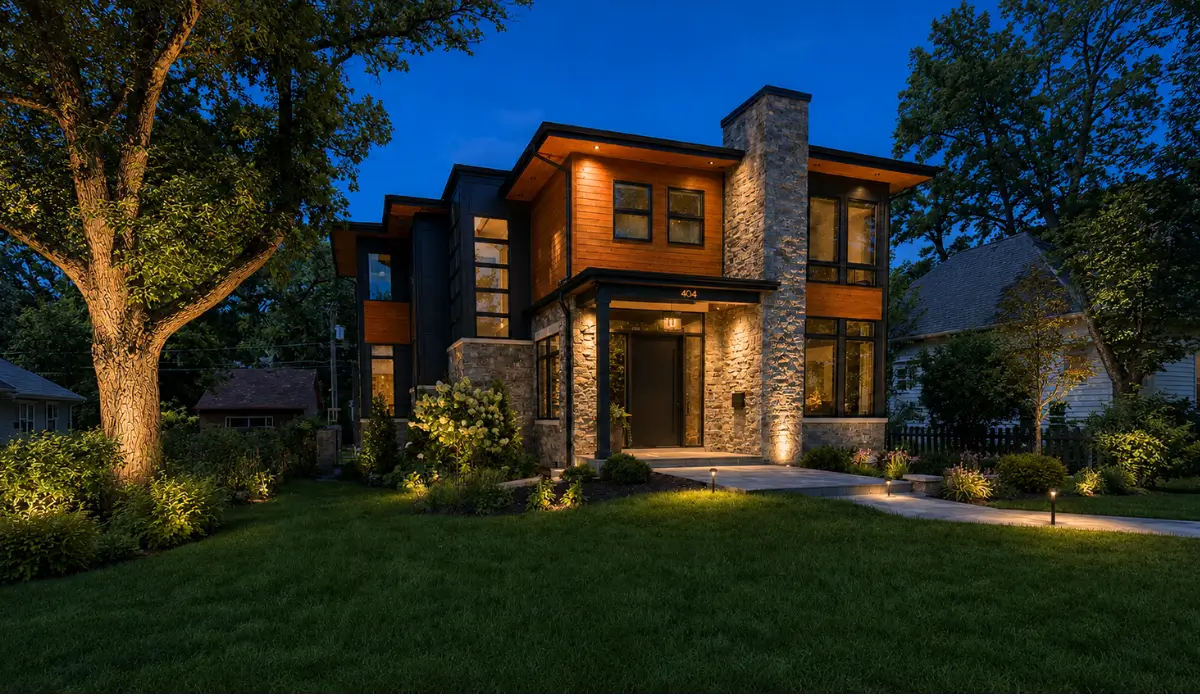
Outdoor lighting can make your property safer to navigate, more inviting after sunset, and more useful as fall brings earlier evenings. Thoughtful placement can also strengthen curb appeal and help you get more everyday value from landscaped areas and outdoor living spaces.
That value is not limited to resale. Better visibility, a welcoming entrance, and usable outdoor areas can improve how a property functions without assuming a specific financial return.
Tommy Pollina Landscape Company has worked with residential and commercial landscapes since 1982. We consider lighting alongside plants, hardscaping, walking routes, and the outdoor spaces people actually use.
The Front Walk Experience
Imagine turning into your driveway after sunset. The route to the front door should be easy to follow without making the front yard overly bright.
Three parts of the arrival experience deserve attention:
- Pathway visibility: Path lights can help people recognize turns, steps, edges, and changes in elevation. Strategic placement matters more than filling the entire walkway with uniform light.
- Entry visibility: Lighting around the doorway, steps, and house numbers can make arrival easier without overpowering the front landscape.
- Curb appeal: Selected trees, planting beds, masonry, and architectural details can create depth after sunset without washing the entire yard in uniform brightness.
Poorly aimed fixtures can create glare and make nearby darker areas harder to read. Keeping light targeted and controlled reflects responsible outdoor lighting principles that focus on putting light where and when it is needed.
Our residential landscape lighting services consider the front walk in relation to the surrounding property. Outdoor lighting installation works best when fixture placement responds to architecture, plants, hardscape, and normal walking routes.
Thoughtful lighting can support three kinds of practical value:
| Type of Value | What Thoughtful Lighting Can Change |
|---|---|
| Everyday | Keeps entrances, paths, patios, and gathering areas more useful |
| Visual | Keeps selected landscaping and architecture visible after dark |
| Safety | Helps identify steps, edges, grade changes, and walking routes |
These benefits can matter whether or not you plan to sell. A specific resale return depends on many factors, so lighting should not be treated as a guaranteed dollar-for-dollar investment.
Around the House: How Outdoor Lighting Shapes the Property
Continue around the house and the needs change. Mature trees, planting beds, gates, architectural details, and side yards each play a different role after sunset.
A mature tree may become a focal point when its branching structure is illuminated, while planting beds may need only enough light to create depth. Brick, stone, columns, and other architectural features can gain definition without overpowering the house.
Think about the property in five zones:
- Arrival: driveway, front walk, steps, and entrance
- Architecture: walls, columns, masonry, and distinctive details
- Landscape: trees, planting beds, and specimen plants
- Movement: side yards, gates, paths, and elevation changes
- Living: patios, cooking areas, seating, and fire features
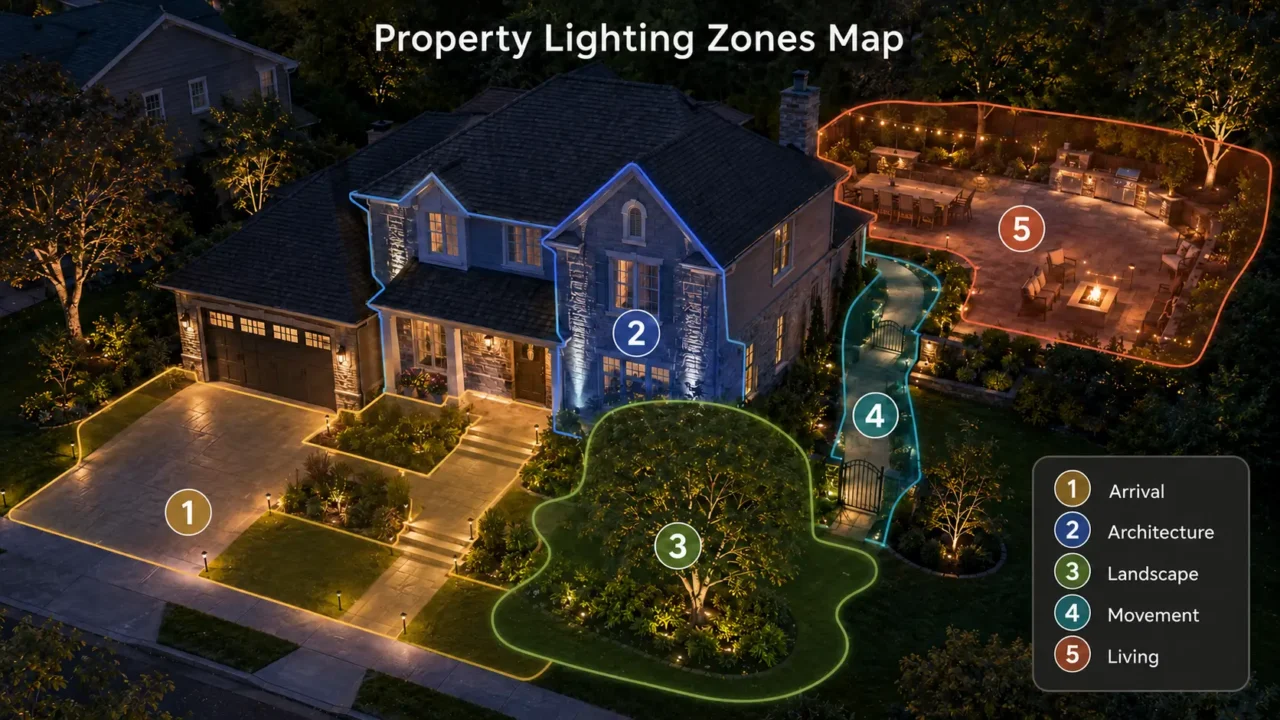
Five Property Lighting Zones for Better Outdoor Living
Planning Outdoor Lighting as Part of the Landscape
These zones do not need equal brightness. Movement areas need comfortable visibility, while landscape and architectural areas often depend more on controlled contrast.
A professional landscape lighting installation should also account for change. Shrubs widen and tree canopies fill out, potentially blocking or redirecting light over time.
The landscape project gallery and our summer landscape makeover features show how planting, hardscape, and outdoor living areas function as connected parts of a property.
A search for a landscape design company near me may begin with one need, but lighting benefits from that broader view. It also reflects the landscaping background and experience behind Tommy Pollina Landscape Company.
The Backyard After Sunset
As fall days shorten, a patio that disappears into darkness becomes harder to use. A well-planned lighting design can keep outdoor kitchens, fire features, seating areas, entertainment spaces, and connecting paths functional after sunset.
Match the light to the activity:
- Cooking: Use clear task lighting around outdoor kitchen work surfaces.
- Gathering: Keep dining, seating, and fire-feature areas softer and comfortable.
- Movement: Illuminate routes between doors, patios, steps, and gathering areas.
In a thoughtful backyard landscaping design, these spaces should not receive identical lighting. The right balance supports visibility where people work and move while preserving a more relaxed atmosphere where they gather.
Our outdoor living trends and backyard hosting upgrades show how cooking, dining, seating, and circulation work together when a backyard is used after sunset.
Energy use is another part of the backyard decision. LEDs can use less electricity than traditional incandescent lighting, while the U.S. Department of Energy provides additional guidance on purchasing energy-efficient light bulbs.
Timers and compatible controls can limit unnecessary operating time. Actual savings depend on the fixtures, operating hours, controls, and overall design, so the practical goal is to light each area appropriately without running more fixtures or hours than the property requires.
Safety Areas Most Homeowners Miss
Some hazards are easy to overlook away from the main entrance. During an evening walk, check for:
- Steps and grade changes that become difficult to distinguish
- Walkway edges that disappear into lawn or planting
- Retaining walls beside walking routes
- Gates and side-yard access with limited visibility
- Plants that partly block a path
- Glare from fixtures aimed toward people’s eyes
- Loose pavers or damaged steps that remain physical hazards
Lighting can reveal a hazard, but it cannot repair one. A loose step, uneven paver, damaged retaining wall, or deteriorated surface still requires attention to its physical condition.
Our brick and stone hardscaping includes retaining walls, steps, patios, walkways, and paver surfaces. Separating visibility from surface condition helps determine whether the issue involves lighting, hardscape, or both.
If a hardscape company near me search begins with a damaged step, paver, or retaining-wall concern, evaluate the physical problem separately from the light around it. Better visibility does not correct an unsafe surface.
Why September Is Ideal for Lighting Projects
September can be a useful time to evaluate lighting because sunset arrives earlier while outdoor areas may still be in regular use. Walking the property after dark makes it easier to notice where movement becomes difficult and which spaces lose usefulness.
Three seasonal factors can shape the decision:
- Time before holiday activities: Earlier planning can provide more time to address permanent lighting needs. Installation timing still depends on weather, site conditions, materials, project size, and scheduling.
- Outdoor working conditions: September may offer workable conditions before colder late-fall weather, although conditions vary by year and property.
- More fall use: Lighting can keep patios, paths, entrances, and gathering areas useful as evenings grow longer.
Fall also creates a natural point to distinguish permanent lighting from seasonal decorating. Permanent systems support year-round visibility and outdoor use, while holiday lighting installation serves a temporary seasonal purpose.
Fixture direction remains important. Shielding and aiming light where it is needed can help limit unnecessary glare and spill, consistent with National Park Service outdoor lighting principles. Our landscaping FAQs address common questions about project planning and related landscape work.
Before choosing fixtures, decide what needs to work better after sunset:
- Visibility: Which entrances, steps, paths, or elevation changes are difficult to read?
- Use: Which patios, cooking areas, or gathering spaces should remain functional longer?
- Emphasis: Which trees, planting beds, masonry, or architectural details deserve attention?
Some properties need only focused improvements, while others benefit from considering lighting alongside planting, hardscaping, and outdoor living areas. Client landscape reviews can help homeowners evaluate what it is like to work with our team before making that decision.
| Once you know what needs to work better after sunset, plan your landscape lighting with Tommy Pollina Landscape Company or call 847-698-6868 to talk through those priorities and determine an appropriate direction for your property and project scope. |
Latest Posts:
- Landscape Lighting Ideas to Make Your Backyard Shine This Summer
- Top 5 Spring Planting Mistakes Homeowners Make
- The Best Backyard Upgrades for Memorial Day Hosting
- Winter Drainage Solutions to Prevent Ice Build-Up Around Glencoe Homes
- Tree Trimming Season: When, Why & Best Time to Trim Trees
- Hardscape Maintenance Tips for Icy Winters in Winnetka
- Lawn Looking Patchy? 3 Fixes Before Summer Heat
- How to Winterize an Outdoor Kitchen in Wilmette and Park Ridge
- 6 Must-Have Features for Your Summer Landscaping Makeover
- Signs Your Lawn Has Winter Drainage Problems (And What to Do Now)
- Are Sprinklers Wasting Water? Signs It’s Time for a Check
- Planning Off-Season Landscaping Early for a Smoother Spring Build
- Is It Time to Replace Your Old Patio? 4 Signs to Watch For
- What Happens If You Don’t Remove Snow From Your Lawn?
- How to Protect Your Landscaping From Extreme Summer Heat
- Valentine’s Day Garden Prep: Plants That Bloom Beautifully by May
- Outdoor Living Trends: Mid-Summer Upgrades Worth the Investment
- Backyard Flooding? Why Early Spring Is the Best Time for Drainage Work
- Your July Landscape Checklist: 8 Tasks to Keep It Thriving
- Thinking of a Patio? Why February Is Prime Time for Hardscape Planning
- Backyard Projects to Finish Before Labor Day
- 3 Landscape Design Ideas to Lock In Before Spring Rush Starts
- Reseed Your Lawn Before Summer Ends: A Lawn Recovery Plan
- What to Do First When Prepping Your Lawn for Spring
- When to Book Fall Cleanup (Hint: It’s Earlier Than You Think)
- Essential Spring Landscaping Services to Book Before April
- How Outdoor Lighting Boosts Home Value & Safety This Fall
- Why Mulching in April Protects Your Garden All Year Long
- 5 Landscape Design Fixes to Make Before Winter Comes
- Outdoor Kitchens in Park Ridge: A Must-Have for Summer
- Evergreens and Shrubs in Glencoe with Cold-Weather Plant Installation
- Functional & Beautiful Retaining Walls for Winnetka Homes
- Transforming Small Backyards in Kenilworth with Hardscaping
- 5 Landscape Design Trends for Glencoe Homeowners in 2025
- French Drain vs. Channel Drain: Which Works Best for Glenview Homes?
- Landscape Drainage Solutions That Actually Work in Winnetka
- Planning a Late Summer Hardscape Installation in Park Ridge
- Outdoor Kitchen Add-Ons Worth the Investment in Glencoe
- We’re Featured on Redfin! Backyard Privacy Tips from Tommy Pollina Landscaping
- Overwatering or Drying? Smart Irrigation System Installations
- Creating Multi-Level Hardscape Designs for Glenview Backyards
- Drainage Upgrades to Prevent Fall Flooding in Park Ridge
- Best Arborvitae Varieties for Privacy in Winnetka and Wilmette
- Designing Outdoor Kitchens with Built-In Fire Features in Glencoe
- Retaining Wall Designs to Manage Slopes in Kenilworth
- Landscape Installation Ideas to Boost Curb Appeal in Lake Forest
- Fall Drainage Maintenance Checklist for Glenview Homeowners
- The Best Time for Arborvitae Installation in Kenilworth & Glencoe