
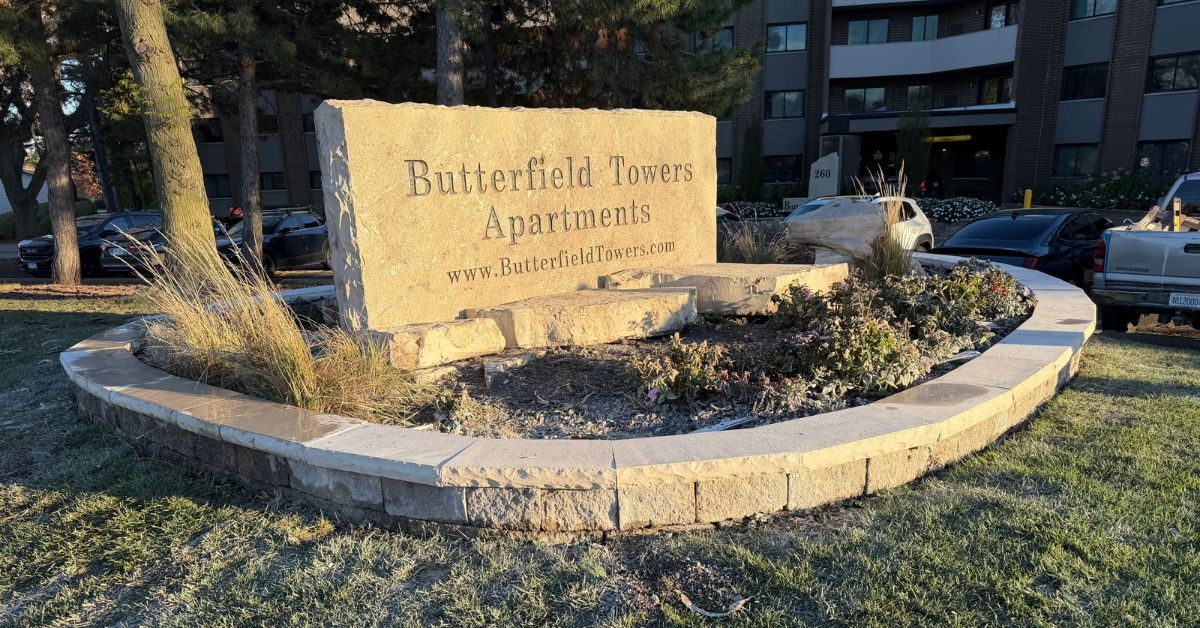
This retaining wall restoration project in Norridge, Illinois, addresses significant damage caused by a vehicle impact to an existing retaining wall and the surrounding landscape island. The collision shifted approximately half of the wall and damaged several large outcropping stones, requiring a coordinated repair process involving demolition, concrete foundation reconstruction, masonry work, stone replacement, and lighting improvements.
The project is organized into multiple phases to address the damaged structures and rebuild the affected areas. Work includes carefully removing and staging the displaced wall materials, constructing reinforced concrete bases to support the retaining wall and large outcropping stone, rebuilding the wall with the existing brick, and replacing the coping along the complete wall for a consistent finish.
Project Goals
- Remove and safely stage the damaged section of the existing retaining wall.
- Reconstruct the concrete support base for the large outcropping stone.
- Install a new concrete sub-base to support approximately 50 feet of retaining wall.
- Rebuild the damaged retaining wall using the existing brick material.
- Replace the coping along the entire wall with Unilock Ledgestone coping.
- Replace large outcropping stones that were broken and can no longer be reused.
- Use machinery to reposition and set the existing large stone.
- Install new low-voltage landscape lighting in the areas affected by the damage.
- Complete the final reinstallation and restoration work after the structural repairs are finished.
- Phase 1: Removal and Staging of the Damaged Retaining Wall
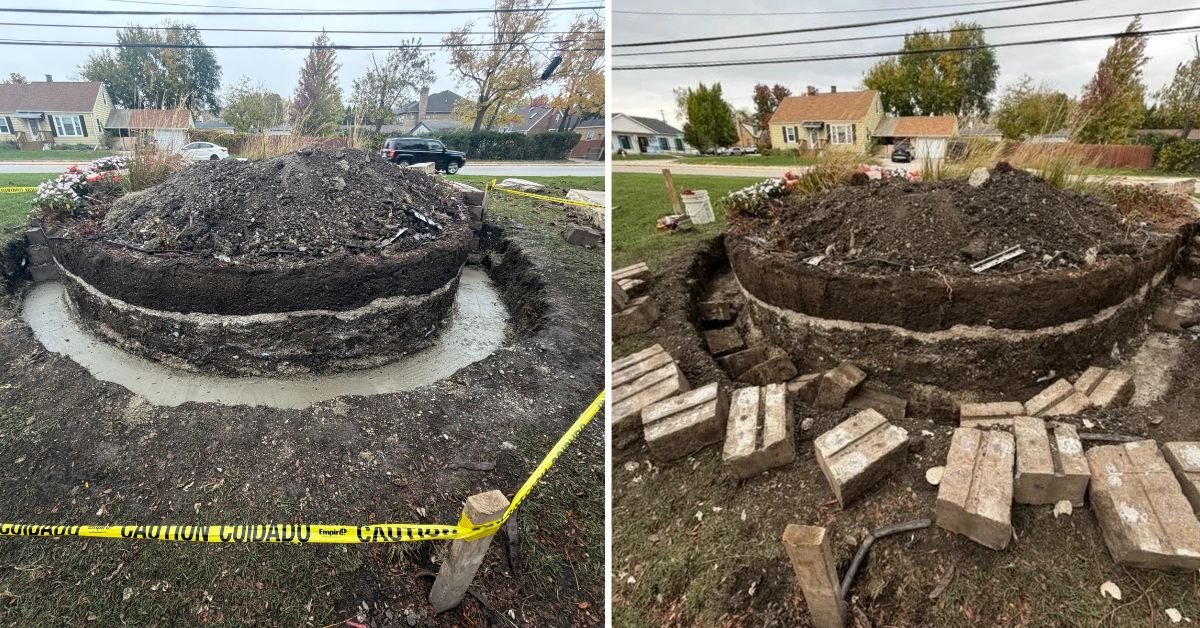
The project begins with removing approximately half of the existing retaining wall in the area affected by the vehicle impact. This section has shifted as a result of the collision and must be taken apart to provide access for the foundation and structural repairs.
The removed wall materials are carefully stacked to the side for reuse during reconstruction. This approach allows the existing brick to be incorporated into the rebuilt wall while clearing the affected area for the upcoming concrete and base work.
Removing the displaced section first provides access to the underlying conditions and creates the working space needed to reconstruct the wall’s supporting foundation.
Phase 2: Rebuilding the Concrete Base for the Large Outcropping Stone
The next phase focuses on reconstructing the concrete base in the center of the landscape island beneath the large outcropping stone that was moved during the impact.
The existing stone weighs approximately 7,000 to 8,000 pounds, requiring a substantial supporting foundation. A new reinforced concrete base is constructed to measure approximately 12 feet long, 3 feet wide, and 48 inches deep.
Rebar is installed within the concrete base to reinforce the structure. This foundation is designed to support the weight of the large stone once it is repositioned.
Because of the stone’s considerable weight, preparing an appropriate foundation is a critical part of restoring the landscape island and providing support for the existing outcropping feature.
Phase 3: Retaining Wall Sub-Base Reconstruction
Once the concrete base for the large stone is completed, work moves to rebuilding the retaining wall’s supporting sub-base.
A new concrete foundation is installed beneath the retaining wall, measuring approximately 1 foot wide by 1 foot deep and extending approximately 50 linear feet.
This foundation provides a new supporting base for the wall reconstruction. Establishing a consistent concrete footing along the affected length helps prepare the area for rebuilding the masonry above it.
The foundation work is an important step in addressing the damage caused by the vehicle impact and preparing the retaining wall for reinstallation.
Phase 4: Retaining Wall Reconstruction and New Coping
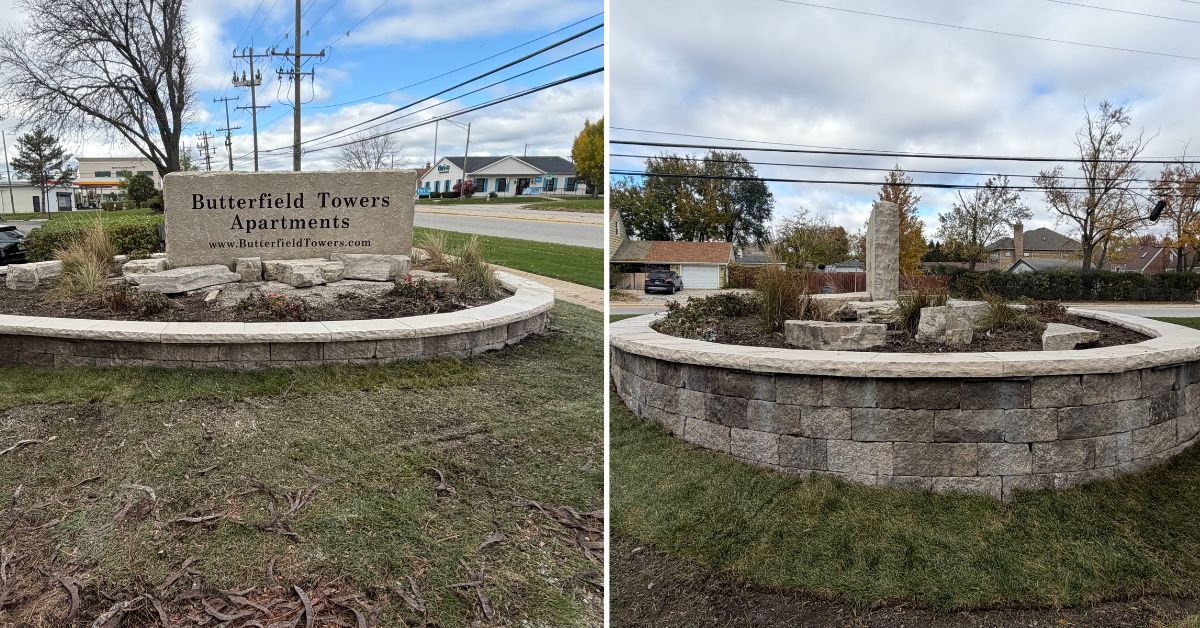
With the concrete foundation completed, the damaged retaining wall is rebuilt using the existing brick materials that were removed and staged during the first phase.
The reconstruction follows the existing wall design, maintaining its established appearance and layout. In addition to rebuilding the damaged section, the coping along the entire wall is replaced to create a consistent finish across both the repaired and existing portions.
New Unilock Ledgestone coping is installed along the complete wall. Replacing all of the wall tops helps ensure the finished structure has a uniform appearance rather than mixing new coping with older, weathered pieces.
This phase restores the wall’s visible masonry features while incorporating the new supporting foundation below.
Phase 5: Low-Voltage Landscape Lighting Installation
The vehicle impact also affected the landscape lighting in the damaged area. New low-voltage lighting is installed wherever needed to restore illumination around the repaired section.
The lighting work is coordinated with the retaining wall and landscape restoration so fixtures can be positioned within the affected areas after the structural repairs are completed.
This step helps restore the nighttime appearance and functionality of the landscape island and surrounding wall.
Phase 6: Replacement of Damaged Outcropping Stones
Several large outcropping stones were broken in half during the incident and can no longer be reused. This phase includes purchasing three to four replacement outcropping stones to take the place of the damaged pieces.
The replacement stones are selected to complement the existing natural stone features and help maintain the overall appearance of the landscape island.
Replacing the unusable pieces is necessary to restore the composition of the stone installation following the impact.
Phase 7: Mechanical Placement of the Existing Large Stone
The existing large outcropping stone, weighing approximately 7,000 to 8,000 pounds, requires machinery for repositioning and installation.
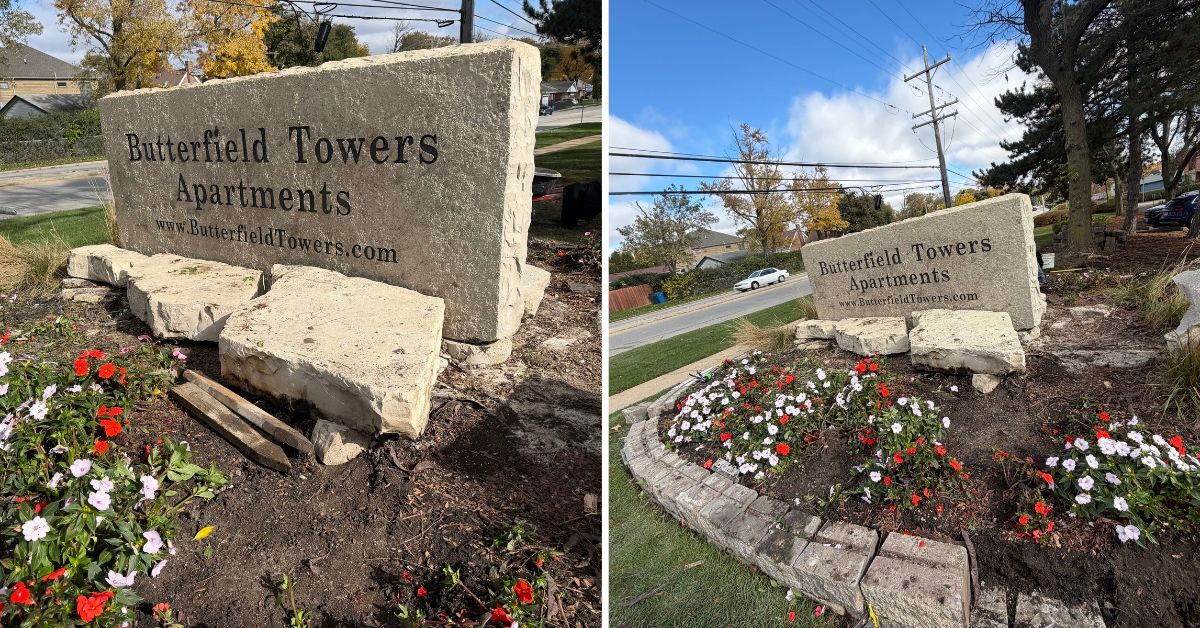
Once the reinforced concrete base has been completed and is ready to support the stone, equipment is used to carefully lift and set it back into position.
Due to the stone’s size and weight, this work requires coordinated handling and proper placement over the newly constructed foundation. The mechanical installation is an essential part of restoring the original landscape feature.
Phase 8: Final Reinstallation and Landscape Restoration
After the structural repairs, wall reconstruction, stone replacement, and lighting work are completed, the crew returns to finish the remaining reinstallation work.
This final phase brings the different components of the project together, completing the restoration of the affected landscape island and surrounding areas. The previously staged materials and remaining landscape features are addressed as part of the final work so the repaired areas can be integrated with the existing property.
The goal is to leave the retaining wall, outcropping stone features, and surrounding landscape in a coordinated and finished condition following the vehicle impact.
Why Proper Retaining Wall and Stone Foundation Repairs Matter
Retaining walls and large landscape stones depend on properly prepared foundations to support their weight and maintain their position. When a vehicle impact shifts a wall or moves a large stone, repairing only the visible damage may not address the underlying structural conditions.
Reconstructing the concrete bases, reinforcing the foundation for the large outcropping stone, and preparing a new footing for the retaining wall address the supporting structures before the visible features are rebuilt.
Replacing damaged stones and installing matching coping across the entire wall also helps restore a consistent appearance. By coordinating the foundation, masonry, stone placement, and lighting work, this project addresses the different types of damage caused by the collision.
Project Highlights
- Removal and staging of approximately half of the vehicle-damaged retaining wall.
- Reconstruction of a reinforced concrete base measuring approximately 12 feet long, 3 feet wide, and 48 inches deep.
- Rebar installation in the concrete foundation supporting the large outcropping stone.
- New retaining wall concrete sub-base measuring approximately 1 foot wide by 1 foot deep and extending 50 linear feet.
- Retaining wall reconstruction using the existing brick materials.
- Replacement of coping along the complete wall with Unilock Ledgestone coping.
- Installation of new low-voltage landscape lighting in the affected areas.
- Purchase and installation of three to four replacement outcropping stones.
- Mechanical repositioning and setting of the existing 7,000- to 8,000-pound outcropping stone.
- Final reinstallation and restoration of the affected landscape areas.
As you browse through the photos, you can see the different stages involved in repairing this Norridge retaining wall and landscape island after the vehicle impact. From removing the shifted masonry and reconstructing the concrete foundations to setting the large outcropping stone and rebuilding the wall, each phase addresses a different part of the restoration process.
The completed work brings together structural concrete construction, retaining wall reconstruction, natural stone placement, and landscape lighting improvements. By rebuilding the supporting foundations and restoring the damaged masonry and stone features, the project addresses both the structural and visual damage caused by the collision.
Please call 847.698.6868 or Contact Us
Tommy Pollina Landscape Company – serving Chicagoland since 1982.
Landscaping Services
- Emergency / Expedited Drainage
- Drainage
- Sump Pump Solutions
- Basement Waterproofing
- Grading and Regrading
- Landscape Design
- Landscape Installations, Plantings
- Lawn Maintenance
- Spring Cleanup
- Stump Grinding
- Tree Triming, Tree Removal, Stump Grinding
- Artificial Turf Installations
- Pool Removal
- Planters
- Irrigation and Sprinkler System
- Seasonal Planter, Potted Plants
- Cemetery Management
- Outdoor Design & Build: Full Outsource Project
- Custom Putting Greens
- Summer Makeover
- Trimming & Pruning
- Lighting
- Mulch
- Waterscaping
- Fall Plantings
- Fall Cleanup
- Seasonal Color: Fall and Holiday
- Holiday Decor, Holiday Lighting
- Snow and Ice Management
Featured Landscaping Projects
- Planting Flowers – Lanscaping Project in Kenilworth
- Wilmette Design Build Hardscape Renovation with Unilock Pavers, Custom Railings, and Integrated Drainage
- Park Ridge double-lot landscape installation project
- Custom Holiday Winter Container Pot Installation Project in Glenview
- Landscape Planting and Privacy Screening Installation Project in Wilmette
- Sump Pump Flow Well Drainage Project in Arlington Heights, IL for Improved Water Management
- Drainage System and Side Yard Grading Project in Harwood Heights, IL
- Landscape Edging, Rock Border & Berm Installation in Arlington Heights
- Seasonal Planter Design & Installation for Fall, Winter, Spring & Summer in Chicago
- Trimming and Pruning Service – Project in Wilmette
- Planting-Bed Landscape Installation Project in Winnetka
- Evanston custom outdoor kitchen island construction project
- Lincoln Park Garage Drainage Project with Nds-Channel Drain
- Chicago Foundation Drainage and Swale Grading Project
- Driveway, Walkway, and Patio Hardscape Restoration Project in Glencoe
- Bush Trimming, Tree Pruning, and Landscape Cleanup Project in Glenview, IL
- Drainage System and Retaining Wall Installation in Prospect Heights, IL
- Window Well, Downspout & Grading Drainage Project in Glencoe
- Drainage Landscaping Project in Northbrook
- Wilmette arborvitae wall project with layered shrubs, trees, privacy, curb appeal, and integrated landscaping
- Lake Zurich outdoor enhancement and planting project
- Park Ridge Front Staircase and Walkway Restoration Project
- Chicago Backyard Privacy Landscaping Project with Arborvitaes & Evergreens
- Sump Pump Discharge Extension and Drainage Improvement Project in Mount Prospect
- Brick Step Repair and Loose Brick Restoration Project in Wheeling
- Downspout Drainage System Installation in Buffalo Grove, IL
- Arborvitae Planting, Garden Bed & Drainage Extension in Chicago
- Foundation Grading & Concrete Removal Project in Highland Park
- Drainage Landscaping Project in Lake Forest
- Wilmette New Construction Landscaping with Bluestone Porch, Unilock Pavers, Deck, Sod, Irrigation, and Drainage Systems
- Schaumburg driveway reconstruction project with asphalt, concrete, Geo Grid, retaining wall, NDS drainage, and brick borders
- Park Ridge Landscape Lighting Installation Project
- Park Ridge Drainage System Replacement Project – Foundation Flooding Repair and PVC Regrading Solution
- Landscape Renovation and Plant Installation Project in Winnetka
- Front Entrance Brick Stair Repair Project in Buffalo Grove, IL
- Sump Pump Drainage System Installation in Deer Park, IL
- 5-Downspout Underground Drainage Installation in Long Grove
- Swimming Pool Removal, Concrete Patio & Landscape Restoration Project in Mount Prospect
- Starting a New Drainage Project in the City of Des Plaines
- Brick Driveway Channel Drain Project in the Village of Riverwoods
- Full Property Outdoor Makeover Project in Park Ridge – Landscaping, Hardscape, Drainage & Lighting Solutions
- Precision Drainage Engineering Project in the Village of Willowbrook
- Deerfield IL Pool Removal and Backyard Landscape Transformation Project
- Backyard Patio Expansion Project with Unilock Hollandstone in Schaumburg