Drainage Systems Built for Long-Term Performance
Water problems around a home are rarely cosmetic. When water is forced to remain above ground or too close to the foundation, it leads to recurring issues—saturated lawns, erosion, structural stress, and long-term damage.
Our drainage systems are designed to solve these problems permanently by moving water below grade, away from the home, and into properly engineered underground dispersal systems. This approach addresses the root cause of water issues rather than masking symptoms at the surface.
This is not a temporary fix. It is permanent drainage infrastructure, built to perform reliably for decades.
Engineered Solutions — Not Surface Corrections
During rain events, hundreds or even thousands of gallons of water can move across a property in a short period of time. When that water has nowhere to go, it pools, migrates toward foundations, and repeatedly damages turf and landscaping.
Our systems are designed to intercept water at multiple collection points and safely convey it underground through an integrated network of drainage components. Water is then dispersed back into the soil in controlled locations where it can naturally percolate without resurfacing or oversaturating critical areas.
Municipal Review & Drainage Constraints
As part of our design process, we coordinate directly with local engineering and building departments to evaluate all viable drainage options—including the possibility of tying into public sewer or storm infrastructure.
In many communities, including Park Ridge and surrounding areas, no accessible public sewer or storm line exists within neighboring yards, making municipal tie-ins infeasible. When that is the case, drainage systems must be engineered to operate independently, with enough capacity and redundancy to manage heavy rain events without relying on public infrastructure.
Scope & Technical Complexity — What Goes Into a Proper Drainage System
Our drainage systems are comprehensive, engineered water-management networks made up of multiple specialized components working together as a single system. These may include:
- French Drain Systems
Subsurface drainage networks using perforated pipe surrounded by stone or engineered drainage media to capture groundwater and surface infiltration and redirect it away from problem areas.
- Solid PVC Conveyance Lines
Rigid, long-lasting PVC pipe used to move large volumes of water underground between collection points, basins, and discharge locations with minimal risk of collapse or failure.
- Buried Downspouts & Roof Runoff Integration
Roof downspouts are buried and tied directly into the drainage system, preventing water from dumping at the foundation and overwhelming surface grades.
- Catch Basins with Drainage Grates
Underground collection structures that intercept surface water and debris at low points before it enters the drainage system. These basins protect downstream components from clogging and improve system longevity.
- Channel Drains / Trench Drains
Linear surface drains installed along driveways, walkways, patios, and hardscape edges to capture sheet flow and direct it into the underground system.
- Flow Wells & Dry Wells
Deep underground dispersal structures designed to manage large volumes of water by temporarily storing it and allowing it to percolate safely into surrounding soils over time.
- Underground Bubblers / Pop-Up Emitters
Controlled discharge points that remain closed when inactive and open under water pressure to release stormwater at designated locations without allowing backflow.
- Elbows, Couplings, Transitions & Junctions
Precision fittings that allow drainage lines to navigate changes in direction, elevation, and pipe size while maintaining proper flow and watertight connections.
- Sump Pump Discharge Integration
High-capacity sump discharge lines tied into solid conveyance systems to move water far enough from the home to prevent recirculation or reentry.
- Final Grading & Soil Redistribution
Surface grading is adjusted to support the drainage system by encouraging water to move toward collection points and away from foundations and structures.
Systems of this scale require precise elevations, consistent slope, correct materials, and exact execution. Even minor installation errors can lead to water resurfacing, lawn failure, frozen or collapsed lines, or long-term foundation stress.
Installed by Our Full Drainage Team
Because of the size, capacity, and long-term importance of these systems, installation is completed by our full drainage team as a single, coordinated effort.
Every system is installed by:
- Our drainage design engineer
- Our drainage foreman with more than 25 years of experience with our company
- Our dedicated drainage crews
- All operating under methods and standards refined through 42+ years and more than 10,000 completed drainage installations
Proper execution at this level depends on expert precision and proven field experience.
Experience With Civil-Engineer-Grade Drainage Systems
We are regularly engaged to install civil-engineer-grade drainage systems, including projects where a city, municipality, or county has mandated a stamped engineering plan due to system failure, regulatory oversight, or project complexity.
In these situations, our role is to execute engineered drainage plans exactly to specification, coordinate inspections, and work through municipal and county review processes. These projects shape how we approach all complex drainage work: strict adherence to design, proactive coordination, and zero shortcuts.
When drainage carries long-term risk and regulatory visibility, precision and experience are not optional—they are required.
Why Execution Matters
Drainage systems either work as designed—or they don’t.
When systems are not executed correctly, problems often don’t appear immediately. Instead, they surface months or years later as recurring water issues, turf failure, or system breakdowns that require excavation and replacement.
A significant portion of our work involves correcting drainage systems that were installed without the level of experience required for complex water management. These issues are avoidable when the system is designed and installed as a single, coordinated plan from the start.
Our Objective
Our objective is straightforward:
to deliver a drainage system that functions as intended, protects your property, and does not need to be revisited in the future.
By keeping design, installation, and accountability under one highly experienced team, we reduce risk, eliminate uncertainty, and deliver drainage solutions built to last.

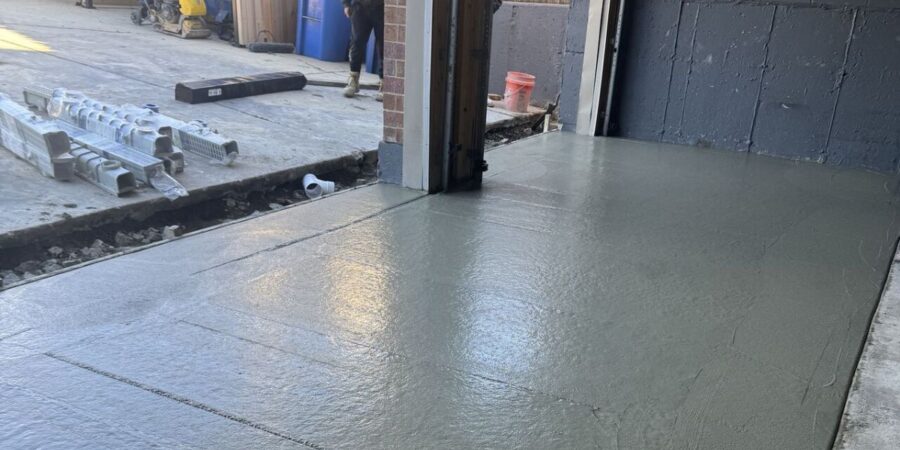
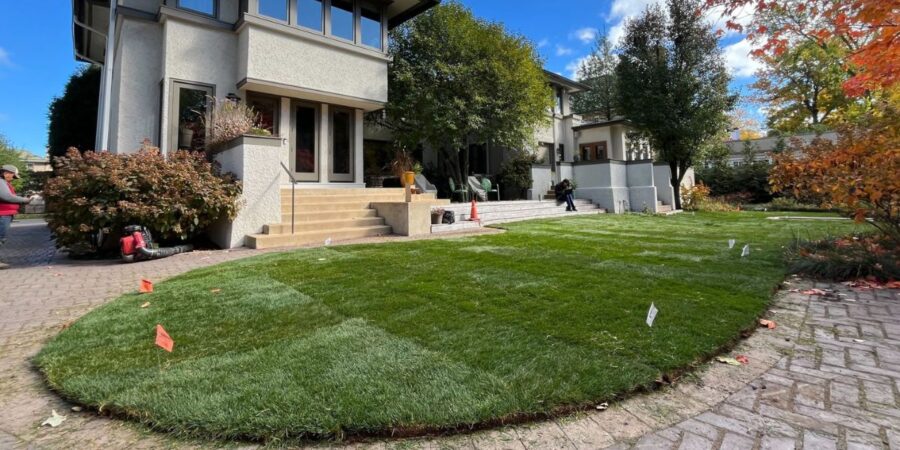
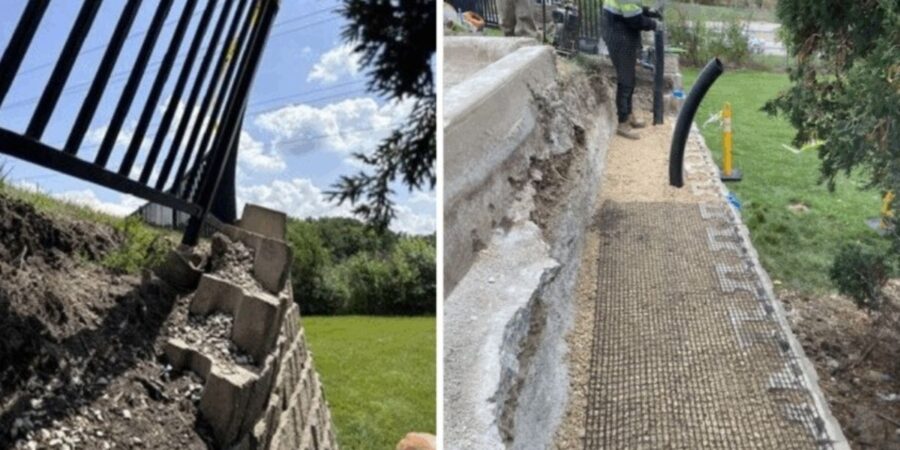
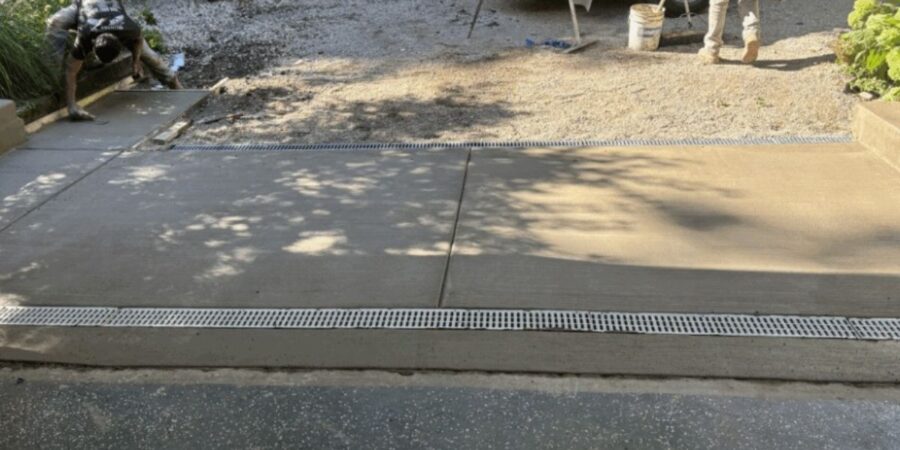 For years, this homeowner’s yard, driveway, garage, and foundation flooded every time it rained. After over 45 years of solving complex drainage problems, Tommy Pollina Landscape Co. Inc knew a simple fix wouldn’t be enough. This project required a complete, integrated NDS drainage solution that connected every part of the property. The team began with an extensive system audit using scopes to trace water flow and blockages, followed by laser-guided measurements to achieve precise grading and connectivity. They reconstructed and re-pitched the driveway with dual channel drains tied into the system, performed hydro-jet cleaning to clear years of buildup, and rebuilt and rerouted drainage lines for long-term reliability. Every component — from yard to foundation — now works as one cohesive system, keeping the property dry no matter the storm.
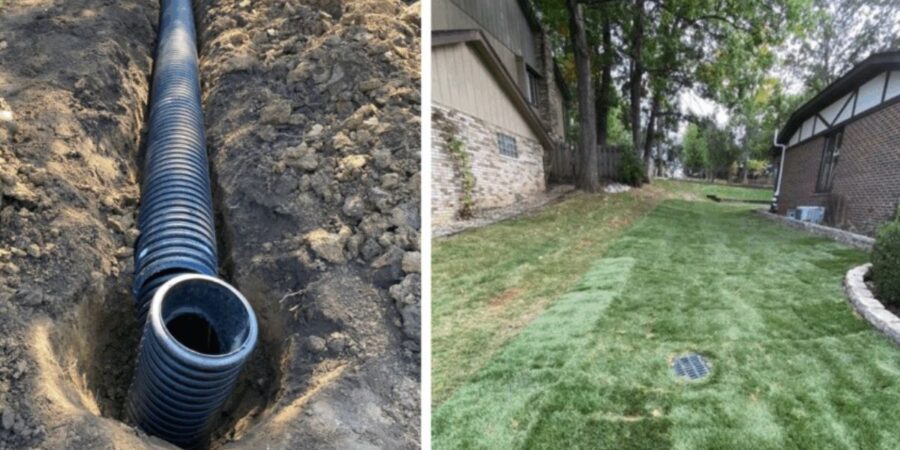 This Willowbrook property sat at one of the lowest points in the neighborhood, where years of heavy rainfall caused constant flooding with nowhere for the water to go. To solve it, Tommy Pollina Landscape Co. Inc. designed a precision-engineered drainage system focused on grading, flow control, and soil balance. The team stabilized slopes with timbers, added soil and crabapple trees for structure, and finished with mulch for root protection. They regraded the entire backyard, installed new sod for stability, and built a 77-foot-long engineered swale with a 40-foot extended drain line to redirect runoff safely away from the home. What was once a floodplain is now a fully functional water management system – protecting the foundation, restoring the yard, and turning a problem property into a lush, usable landscape.
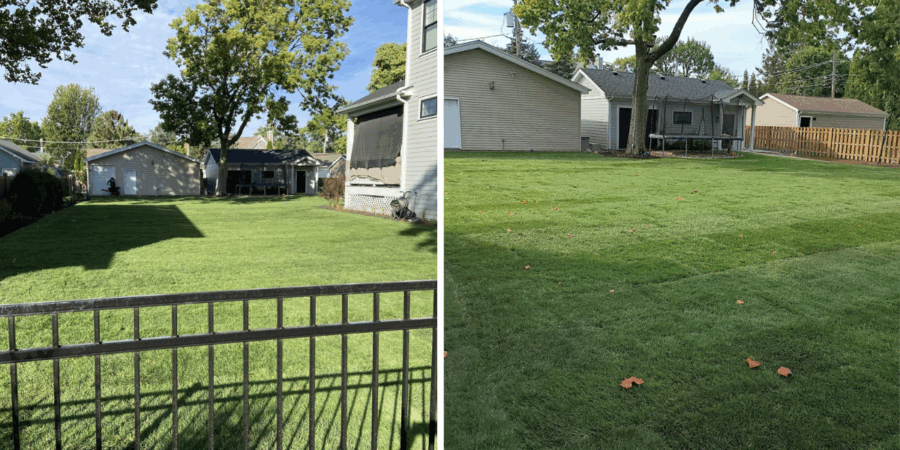 A Park Ridge homeowner took a bold step by purchasing the neighboring property and demolishing the house to create a stunning double-lot yard. Tommy Pollina Landscape Co. Inc. brought the vision to life with over 800 rolls of sod, enriched soil, and strategic plantings that blend beauty and privacy—featuring trees like Quaking Aspen and Green Giant Arborvitae, as well as vibrant perennials and shrubs including Hydrangeas, Catmint, and Dwarf Korean Lilac. Clean-lined hardscaping with Unilock pathways, river rock accents, and a custom drainage system completed the transformation. The result: a lush, expansive landscape rarely seen in the area.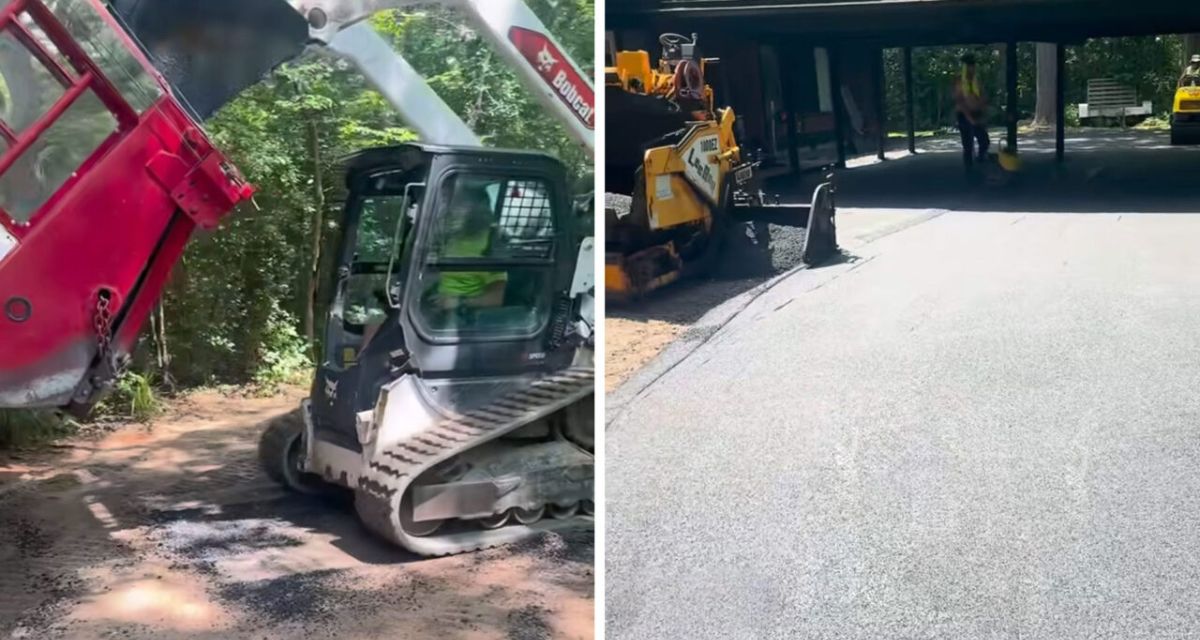
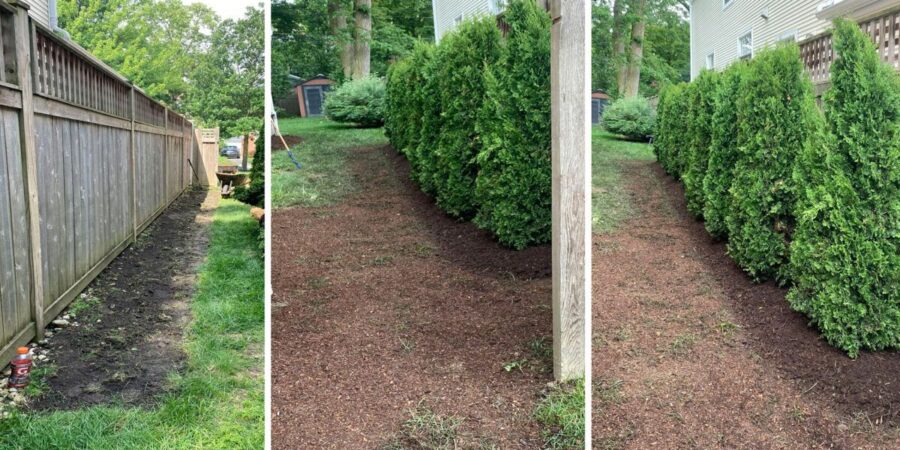 Redfin featured Tommy Pollina Landscape Co. Inc — and this Village of Wilmette project shows exactly why.
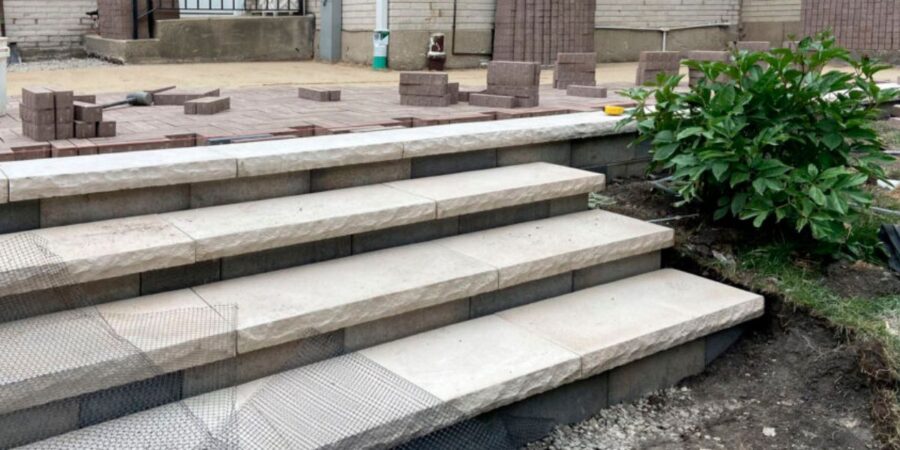 Tommy Pollina Landscape Co. Inc. is deep into a full transformation in the Village of Wilmette — and this one’s shaping up to be something special. It’s more than just a facelift — it’s a full-scale design-build upgrade.
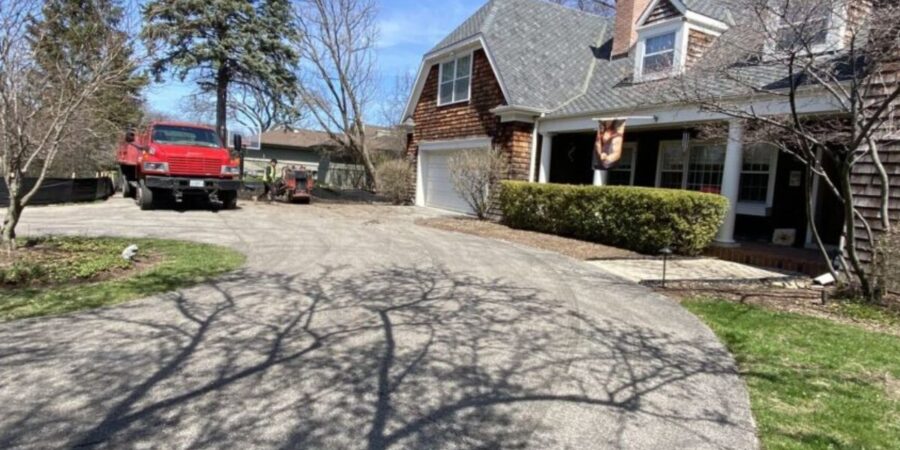
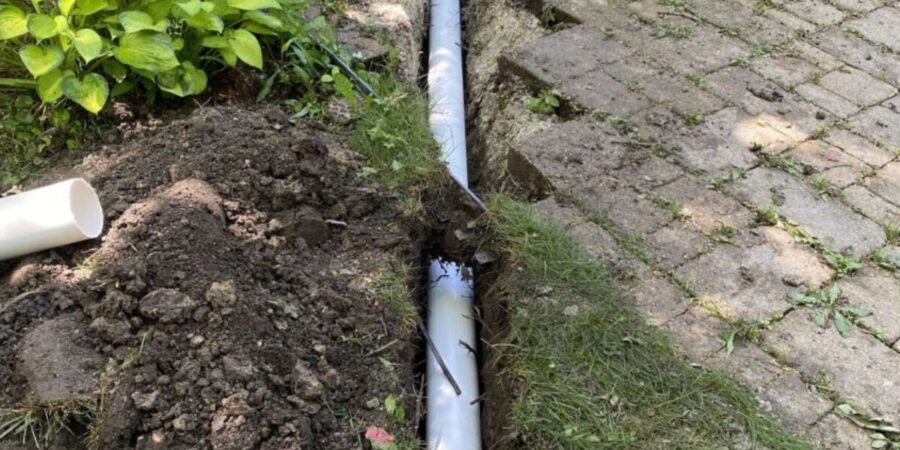 Tommy Pollina Landscape Co. Inc is creating one fully integrated system to keep this property dry and functional for years to come. This large project includes a 5,500 sq. ft. asphalt driveway combined with a custom drainage network that ties together every part of the landscape — from excavating the brick patio and resetting pavers to installing catch basins and extending downspouts.Every detail is designed to work together seamlessly so water stays where it belongs and your property looks great.
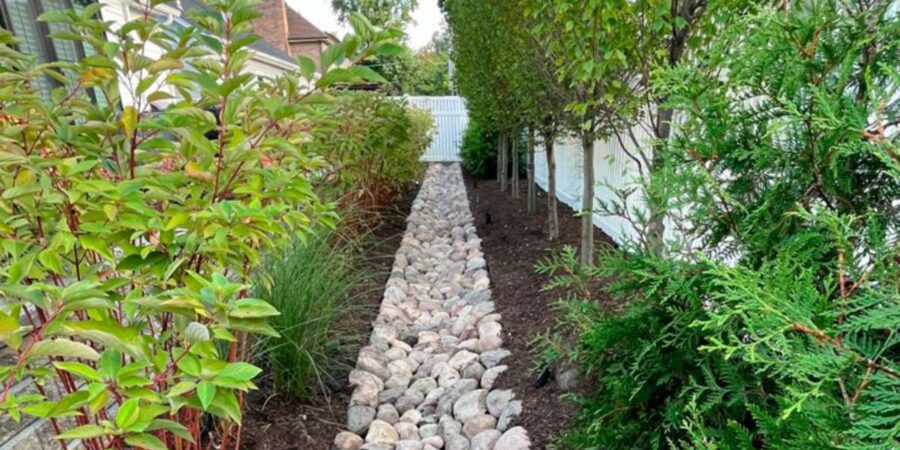 At Tommy Pollina Landscape Co. Inc we’re all about more than just curb appeal — we create functional landscaping solution that are designed to look beautifull and sove problems. This recent project is a perfect example: A backyard swale lined with medium-sized river rock boulders now redirects excess water that used to flow in from the neighbor’s yard. At the end of the swale, we installed flow wells that capture and contain the runoff underground, preventing flooding and standing water in the yard.
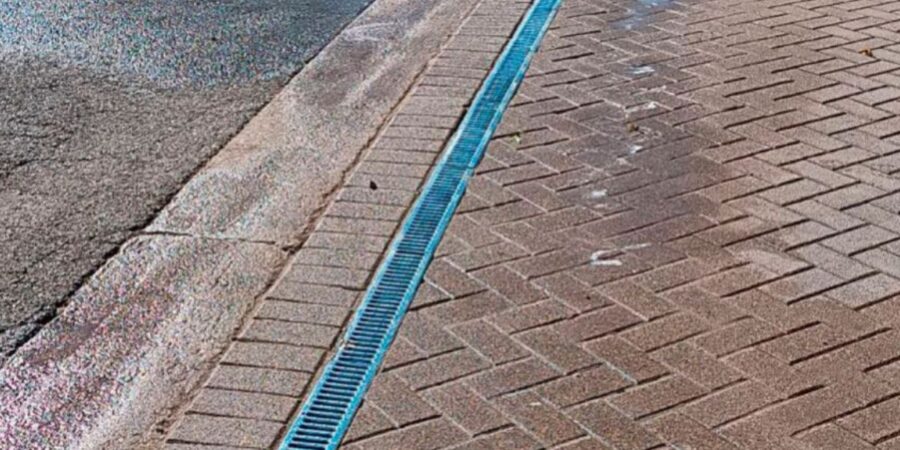 Another recent project in the Village of Riverwoods that required the expertise of multiple specialized crews working together to install a channel drain at the bottom of a brick driveway.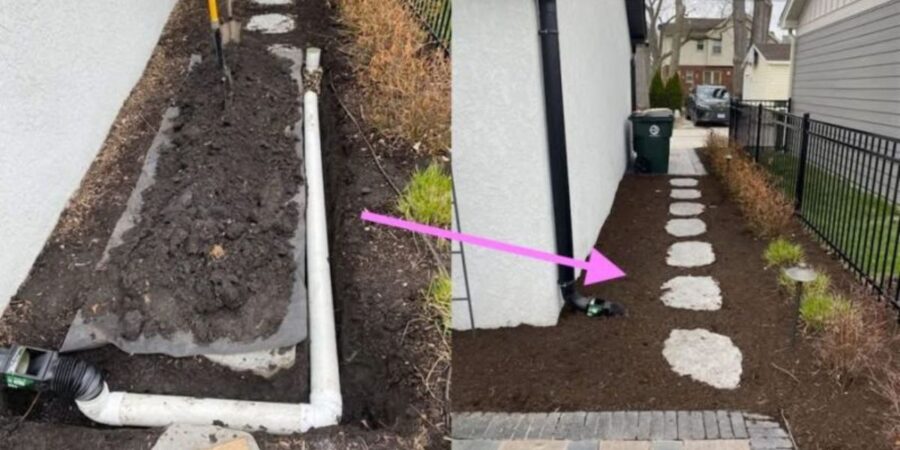
 When a Village of Northfield homeowner started planning a major addition with a high-end builder, the Village stepped in and flagged an issue: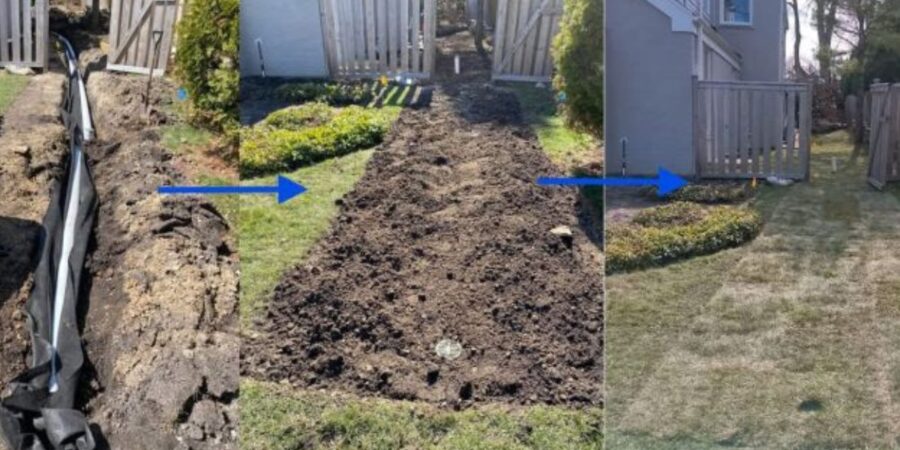
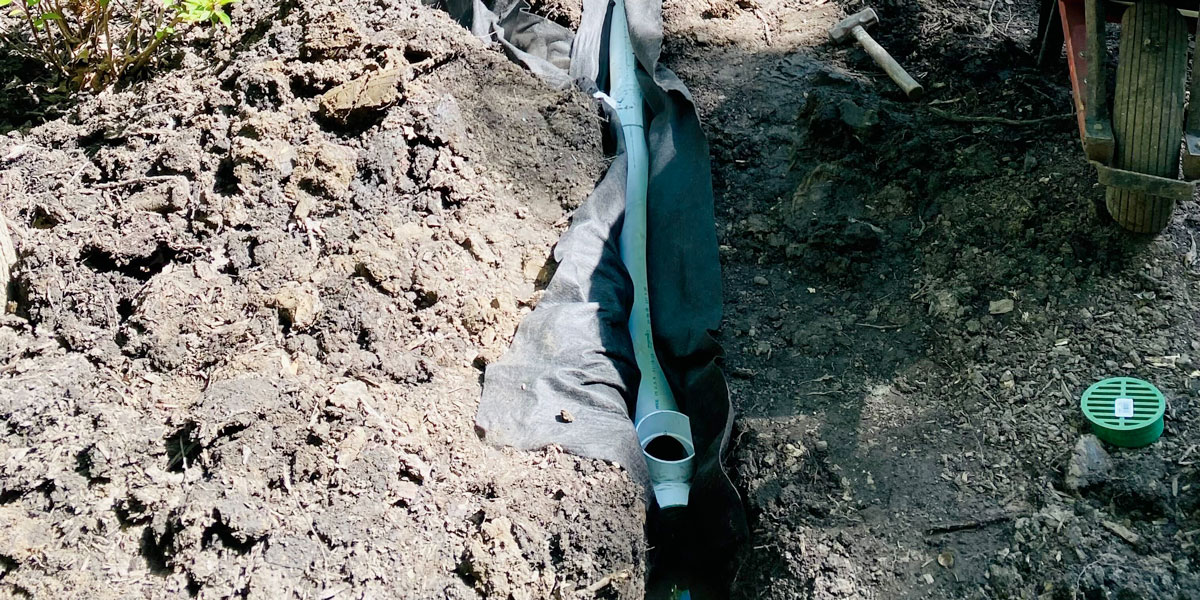 To improve drainage in the southeast area of the backyard, 17 yards of soil will be brought in to fill low spots and fine-graded to direct water toward two oak trees. A swale will be installed in the middle of the low area, pitched from right to left to drain between the trees. To enhance water collection, an 82-foot French drain system will be installed, with one section running through the swale and another along the east side of the yard, starting 10 feet south of the fence and connecting to the first drain. The project will conclude with final grading to ensure proper drainage, leaving the area ready for seeding.
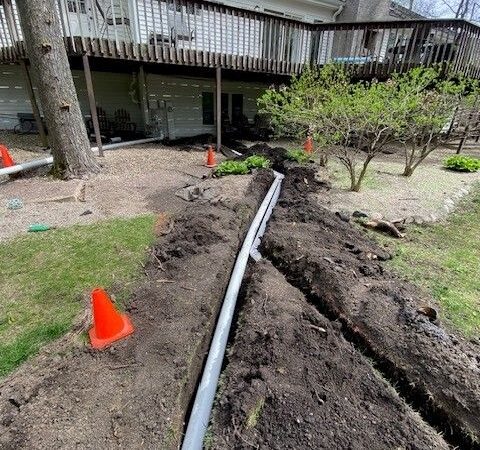 Custom Drainage Solution Spanning Over Two Football Fields. At Tommy Pollina Landscape, we recently broke ground on a full-scale drainage project unlike any other—a custom system that extends the length of more than two football fields in durable PVC piping. Designed to eliminate chronic flooding and transform unusable outdoor space, this is a shining example of what over 45 years of drainage expertise can achieve.
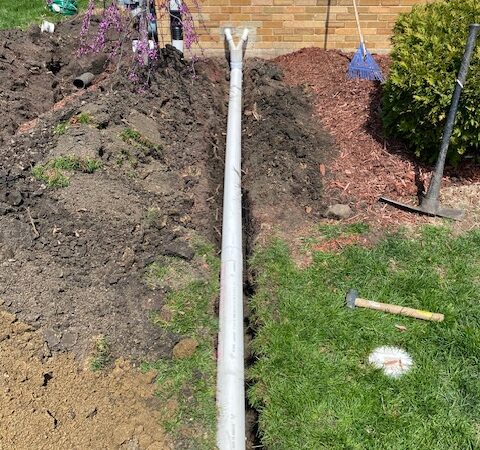 Today we started a project where we are burying the downspouts and sump pump discharge underground and engineering them to flow into one fully integrated drainage system. Instead of water running out onto the lawn and causing flooding, everything will be directed safely underground, keeping the yard dry and usable. By connecting the roof runoff and sump pump into one streamlined system, we’re preventing standing water, protecting the foundation, and following all city of Des Plaines guidelines. Solving Landscape and Outdoor Problems For over 45 years
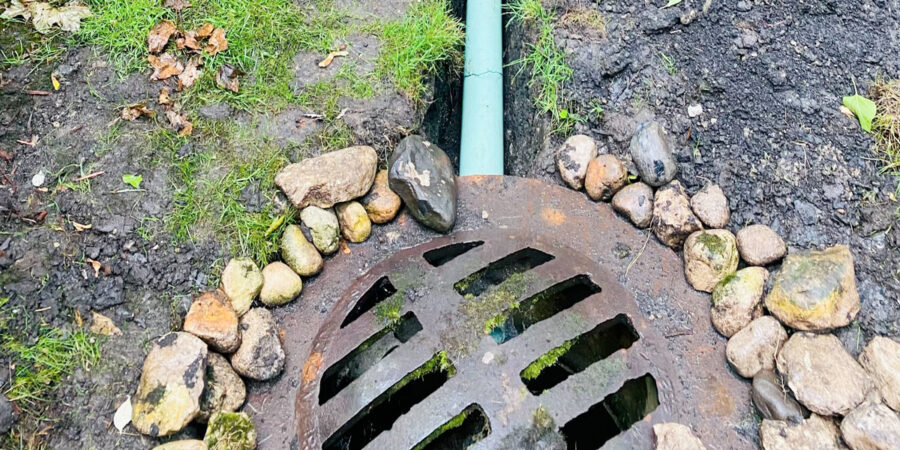 Northbrook Backyard Drainage Installation Plan: Catch Basin, French Drain Installation, Secondary Catch Basin Installation, Additional French Drains, Final Catch Basin & Solid PVC Drainage Installation, Lawn Restoration & Finishing Touches.