
How to Spot Winter Drainage Problems Before Spring Damage Starts
Winter drainage problems can quietly damage your lawn before spring arrives. Soft spots, lingering moisture, or mildew odors often point to a water issue that may lead to erosion or foundation damage. These signs often prompt searches for a drainage company near me.
Tommy Pollina Landscape Company helps homeowners spot these issues early with expert drainage solutions designed for winter conditions. Below are the signs to watch for and the steps that can still be taken now to protect your property before the thaw.
Don’t wait until soaked soil becomes structural damage. Our team understands how cold-weather drainage issues escalate quickly. Start with an expert assessment and get practical solutions that keep your property dry, stable, and protected before spring arrives.
What Drainage Problems Look Like in Winter
Some of the clearest signs of winter drainage problems appear before the snow has fully melted. These warning signals often go unnoticed until the damage is already underway.
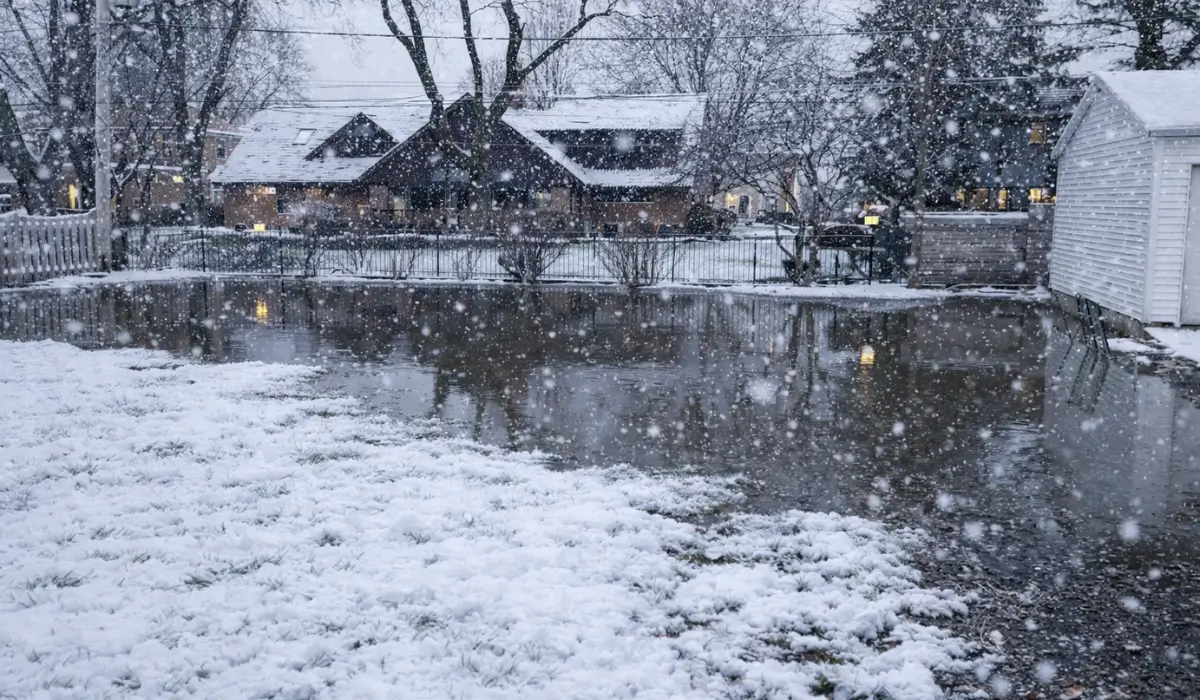
🧊 Standing Water After Snowmelt
Water pooling in specific low spots, while the rest of the yard stays dry, often points to a grading and drainage imbalance. As outlined in the EPA Stormwater Handbook, improper site grading and surface water flow contribute to long-term saturation and runoff problems.
🧊 Ice Patches That Keep Forming
Recurring ice slicks in the same areas signal improper water flow. As melted snow has no path to drain, it refreezes into hazardous surfaces. This is a common sign homeowners report when searching for a drainage contractor in colder months.
🧊 Mushy or Soft Lawn Areas
If sections of your lawn feel spongy despite freezing temperatures, moisture may be trapped beneath the surface. Over time, this saturation promotes root rot, soil compaction, and fungus—issues that worsen when ignored until spring.
🧊 Musty or Mildew Odors
When moisture lingers in shaded or poorly drained areas, a musty smell often develops. This suggests water is not moving away from your home efficiently, which can require deeper slope correction or support from a qualified lawn drainage contractor.
“If your lawn feels like a sponge, it’s trying to tell you something.”
These signs are subtle but serious. Spotting them early helps prevent major issues tied to foundation shifts and expensive turf restoration later in the year.
How Winter Drainage Problems Get Worse in Cold Months
Frozen ground doesn’t stop water. It traps it. As snow begins to melt, frozen soil creates a barrier that prevents absorption. Water pools, refreezes, or shifts toward areas it shouldn’t, often resulting in damage around your home’s foundation.
Here’s why drainage issues often become more severe during colder months:
🔷 Frozen Soil Stops Absorption
When the ground is frozen, snowmelt sits on the surface.
- Water collects in low spots and shaded zones
- Soil can’t absorb moisture, causing standing water
- Leads to soggy lawns and runoff once the ground thaws
🔷 Roof and Gutter Overflow
Even clean gutters can lead to pooling when water has nowhere to drain.
- Melted snow freezes near downspouts or along the base of the home
- Creates long-lasting ice buildup
- Increases the risk of lawn saturation and foundation erosion
🔷 Sump Pump Discharge Freezing
This is one of the most common winter service calls we receive.
- Discharge lines freeze, blocking water flow
- Sump pump recycles the same water and runs constantly
- If discharge is too close to the house, it can cause seepage or pump failure
Many of these problems can be traced back to subtle slope issues or outdated discharge setups that go unnoticed until cold weather exposes them. Tommy Pollina Landscape Company identifies where water gets trapped, redirected, or forced against your home. Winter offers the right window to evaluate drainage patterns and put a plan in place that protects your property before spring arrives.
Standing water, frozen sump lines, or soggy turf deserve fast attention. Schedule a consultation today and find the most effective way to stop the problem before spring arrives and repairs get more expensive.
Costs of Ignoring Winter Drainage Problems Too Long
Waiting for warmer weather to address drainage issues often leads to bigger, more expensive problems. Once the ground thaws, hidden water damage becomes visible and more difficult to fix. Common problems we see during early spring service calls include:
💥 Foundation Erosion
Repeated freeze-thaw cycles shift soil around your home. Without proper drainage, water builds pressure against basement walls and leads to cracking or seepage. This is one of the most common reasons homeowners begin searching for yard drainage near me.
💥 Pavement and Brick Cracks
Water trapped beneath walkways and driveways freezes and expands. This causes lifting, cracking, and long-term structural damage.
💥 Lawn and Plant Bed Damage
Saturated soil suffocates plant roots. Even dormant turf can suffer from root rot, fungus, and compaction after a wet winter.
Many homeowners search for a french drain contractor only after visible signs appear. At that stage, repairs tend to be more complex and often more expensive.
A winter inspection allows you to catch these issues early and avoid a spring filled with avoidable repairs.
Fixing Winter Drainage Problems Before Spring Hits
Not all drainage or grading work needs to wait for spring. Several important steps can be taken during winter to prevent damage and prepare for a proper solution.
🔧 Emergency Trenching
For yards that flood after snowmelt, temporary trenches can redirect water away from your home or problem areas. This quick solution reduces standing water and helps protect your foundation while you plan a long-term grading and drainage strategy.
🔧 French Drain Consultations
Even if installation waits for warmer weather, now is the right time for an on-site assessment. Booking a consultation during winter ensures your project is prioritized when the ground thaws—and helps you avoid peak-season delays.
🔧 Yard Regrading Estimates
While frozen soil limits excavation, accurate slope measurements and flow assessments can still be completed. If your property slopes toward your home or collects water in specific areas, now is the right time to plan landscape drainage adjustments that resolve elevation issues before spring runoff begins.
❄️ FAQ: Winter Drainage Questions, Answered
Can Frozen Ground Still Be Regraded?
While earthmoving can’t happen during deep freezes, design planning, slope calculations, and project scheduling can. Acting now puts you ahead of the seasonal rush. Visit our FAQ page for more winter-specific landscaping insights.
What’s The Difference Between A French Drain And A Swale?
Waiting for warmer weather to address drainage issues often leads to bigger, more expensive problems. Once the ground thaws, hidden water damage becomes visible and more difficult to fix. Common problems we see during early spring service calls include:
Protect Your Lawn from Winter Drainage Issues Before Spring
Properties showing signs of winter drainage problems should be evaluated before the thaw. While full installations may require warmer conditions, inspections, assessments, and project planning can begin immediately to prevent costly damage in spring.
Tommy Pollina Landscape Company has been solving Chicagoland’s most challenging drainage issues since 1982. With decades of experience managing freeze-thaw patterns and runoff flow, our team designs systems that stay reliable through every season.
Whether the concern involves sump pump discharge, surface pooling, or uneven grading, our drainage services provide lasting solutions that protect your property now and continue to perform as temperatures rise.
Prevent small winter issues from turning into spring disasters. Call (847) 698-6868, view our drainage services now. Protect your lawn, foundation, and peace of mind with expert solutions backed by decades of experience.
Latest Posts:
- Winter Drainage Solutions to Prevent Ice Build-Up Around Glencoe Homes
- Hardscape Maintenance Tips for Icy Winters in Winnetka
- Winterizing Outdoor Kitchens in Wilmette & Park Ridge
- What Happens If You Don’t Remove Snow From Your Lawn?
- Valentine’s Day Garden Prep: Plants That Bloom Beautifully by May
- 3 Landscape Design Ideas to Lock In Before Spring Rush Starts
- Thinking of a Patio? Why February Is Prime Time for Hardscape Planning
- Functional & Beautiful Retaining Walls for Winnetka Homes
- Transforming Small Backyards in Kenilworth with Hardscaping
- 5 Landscape Design Trends for Glencoe Homeowners in 2025
- French Drain vs. Channel Drain: Which Works Best for Glenview Homes?
- Landscape Drainage Solutions That Actually Work in Winnetka
- Planning a Late Summer Hardscape Installation in Park Ridge
- Outdoor Kitchen Add-Ons Worth the Investment in Glencoe
- We’re Featured on Redfin! Backyard Privacy Tips from Tommy Pollina Landscaping
- Creating Multi-Level Hardscape Designs for Glenview Backyards
- Overwatering or Drying? Smart Irrigation System Installations
- Drainage Upgrades to Prevent Fall Flooding in Park Ridge
- Best Arborvitae Varieties for Privacy in Winnetka & Wilmette
- Designing Outdoor Kitchens with Built-In Fire Features in Glencoe
- Retaining Wall Designs to Manage Slopes in Kenilworth
- Landscape Installation Ideas to Boost Curb Appeal in Lake Forest
- Fall Drainage Maintenance Checklist for Glenview Homeowners
- The Best Time for Arborvitae Installation in Kenilworth & Glencoe
- Boost Curb Appeal in Wilmette: Combine Hardscape and Plantings Today
- Choosing the Right Hardscape Material for Wilmette Backyards
- Drainage Solutions to Protect Foundations in Winnetka Homes
- Yard Drainage Problems in Glenview: What to Watch for This Spring
- Outdoor Kitchen Lighting and Heating Upgrades for Fall Entertaining
- Outdoor Kitchens in Park Ridge: A Must-Have for Summer
- Evergreens and Shrubs in Glencoe with Cold-Weather Plant Installation
- Hardscaping Solutions for Stronger & Durable Outdoor Spaces
- Boost Your Home Value with an Outdoor Kitchen: 100% Return on Investment!
- Tired of a Patchy Lawn? Let’s Go Over Some Valuable Tips
- No Privacy in Your Yard? Landscape Designs That Add Beauty & Seclusion
- Year-Round Yard Care: Cleanup, Snow Removal & Tree Care Services
- Mulch is Frequently Used in Landscape Design
- Yard Flooding Issues? A Complete Guide
- Controlling Sump Pump Discharge